
Blog
Alternative Mortgages in Ontario: Complete Expert Guide


Over 20 percent of Ontario homebuyers now turn to alternative mortgages when banks say no. For many, traditional lenders simply cannot meet the needs of self-employed workers, newcomers, or anyone with a less conventional financial history. Understanding how these flexible mortgage options work can reveal new pathways to homeownership while helping buyers avoid costly missteps in a rapidly changing real estate market.
Table of Contents
- Defining Alternative Mortgages In Ontario
- Types Of Alternative Mortgage Solutions
- How Alternative Mortgages Work In Practice
- Approval Criteria And Borrower Qualifications
- Risks, Costs, And Legal Considerations
- Comparing Alternative And Traditional Mortgages
Key Takeaways
| Point | Details |
|---|---|
| Specialized Financing | Alternative mortgages in Ontario cater to homebuyers and investors who do not qualify for traditional bank loans, focusing on property value rather than strict income verification. |
| Higher Costs and Shorter Terms | These mortgages typically feature higher interest rates and shorter loan terms, usually between 1-3 years, reflecting the increased risk for lenders. |
| Diverse Borrower Eligibility | They provide access to financing for self-employed individuals, those with non-traditional income sources, and individuals recovering from credit issues. |
| Flexibility in Approval | The approval process is faster and less stringent than traditional mortgages, allowing for quicker access to funds but requiring careful consideration of associated risks. |
Defining Alternative Mortgages in Ontario
Alternative mortgages represent a specialized financial solution for Ontario homebuyers and property investors who cannot secure traditional bank financing. According to the Financial Services Regulatory Authority of Ontario (FSRAO), these mortgages are short-term financing options designed for consumers unable to qualify through conventional lending channels.
Unlike standard bank mortgages, alternative mortgages are primarily evaluated based on property value rather than strict income requirements. MPAMag explains that these financial products offer remarkable flexibility, catering specifically to borrowers with unique financial circumstances that might disqualify them from traditional lending.
Key characteristics of alternative mortgages in Ontario include:
- Higher interest rates compared to traditional bank mortgages
- More lenient approval criteria
- Faster application and approval processes
- Consideration of property value over personal credit history
- Shorter loan terms typically ranging from 1-3 years
These mortgage alternatives become particularly valuable for specific groups such as self-employed professionals, individuals with non-traditional income streams, recent immigrants, or those recovering from previous credit challenges. By providing a pathway to homeownership and property investment that traditional banks cannot accommodate, alternative mortgages fill a critical gap in Ontario’s diverse real estate financing landscape.

For those considering this mortgage option, understanding the nuanced requirements and potential risks is crucial. Second Mortgage Ontario can provide additional insights into navigating these specialized lending environments.
Types of Alternative Mortgage Solutions
Alternative mortgage solutions offer Ontario borrowers diverse financing options beyond traditional banking models. MPAMag identifies several critical alternative mortgage types that cater to unique financial circumstances across Canada.
B Lender Mortgages represent a significant category of alternative financing, typically provided by financial institutions that specialize in higher-risk lending profiles. These mortgages accommodate borrowers with complex income structures, lower credit scores, or non-traditional employment scenarios. Unlike conventional bank loans, B lender mortgages offer more flexible qualification criteria while maintaining structured lending standards.
Key alternative mortgage solutions include:
- Private Mortgage Loans: Direct lending from individual investors or private financial groups
- Bridge Loans: Short-term financing to help buyers transition between property purchases
- Rent-to-Own Agreements: Innovative pathways allowing tenants to build equity while renting
- Multiple Collateral Mortgages: Loans secured against multiple property assets
- Construction Loans: Specialized financing for new property development or major renovations
For self-employed professionals and entrepreneurs seeking tailored mortgage solutions, Self-Employed Mortgages Guide provides comprehensive insights into navigating these specialized lending environments. These alternative mortgage types demonstrate the evolving landscape of real estate financing in Ontario, offering flexibility and opportunities for borrowers traditionally overlooked by mainstream banking institutions.
How Alternative Mortgages Work in Practice
Alternative mortgages function differently from traditional bank loans, offering unique pathways for borrowers with complex financial situations. FSRAO explains that these mortgages are typically short-term solutions, usually lasting one to two years, designed to help individuals who cannot secure conventional financing.
Property Valuation becomes the primary focus in alternative mortgage processing. Unlike traditional lenders who extensively examine personal income and credit history, alternative mortgage providers prioritize the underlying real estate asset’s market value. This approach allows for more flexible lending criteria, enabling borrowers with non-standard income streams or credit challenges to access financing.
Key practical aspects of alternative mortgages include:
- Faster approval processes (often within 1-3 business days)
- Higher interest rates reflecting increased lending risk
- More lenient qualification standards
- Emphasis on property value over personal credit scores
- Shorter loan terms (typically 12-24 months)
For those navigating the complexities of alternative lending, How to Choose a Private Mortgage Lender provides critical insights into selecting the right lending partner. CHMIC highlights that these mortgage solutions offer unprecedented flexibility, particularly for self-employed professionals, recent immigrants, and individuals recovering from financial setbacks who might otherwise struggle to secure traditional financing.
Approval Criteria and Borrower Qualifications
Alternative mortgage approval processes diverge significantly from traditional lending models, focusing on different evaluation criteria that accommodate borrowers with unique financial backgrounds. FSRAO emphasizes that private lenders predominantly base mortgage approvals on property value rather than conventional income verification methods.
Borrower Qualifications for alternative mortgages involve a comprehensive assessment that goes beyond standard credit score requirements. Lenders typically examine multiple factors, including property equity, potential rental income, and the borrower’s realistic strategy for transitioning to more permanent financing. This approach enables individuals with non-traditional income streams, such as self-employed professionals, freelancers, and those with complex financial histories, to access mortgage opportunities.
Key qualification considerations for alternative mortgages include:
- Minimum property equity of 25-35%
- Demonstrable ability to service short-term mortgage payments
- Clear exit strategy for transitioning to traditional financing
- Acceptable loan-to-value (LTV) ratio
- Proof of income or alternative revenue sources
- Potential for property appreciation
Private Mortgages can provide tailored solutions for borrowers who might struggle with conventional lending criteria. The alternative mortgage landscape recognizes that financial circumstances are diverse, offering flexibility where traditional banks impose rigid restrictions. By focusing on property value and potential rather than strict income documentation, these mortgage options create pathways to homeownership for a broader range of Ontario residents.
Risks, Costs, and Legal Considerations
Alternative mortgages present a complex financial landscape with unique risks and potential challenges that borrowers must carefully navigate. FSRAO warns that these mortgage options often come with higher interest rates and additional fees, emphasizing the critical importance of working with a licensed mortgage professional to fully comprehend the intricate terms and conditions.
Financial Risks associated with alternative mortgages extend beyond traditional lending parameters. Borrowers face potentially higher short-term costs, including elevated interest rates that can range from 2-4% higher than conventional mortgage products. These increased expenses reflect the higher risk profile accepted by alternative lenders, who are willing to work with borrowers who cannot meet standard banking criteria.
Key risks and considerations include:
- Significantly higher interest rates
- Potential prepayment penalties
- Short-term loan durations (typically 1-3 years)
- More stringent legal documentation requirements
- Limited flexibility in loan terms
- Potential impact on long-term financial planning
How to Choose a Private Mortgage Lender becomes crucial in mitigating these risks. Financial Consumer Agency of Canada advises that understanding specific mortgage terms, including prepayment privileges and potential penalties, is essential for borrowers. Careful evaluation and strategic planning can help transform these alternative mortgage challenges into opportunities for financial flexibility and homeownership.
Comparing Alternative and Traditional Mortgages
FSRAO highlights significant differences between alternative and traditional mortgage approaches, revealing distinct pathways for Ontario borrowers with varying financial profiles. Traditional mortgages represent the standard lending model offered by banks and credit unions, characterized by stringent qualification criteria and lower interest rates, while alternative mortgages provide more flexible financing solutions for borrowers who fall outside conventional lending parameters.
Qualification Standards represent the most profound distinction between these mortgage types. Traditional lenders typically require extensive documentation, including stable employment history, high credit scores, and low debt-to-income ratios. In contrast, alternative mortgage providers focus primarily on property value and potential, offering a lifeline to self-employed professionals, recent immigrants, and individuals with non-traditional income streams.
Key comparative elements include:
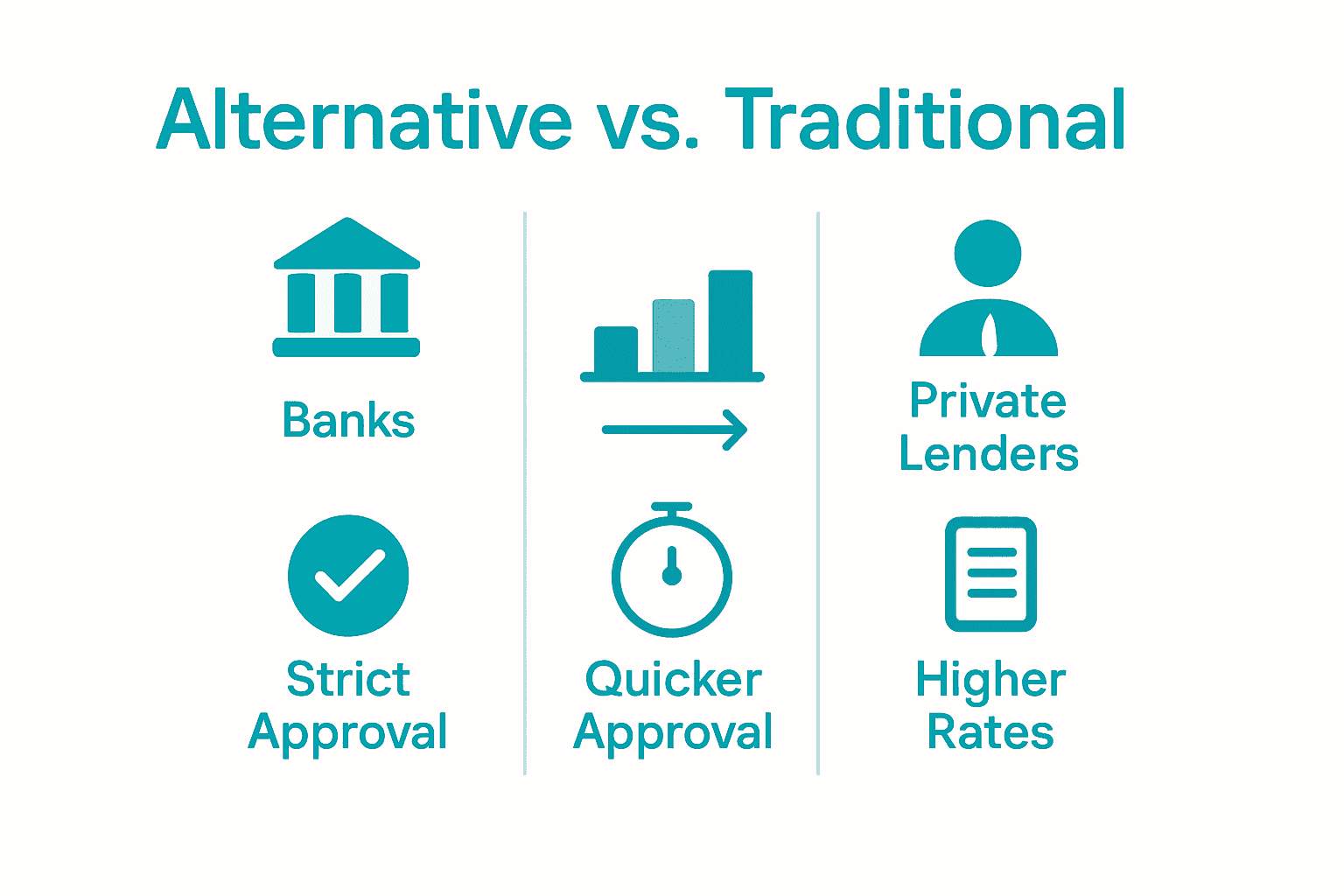
- Interest Rates
- Traditional: Lower rates (3-5%)
- Alternative: Higher rates (6-10%)
- Approval Speed
- Traditional: Weeks-long process
- Alternative: Days to weeks
- Documentation Requirements
- Traditional: Extensive income verification
- Alternative: Property-value focused
- Loan Term Flexibility
- Traditional: Longer, more structured terms
- Alternative: Shorter, more adaptable periods
Complete Guide to Ontario Mortgage Brokers’ Role offers deeper insights into navigating these complex lending landscapes. MPAMag emphasizes that while alternative mortgages provide crucial flexibility, borrowers must carefully evaluate the higher associated costs and shorter-term nature of these financial products.
Unlock Flexible Financing Solutions with Ontario’s Trusted Mortgage Experts
Navigating the complexities of alternative mortgages can feel overwhelming when facing higher interest rates, short loan terms, and strict approval criteria focused on property value. If you’re self-employed, have a low credit score, or need a quick solution for refinance or debt consolidation, Miracle Financial understands these challenges and offers tailored strategies to help you succeed. With expertise as a leading Ontario mortgage broker, we deliver personalized guidance that transforms alternative mortgage hurdles into clear pathways to homeownership or investment growth.
Take control of your financial future today by partnering with a trusted Vaughan mortgage broker committed to your goals. Visit Miracle Financial for fast approvals and transparent service that match your unique situation. Don’t wait — explore your options now at https://www.miraclefinancial.ca/ and experience how expert support can open doors when traditional lenders say no.
Frequently Asked Questions
What are alternative mortgages?
Alternative mortgages are specialized financial solutions designed for borrowers who cannot secure traditional bank financing. They are primarily evaluated based on property value rather than strict income requirements, making them ideal for those with unique financial situations.
How do alternative mortgages work?
Alternative mortgages function differently from traditional loans, focusing on property valuation rather than personal credit history. They usually have shorter terms (1-3 years) and faster approval processes, accommodating borrowers with complex financial backgrounds.
What are the risks associated with alternative mortgages?
Risks include higher interest rates (often 2-4% above conventional rates), potential prepayment penalties, and short loan durations. Borrowers must carefully understand the terms to avoid long-term financial impacts.
How do I qualify for an alternative mortgage?
Qualifying for an alternative mortgage requires demonstrating property equity, the ability to make short-term payments, and having a clear strategy for transitioning to traditional financing. These mortgages typically focus on property value rather than strictly on credit scores.
Recommended
- Self-Employed Mortgages: Complete Guide for Ontario – Miracle Financial
- How to Choose Private Mortgage Lender in Ontario: Step-by-Step – Miracle Financial
- Complete Guide to Ontario Mortgage Brokers’ Role – Miracle Financial
- 7 Key Benefits of Refinancing for Ontario Homeowners – Miracle Financial
- How to Vet a Real Estate Agent in Oakland County – Homes2MoveYou.com