
Blog
Bridge loan meaning in Ontario: Short-term financing for buyers


TL;DR:
- Bridge loans quickly cover short-term funding gaps during property transactions in Ontario.
- They are interest-only loans with flexible terms, suitable for specific, time-sensitive needs.
- Proper planning and working with experienced brokers maximize benefits and minimize risks.
Bridge loans have a reputation for being complicated, expensive, or reserved for buyers in financial trouble. That reputation is largely undeserved. In Ontario, a bridge loan is one of the most practical tools available to homeowners and real estate investors who need to move quickly between properties without waiting for a sale to close. Whether you are buying your next home before your current one sells, or you are an investor seizing a time-sensitive deal, understanding how bridge financing works can mean the difference between landing the property you want and losing it entirely. This guide explains what bridge loans are, how they work, what they cost, and how to use them wisely.
Table of Contents
- What is a bridge loan in Ontario?
- How bridge loans work: The mechanics and process explained
- Bridge loans vs traditional mortgages and other options
- Costs, risks, and key considerations for Ontario borrowers
- Why bridge loans are misunderstood and how to use them wisely
- Connect with expert mortgage advice in Ontario
- Frequently asked questions
Key Takeaways
| Point | Details |
|---|---|
| Bridge loans defined | Bridge loans in Ontario are short-term, interest-only solutions for covering funding gaps during property transitions. |
| How they work | These loans offer quick approval and flexible repayment, making them ideal for homeowners or investors buying before selling. |
| Comparison insights | Bridge loans provide advantages over traditional mortgages and HELOCs in speed and adaptability but carry higher rates. |
| Risk awareness | Borrowers should plan for higher costs and have backup strategies in case a property sale does not close as expected. |
| Expert guidance | Consulting a trusted mortgage broker ensures you understand bridge loan risks and find a solution tailored for your needs. |
What is a bridge loan in Ontario?
A bridge loan is a short-term loan designed to “bridge” the gap between two financial events, most commonly between buying a new property and receiving the proceeds from selling your current one. In Ontario’s fast-moving real estate market, timing rarely lines up perfectly. Your new closing date might arrive before your old property sells, leaving you temporarily without the funds you need for the down payment or purchase price.
According to borrowing basics, a bridge loan in Ontario’s financial context is structured as an interest-only loan, meaning you pay only the interest during the loan term rather than paying down the principal. This keeps your monthly obligations low during the transition period.
Here is what typically qualifies you for a bridge loan in Ontario:
- You have a firm sale agreement on your existing property
- You have a signed purchase agreement on your new property
- Your lender can confirm both closing dates
- You have sufficient equity in your current home to cover the loan amount
To make this concrete, consider this scenario. You own a home worth $900,000 with a remaining mortgage of $400,000, giving you $500,000 in equity. You are purchasing a new home for $1,100,000 and need a $200,000 down payment before your current home closes. A bridge loan of $200,000 covers that gap for 60 days until your sale completes and you repay the loan from the proceeds.
Bridge loans are not a sign of financial stress. They are a strategic tool that lets you act on opportunity without being held hostage by closing date mismatches.
You can learn more about how bridge financing in Ontario is structured and what lenders look for before approving your application.
Pro Tip: Always secure a firm sale agreement on your existing property before applying for a bridge loan. Lenders in Ontario are far more likely to approve your application and offer better terms when the sale is confirmed.
How bridge loans work: The mechanics and process explained
Now that the basics are clear, let us walk through exactly how a bridge loan works from start to finish. The process is more straightforward than most people expect, especially when you are working with an experienced mortgage broker.
- Confirm both transactions. Your lender needs a signed Agreement of Purchase and Sale for both your existing property and your new one. These documents confirm the loan amount needed and the repayment timeline.
- Submit your application. Your broker gathers income verification, property details, current mortgage statements, and both agreements. Unlike a traditional mortgage, the approval is largely based on your confirmed equity and the sale agreement rather than a lengthy income assessment.
- Receive approval and funds. Once approved, funds are typically advanced at or before your new property’s closing date. The loan covers the shortfall between what you need and what you currently have available.
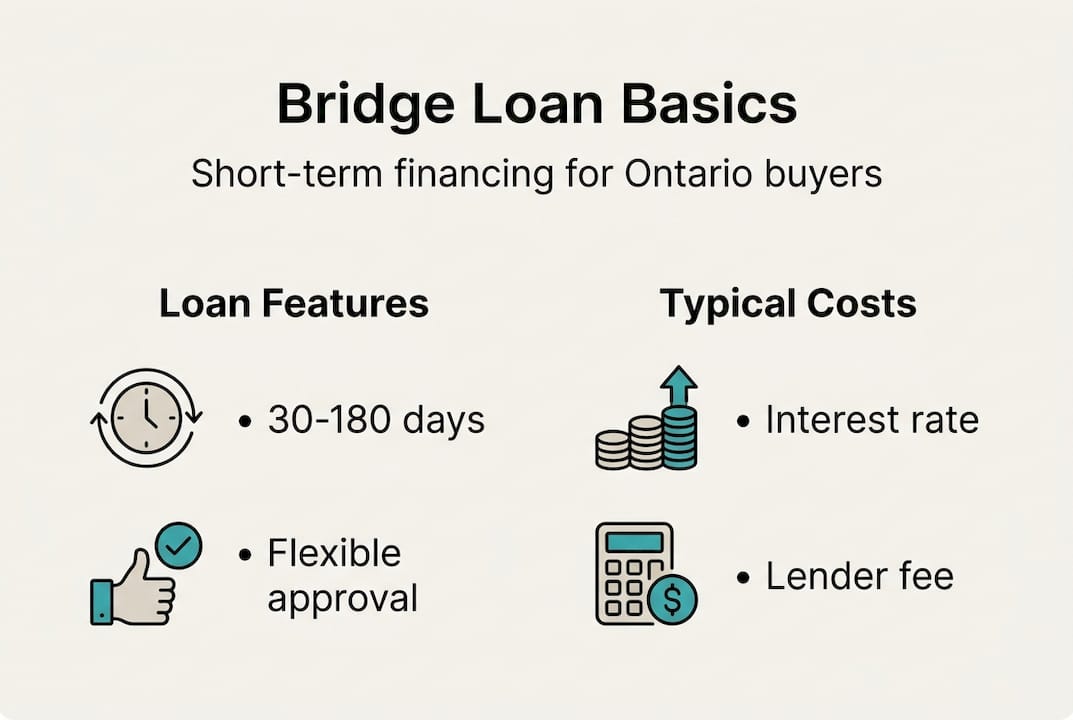
- Pay interest only. During the bridge period, which typically runs between 30 and 180 days, you pay only interest. No principal payments are required, which keeps your cash flow manageable.
- Repay on your sale closing date. When your existing property closes, the net proceeds go directly toward repaying the bridge loan in full. The transaction is clean and self-contained.
Ontario lenders, including banks and private lenders, each have slightly different requirements for the bridge financing process. Banks typically require both a firm sale and an existing mortgage with them. Private lenders offer more flexibility but at higher rates.

One common pitfall is assuming the bridge loan will automatically renew if your sale is delayed. It will not. If your sale falls through or is delayed beyond the loan term, you will need to refinance or negotiate an extension, often at additional cost. Interest rates explained for bridge products show rates typically range from prime plus 2% to prime plus 4% in Ontario’s current lending environment, making cost awareness essential.
Pro Tip: Ask your mortgage broker to build a buffer into the loan term. Requesting a 90-day bridge when you only expect to need 60 days gives you breathing room if your sale closing is delayed.
Bridge loans vs traditional mortgages and other options
Once you understand the mechanics, it is crucial to compare bridge loans with your other financing choices. Not every short-term funding gap requires a bridge loan, and knowing your alternatives helps you choose the most cost-effective path.
| Feature | Bridge loan | Traditional mortgage | HELOC | Personal loan |
|---|---|---|---|---|
| Loan term | 30 to 180 days | 25 years amortised | Revolving | 1 to 5 years |
| Interest rate | Prime + 2% to 4% | Prime or fixed rate | Prime + 0.5% | 6% to 20% |
| Approval speed | Days | Weeks | Weeks | Days |
| Requires equity | Yes | Yes | Yes | No |
| Repayment structure | Interest only | Principal and interest | Flexible | Principal and interest |
As this table shows, bridge loans are not the cheapest option, but they are often the fastest and most flexible for property-specific transitions. Mortgage options in Ontario vary widely depending on your situation, and types of mortgages in Ontario each serve different purposes.
When a bridge loan makes more sense than alternatives:
- Your closing dates do not align and you cannot renegotiate them
- You need funds within days, not weeks
- Your equity is confirmed and the sale agreement is firm
- A HELOC is not already in place and there is no time to arrange one
When other options may be better:
- You have an existing HELOC with available room and flexible timing
- The gap in funding is small and a personal loan covers it affordably
- Your lender allows you to port your mortgage and adjust timing
The smartest borrowers treat bridge loans as a precision instrument, not a fallback. They are best when used for a specific, time-limited need with a clear repayment event on the horizon.
For buyers still weighing ownership decisions, comparing renting vs buying can also clarify whether a bridge loan fits your broader financial plan.
Costs, risks, and key considerations for Ontario borrowers
Having compared the options, let us examine what bridge loans really cost and what to watch for. Transparency about costs is where many borrowers get caught off guard.
| Cost component | Typical range in Ontario (2026) |
|---|---|
| Interest rate | Prime + 2% to prime + 4% |
| Lender fee | 0.5% to 1.5% of loan amount |
| Legal fees | $500 to $1,500 |
| Appraisal (if required) | $300 to $600 |
On a $200,000 bridge loan at prime plus 3% (approximately 9.2% annualised in 2026) over 60 days, you would pay roughly $3,000 in interest plus fees. That is a real cost, but it is often far less than the cost of losing a property or renegotiating a purchase agreement.
The latest mortgage rates show that while traditional mortgage rates have retreated slightly in 2026, bridge loan rates remain elevated due to their short-term and higher-risk nature from the lender’s perspective.
Key risks to manage:
- Failed sale: If your buyer backs out, you are still responsible for the bridge loan. Always have a contingency plan.
- Market timing: In a softening market, your property may sell for less than expected, reducing the proceeds available to repay the loan.
- Cost creep: Fees add up quickly. Get a full cost breakdown before signing.
- Lender restrictions: Some banks will only bridge loans they originated. Private lenders offer more flexibility but at higher cost.
To reduce your exposure, consider benefits of refinancing in Ontario as a parallel strategy if your equity position is strong enough to support a longer-term solution.
Pro Tip: Negotiate the lender fee before you commit. On a $300,000 bridge loan, the difference between a 0.5% and a 1.5% fee is $3,000. Brokers with strong lender relationships can often secure better terms than you would get by approaching a lender directly.
Why bridge loans are misunderstood and how to use them wisely
Here is our candid perspective on bridge loans in Ontario. The suspicion surrounding them comes almost entirely from a lack of clear information, not from actual experience with how they perform when used correctly.
We have seen homeowners delay purchases, lose competitive bids, or make rushed decisions simply because they did not know bridge financing in Ontario was available and accessible. The assumption that only desperate buyers use bridge loans is simply wrong. In Ontario’s property cycles over the past several years, some of the most financially disciplined buyers we have worked with used bridge loans deliberately and strategically.
The real risk is not the loan itself. It is going in without a plan. Borrowers who treat a bridge loan as a last resort tend to apply too late, accept poor terms, and panic when timelines shift. Borrowers who plan for it as part of their transaction structure, alongside their mortgage broker from the start, use it as the clean, effective tool it is designed to be. Examples of mortgage solutions show that bridge financing, when structured well, is one of the least complicated short-term products available.
Connect with expert mortgage advice in Ontario
Short-term financing decisions have long-term consequences, and the right guidance makes all the difference. At Miracle Financial, we work with Ontario homeowners and investors every day to structure bridge financing that fits the transaction, the timeline, and the budget.

Our team understands the nuances of Ontario’s lending landscape, from bank bridge products to private lender solutions. We know which lenders move fastest, which offer the most flexible terms, and how to negotiate fees on your behalf. Whether you are a first-time buyer navigating your first overlap in closing dates or an experienced investor managing multiple properties, our Ontario mortgage broker guide is a strong starting point. When you are ready to move forward, book a consultation and we will build a plan around your specific situation.
Frequently asked questions
What is the typical duration for a bridge loan in Ontario?
Most bridge loans in Ontario last between 30 and 180 days, designed specifically to cover the short window between buying a new property and receiving sale proceeds from your existing one.
Are bridge loans available to both homeowners and investors in Ontario?
Yes, bridge loans serve both homeowners managing overlapping closing dates and real estate investors who need fast, flexible capital to secure time-sensitive property purchases.
How do bridge loan interest rates compare to traditional mortgages?
Bridge loan rates in Ontario are generally higher than traditional mortgages because rates reflect the short-term, flexible, and higher-risk nature of the product from the lender’s perspective.
What happens if my property sale falls through while using a bridge loan?
If your sale collapses, you must either refinance the bridge loan, sell the property quickly, or repay it through other means. Failed sales are the single biggest risk in bridge financing, which is why a firm sale agreement is essential before applying.
How can I minimise risks when taking a bridge loan in Ontario?
Working with an experienced mortgage broker, securing a firm sale agreement first, and negotiating favourable terms upfront are the most effective ways to reduce risk and keep your transaction on track.
Recommended
- How bridge loans work: costs, timing, and risks
- Bridge Financing – Miracle Financial
- Ontario mortgage terms guide: definitions for 2026 buyers
- Private Mortgage Lending Explained: Ontario Guide – Miracle Financial
- Private Mortgage Lenders in Ontario – Impact on Home Financing
- Understanding Borrowing Basics for Financial Success – Finblog