
Blog
Credit Score and Mortgages – Impact on Vaughan Buyers


Nearly 33 percent of Canadian first-time homebuyers worry their credit score will block access to a mortgage in Vaughan. For self-employed residents, traditional bank lending can feel out of reach, especially when credit history is less than ideal. This guide uncovers how credit scores shape mortgage options and highlights practical solutions that Vaughan locals can use to find a path to homeownership even with past financial setbacks.
Table of Contents
- What Credit Score Means For Mortgages
- How Lenders Use Credit Scores In Vaughan
- Ontario Mortgage Options For Low Scores
- Improving Credit For Better Mortgage Rates
- Mistakes That Hurt Mortgage Approval Chances
Key Takeaways
| Point | Details |
|---|---|
| Importance of Credit Score | A credit score determines mortgage eligibility, impacting interest rates and lending terms in Vaughan. |
| Tiered Score Impact | Scores are categorised into excellent to poor, significantly affecting mortgage options and approval chances. |
| Strategies for Improvement | Consistently paying bills and maintaining low credit utilisation are crucial for enhancing credit scores. |
| Common Pitfalls | Changing jobs or accumulating new debt during the application process can hurt mortgage approval chances significantly. |
What Credit Score Means for Mortgages
When it comes to mortgage applications in Vaughan, your credit score serves as a critical financial passport that determines your borrowing potential. In Canada, mortgage lenders use credit scores as a primary mechanism to assess borrower risk and reliability, with scores directly influencing your mortgage terms, interest rates, and overall approval chances. Credit scores reflect borrower risk through a comprehensive evaluation of your financial history and behaviour.
Credit scores range from 300 to 900, with higher numbers indicating greater financial trustworthiness. Lenders typically categorize scores into distinct tiers: excellent (760-900), good (660-759), fair (560-659), and poor (300-559). Each tier significantly impacts your mortgage options. Excellent credit scores often unlock preferential interest rates, larger borrowing amounts, and more flexible lending terms. Conversely, lower scores can limit your mortgage choices, potentially requiring alternative lending strategies or higher interest rates to compensate for perceived financial risk.
Here’s a summary of how credit score ranges affect mortgage opportunities in Vaughan:
| Credit Score Range | Typical Lender Type | Possible Mortgage Terms | Borrower Profile |
|---|---|---|---|
| 760–900 (Excellent) | Major banks, credit unions | Lowest interest rates, high loan amounts | Stable employment, good financial history |
| 660–759 (Good) | Major banks, specialized lenders | Competitive rates, standard terms | Steady income, few missed payments |
| 560–659 (Fair) | Alternative lenders, private lenders | Higher rates, strict requirements | Occasional missed payments, moderate debt |
| 300–559 (Poor) | Private, non-traditional lenders | Highest rates, limited options | Recent financial challenges, credit rebuilding |
The components influencing your credit score include payment history, credit utilization, credit history length, recent credit inquiries, and overall credit mix. Timely bill payments, maintaining low credit card balances, and avoiding frequent credit applications can help maintain a strong score. For Vaughan homebuyers with less-than-perfect credit, understanding these factors becomes crucial in strategic financial planning and mortgage preparation.
Pro tip: Request a free credit report annually and review it thoroughly for any errors or inconsistencies that could negatively impact your mortgage application.
How Lenders Use Credit Scores in Vaughan
Local mortgage lenders in Vaughan employ sophisticated assessment strategies when evaluating credit scores, treating them as comprehensive financial health indicators beyond simple numerical ratings. Each credit score represents a complex risk profile that helps financial institutions determine lending parameters, interest rates, and overall mortgage approval potential. Borrowers with mortgage approval checklists can strategically position themselves for better lending outcomes.
Lenders typically break down credit score evaluations into multiple risk categories, with each tier influencing mortgage terms differently. For instance, scores above 760 often qualify for prime lending rates, while scores between 600-659 might require alternative lending solutions. Vaughan financial institutions consider not just the numerical score, but also underlying credit history patterns, examining factors like payment consistency, credit utilization, and length of credit relationships. This holistic approach allows lenders to make nuanced decisions that go beyond simple numerical thresholds.

The local lending ecosystem in Vaughan is particularly attentive to self-employed professionals and entrepreneurs who might have less traditional credit histories. These borrowers often require more comprehensive credit assessments, with lenders examining additional documentation such as tax returns, business financial statements, and income stability. By understanding these detailed evaluation processes, Vaughan homebuyers can better prepare their credit profiles and anticipate potential lending challenges.
Pro tip: Obtain a detailed credit report six months before applying for a mortgage to identify and address any potential issues or discrepancies.
Ontario Mortgage Options for Low Scores
Ontario homebuyers with low credit scores have multiple pathways to mortgage approval, contrary to common misconceptions. Mortgage options for low credit have expanded significantly, offering hope for those traditionally viewed as high-risk borrowers. Lenders now recognize that credit scores represent just one aspect of financial reliability, creating more flexible lending strategies for individuals with challenging credit histories.
The mortgage landscape in Ontario includes several strategic options for low-credit borrowers. Alternative lending programs such as private mortgages, non-traditional lenders, and specialized credit-rebuilding mortgage products provide opportunities for homeownership. Borrowers with scores between 620-640 can potentially qualify by demonstrating stable income, maintaining low debt ratios, and presenting comprehensive financial documentation. Co-signing arrangements with creditworthy partners can also substantially improve mortgage approval chances, allowing individuals to leverage stronger credit profiles.
Specialized mortgage strategies exist for different low-credit scenarios in Ontario. Self-employed professionals, newcomers to Canada, and individuals recovering from financial challenges can access tailored lending solutions. These may include higher interest rates, larger down payment requirements, or shorter initial term lengths. By working with mortgage professionals who understand nuanced lending criteria, borrowers can develop strategic approaches to navigate credit challenges and achieve homeownership goals.
Below is a comparison of alternative mortgage options available in Ontario for homebuyers with low credit scores:
| Option Type | Key Requirements | Typical Benefits | Special Considerations |
|---|---|---|---|
| Private Mortgage | Large down payment, stable income | Flexible approval, quicker processing | Higher rates, shorter terms |
| Co-Signing Arrangement | Co-signer’s strong credit, shared liability | Improved approval odds | Shared responsibility for the loan |
| Credit-Rebuilding Product | Demonstrated effort to improve credit | Tailored support, gradual score boost | May require extra documentation |
Pro tip: Develop a targeted credit improvement plan at least 12 months before applying for a mortgage, focusing on consistent bill payments and reducing overall credit utilization.
Improving Credit for Better Mortgage Rates
Improving your credit score is a strategic process that directly impacts mortgage rates and lending opportunities. Vaughan homebuyers can significantly enhance their borrowing potential by understanding and systematically addressing credit challenges. Credit repair strategies play a crucial role in transforming financial profiles and unlocking more favourable mortgage terms.
The credit improvement journey involves multiple targeted approaches. Borrowers should focus on key factors that influence credit scores, including payment consistency, credit utilization, and overall credit mix. This means maintaining low credit card balances (ideally below 30% of total credit limit), ensuring all bills are paid on time, and avoiding unnecessary credit inquiries. Establishing a diverse credit history by responsibly managing different types of credit accounts can also contribute to score improvements.
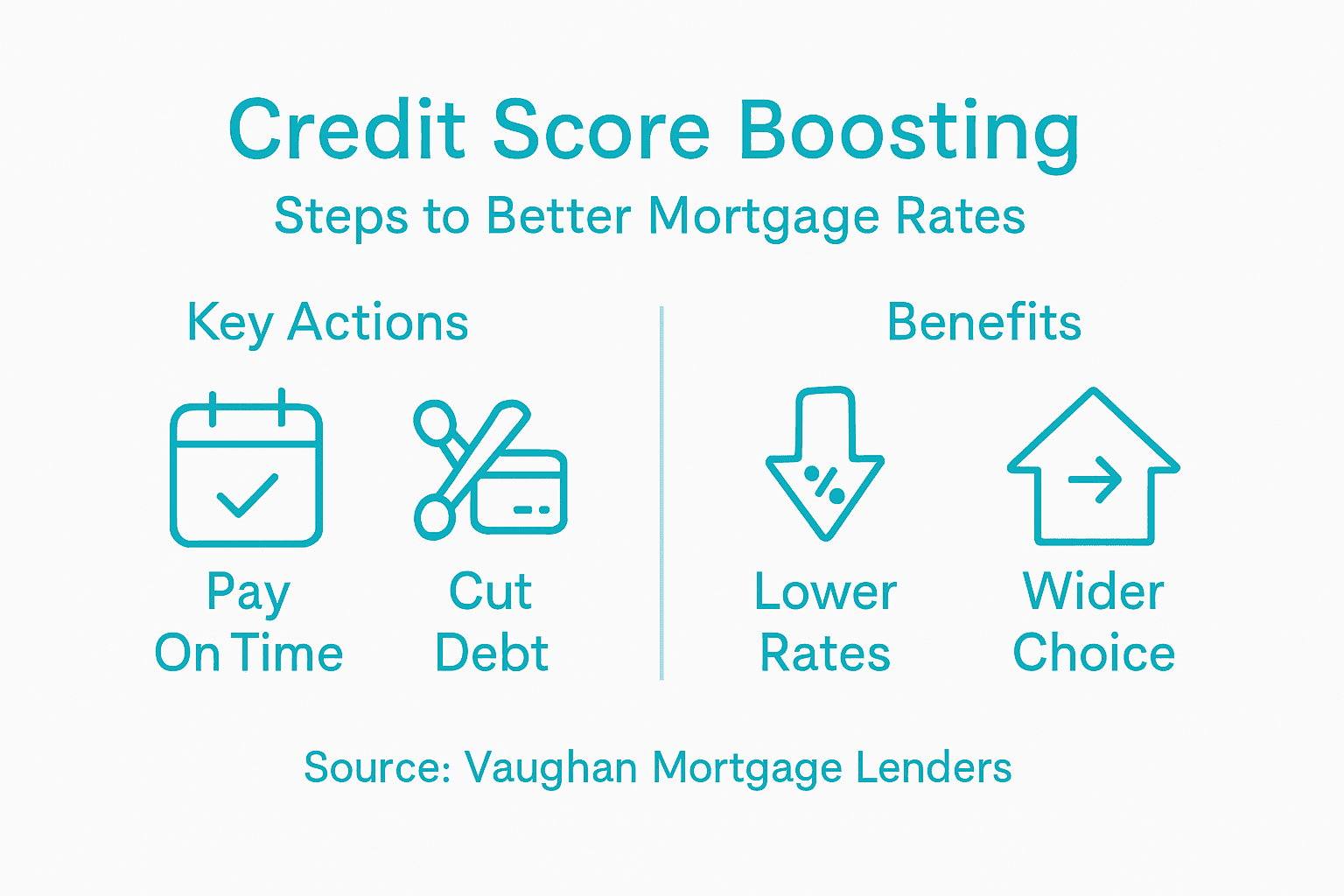
For Vaughan residents seeking mortgage opportunities, credit repair requires a disciplined and patient approach. This might involve negotiating with existing creditors, addressing any outstanding collections, and gradually rebuilding credit through secured credit products or carefully managed credit lines. Professional credit counselling can provide personalized strategies tailored to individual financial situations, helping borrowers develop targeted plans that systematically improve their creditworthiness and increase their chances of securing competitive mortgage rates.
Pro tip: Create a detailed credit improvement spreadsheet tracking payment dates, credit utilization, and score progress to maintain consistent financial discipline.
Mistakes That Hurt Mortgage Approval Chances
Mortgage approval is a delicate process where seemingly minor financial decisions can dramatically impact your homeownership prospects. Common mortgage mistakes can quickly derail even the most carefully planned application, transforming what should be an exciting journey into a frustrating experience. Vaughan homebuyers must understand these potential pitfalls to navigate the mortgage landscape successfully.
Key financial behaviours can significantly compromise mortgage approval chances. Changing employment during the application process signals instability to lenders, potentially triggering immediate rejection. Accumulating new debt before closing is another critical error that raises red flags, as it increases your debt-to-income ratio and suggests financial volatility. Lenders meticulously examine recent financial activity, scrutinizing bank statements, credit reports, and income documentation for any signs of potential risk. Unpaid collections, recent credit inquiries, and inconsistent income streams can also substantially reduce your mortgage eligibility.
Documentation and financial transparency represent another crucial area where homebuyers frequently stumble. Incomplete tax documents, inconsistent income reporting, and failure to disclose existing financial obligations can immediately undermine your application. Self-employed individuals face additional scrutiny, requiring more comprehensive financial documentation to demonstrate income stability. Understanding these nuanced lending criteria and preparing comprehensive, accurate documentation is essential for successfully navigating the mortgage approval process in Vaughan’s competitive real estate market.
Pro tip: Maintain a dedicated folder with all financial documents, including tax returns, pay stubs, and bank statements, to streamline your mortgage application process.
Take Control of Your Mortgage Journey with Expert Guidance in Vaughan
Understanding how your credit score affects mortgage approval and terms is essential for any homebuyer in Vaughan. If you are facing challenges with a low credit score or navigating complex lending criteria, Miracle Financial offers tailored solutions designed to meet your unique needs. From alternative lending options and private mortgage solutions to strategies for improving credit and securing the best rates, our team of experienced Ontario mortgage brokers is here to help you overcome financial hurdles and unlock better borrowing possibilities.
Key benefits when working with us include:
- Personalized mortgage planning focused on your credit profile and financial goals
- Access to private mortgage lenders Ontario and alternative credit options
- Expert advice for self-employed mortgage challenges and debt consolidation mortgages

Are you ready to improve your credit standing and secure a competitive mortgage rate? Visit Miracle Financial now to explore how our Vaughan mortgage broker specialists can guide you through every step with transparency and dedicated support. Don’t wait for credit issues to hold back your homeownership dreams. Start your journey today with trusted professionals who understand how crucial your credit score is in Ontario’s mortgage market. Learn more about our Low Credit Score Mortgage Solutions and take the first step toward better financial outcomes.
Frequently Asked Questions
What credit score do I need for a mortgage in Vaughan?
A credit score of 760 or higher is typically considered excellent and can help you secure the lowest interest rates and best mortgage terms. Scores between 660-759 are usually considered good, while scores below 660 may lead to higher rates and increased scrutiny from lenders.
How does my credit score affect my mortgage interest rate?
Your credit score directly influences the interest rate you are offered on a mortgage. Higher scores often result in lower rates, which can save you thousands over the life of the loan. Conversely, lower scores can lead to higher rates, increasing your overall borrowing costs.
Can I get a mortgage with a low credit score?
Yes, it is possible to obtain a mortgage with a low credit score, although options may be limited. Alternative lenders, private mortgages, and co-signing with someone who has better credit can improve your chances of approval despite having a lower score.
What steps can I take to improve my credit score before applying for a mortgage?
To improve your credit score, focus on paying bills on time, maintaining low credit card balances (ideally below 30% of your limit), and avoiding new credit inquiries. Regularly check your credit report for errors and work to resolve any outstanding debts or collections.