
Blog
Credit Scores for Mortgages: 50-Point Boost Saves Thousands


Many Ontario homebuyers think a credit score below 600 means no mortgage. That’s false. Insured mortgage options accept scores as low as 540, opening doors even when conventional lenders say no. Your credit score shapes approval odds, interest rates, and refinancing potential, but understanding the system gives you power to improve outcomes and save thousands over your mortgage life.
Table of Contents
- Credit Score Basics For Mortgages
- Credit Score Ranges And Mortgage Eligibility In Ontario
- How Credit Scores Affect Mortgage Rates And Terms
- Credit Scores In Refinancing And Debt Consolidation
- Common Misconceptions About Credit Scores For Mortgages
- Credit Bureaus And Score Variability
- Strategies To Improve Your Credit Score Before Applying
- Special Considerations For Self-Employed Borrowers
- Discover Expert Mortgage Solutions With Miracle Financial
- Frequently Asked Questions
Key Takeaways
| Point | Details |
|---|---|
| Credit score ranges | In Canada, credit scores range from 300 to 900, with 650+ considered good credit for mortgage lending. |
| Approval thresholds | Conventional mortgages require minimum credit scores around 620, while insured mortgages can accept scores as low as 540 in Ontario. |
| Rate impact | A 50-point increase in credit score can lower mortgage rates by up to 0.5%, saving thousands over loan life. |
| Refinancing requirements | Refinancing generally requires credit profiles comparable to initial mortgage, with scores below 600 limiting options for debt consolidation. |
| Bureau differences | Equifax and TransUnion report credit information differently, impacting lender decisions. |
Credit Score Basics for Mortgages
Credit scores measure your financial reliability on a scale from 300 to 900 in Canada. Anything above 650 generally signals lenders you’re a safe bet for mortgage approval. Two main credit bureaus, Equifax and TransUnion, collect payment histories, outstanding debts, and credit inquiries to calculate your score monthly.
Several factors determine where you land on that scale. Payment history carries the most weight, showing whether you pay bills on time. Credit utilization, the percentage of available credit you’re using, ranks second. Hard inquiries from applying for new credit, the length of your credit history, and your credit mix all contribute smaller amounts to the final number.
Your score updates monthly as bureaus receive new data from lenders, landlords, and utilities. Because Equifax and TransUnion don’t receive identical information, your scores can differ between them. This variability matters when applying for mortgages, since lenders often pull reports from one bureau over the other based on their underwriting preferences.
Key factors influencing your credit score:
- Payment history accounts for roughly 35% of your score
- Credit utilization below 30% demonstrates responsible borrowing
- Hard inquiries from new credit applications temporarily lower scores
- Length of credit history shows long-term financial patterns
- Credit mix diversity reflects experience managing different account types
Understanding credit score ranges in Ontario gives you a baseline for targeting the right mortgage products. Scores evolve over time, responding to your financial behaviors within three to six months of consistent changes.
Credit Score Ranges and Mortgage Eligibility in Ontario
Your credit score determines which mortgage doors open and which stay locked. Conventional lenders, the big banks and credit unions, typically demand scores of 620 or higher. Drop below that threshold, and you enter alternative lending territory where higher interest rates become the norm.
Insured mortgages through CMHC offer a middle path. If your score falls between 540 and 619, you can still access homeownership, though you’ll pay mandatory insurance premiums that protect lenders against default risk. Below 540, private lenders become your primary option, charging premium rates that reflect higher perceived risk.
Credit score bands and mortgage options:
| Score Range | Lender Type | Interest Rate Impact | Special Requirements |
|---|---|---|---|
| 760+ | Prime conventional | Lowest rates available | Standard documentation |
| 680-759 | Conventional | Slightly higher rates | Standard approval process |
| 620-679 | Conventional with caution | Moderate rate increase | May require larger down payment |
| 540-619 | CMHC insured | Higher rates plus insurance | Mandatory mortgage insurance |
| Below 540 | Alternative/private | Significantly higher rates | Additional documentation required |
Different lenders set their own score preferences within these bands. Some credit unions show more flexibility with borderline scores, while others stick rigidly to cutoffs. Understanding where you fall helps target mortgage options for low credit scores that match your situation rather than wasting time on applications destined for rejection.
Pro Tip: Check your credit score three months before applying for a mortgage. This gives you time to address errors or improve weak areas without rushing into unfavorable loan terms.
How Credit Scores Affect Mortgage Rates and Terms
Your credit score directly controls how much you pay for borrowing money. Lenders reward higher scores with lower interest rates because strong credit histories predict reliable repayment. The inverse holds true: lower scores trigger higher rates that compensate lenders for increased risk.

The financial impact adds up quickly. A borrower with a 780 credit score might secure a 5.2% mortgage rate, while someone at 620 pays 5.7%. On a $400,000 mortgage over 25 years, that half-percent difference costs roughly $32,000 in extra interest. The math becomes even starker when comparing prime rates to alternative lender rates.
Improving your score before applying pays immediate dividends. Even modest gains translate into rate reductions. Better credit profiles also speed up approval timelines and expand your lender choices, giving you negotiating leverage that weaker scores eliminate.
How credit scores impact your mortgage costs:
- Higher scores unlock the lowest available interest rates
- Lower scores trigger mandatory insurance premiums on insured mortgages
- Score improvements create compound savings over the mortgage term
- Better credit expands lender options and approval speed
- Strong profiles may waive certain fees or documentation requirements
Beyond rates, your score influences other loan terms. Lenders might require larger down payments from borrowers with scores below 650, or impose stricter debt-to-income ratio limits. Some refuse certain property types or geographic areas when credit doesn’t meet their comfort threshold. Taking steps to improve mortgage approval and rates before applying maximizes your options.
Credit Scores in Refinancing and Debt Consolidation
Refinancing your mortgage or consolidating debt through a mortgage product requires similar credit scrutiny as your original loan. Lenders want proof your financial situation remains stable or improved since your initial approval. If your score dropped, you face limited refinancing options and potentially higher rates than your current mortgage.
Debt consolidation through refinancing demands particular attention. You’re asking lenders to replace high-interest debts with mortgage debt, essentially using your home equity as collateral. Lenders scrutinize credit scores carefully because they need confidence you won’t accumulate new debt after consolidation, creating a cycle of financial instability.
Scores below 600 severely restrict traditional refinancing paths. Major banks typically decline these applications outright, pushing borrowers toward alternative lenders with less favorable terms. This reality makes maintaining or improving your score before refinancing critical to accessing competitive rates and flexible terms.
Refinancing and debt consolidation credit considerations:
- Refinancing generally requires credit equal to or better than your original mortgage approval
- Debt consolidation demands lender confidence in your ability to manage consolidated debt
- Scores below 600 eliminate most conventional refinancing options
- Alternative lenders charge premium rates reflecting higher perceived risk
- Planning credit improvements 6-12 months before refinancing maximizes approval odds
Pro Tip: Work with a mortgage broker before applying for refinancing. They understand which lenders accept lower credit scores for debt consolidation and refinancing credit requirements, saving you from multiple hard inquiries that further damage your score.
Maintaining good credit between mortgage milestones protects your refinancing options. Even if you don’t plan to refinance soon, life circumstances change. Preserving strong credit gives you flexibility when unexpected needs arise.
Common Misconceptions About Credit Scores for Mortgages
The mortgage world breeds myths that prevent people from pursuing homeownership. The biggest misconception claims low credit scores guarantee automatic denial. Ontario lenders offer insured mortgage options for credit scores as low as 540, disproving that myth completely. You have options even with challenged credit.
Another common belief assumes your credit score is universal. In reality, Equifax and TransUnion generate different scores because they receive varying data from creditors. Lenders may pull from one bureau over the other, meaning you could get approved or denied based on which report they check. Always review both before applying.
Self-employed applicants often think their variable income makes credit scores less important. Wrong. Credit scores remain crucial, but lenders layer additional documentation requirements on top. Your score still opens or closes doors; self-employment simply adds complexity to the approval process.
Myths versus reality in mortgage credit scoring:
- Myth: Low scores mean automatic denial. Reality: Insured mortgages accept scores as low as 540.
- Myth: Credit scores are identical across bureaus. Reality: Equifax and TransUnion scores often differ.
- Myth: Self-employment reduces credit score importance. Reality: Credit matters equally but requires more documentation.
- Myth: Credit improvements happen instantly. Reality: Meaningful changes take 3-6 months of consistent behavior.
- Myth: Checking your own credit hurts your score. Reality: Soft inquiries from self-checks don’t impact scores.
Pro Tip: Dispute any errors on your credit reports immediately. Inaccurate late payments or collections can artificially depress scores, costing you better rates while you wait for corrections.
Understanding mortgage myths and realities prevents you from accepting unnecessary limitations. Knowledge about how scores actually work empowers better decisions and prevents premature discouragement.
Credit Bureaus and Score Variability
Equifax and TransUnion dominate credit reporting in Canada, and Ontario mortgage lenders rely heavily on their data. These bureaus collect information from creditors, landlords, utilities, and government agencies to build comprehensive financial profiles. However, they don’t receive identical information, creating score discrepancies that affect mortgage applications.
The bureaus use proprietary algorithms to calculate scores, meaning even shared data might generate different numbers. One bureau might weight recent payment history more heavily, while the other emphasizes credit utilization. Lenders know these differences exist and often specify which bureau’s report they require during underwriting.
Score variations can swing mortgage outcomes. You might have a 680 on Equifax and 640 on TransUnion. If a lender pulls only TransUnion, you face higher rates or denial, even though your Equifax score qualifies you for better terms. This reality makes checking both reports before applying essential.
Why credit bureau scores differ:
- Creditors don’t report to both bureaus equally
- Proprietary scoring algorithms weigh factors differently
- Timing differences cause data updates to appear at different moments
- Geographic variations in creditor reporting practices affect regional scores
- Errors on one report don’t automatically appear on the other
Borrowers should request reports from both bureaus several months before mortgage applications. This timing allows you to spot errors, dispute inaccuracies, and understand which score lenders will likely see. Some mortgage brokers pull both reports during pre-qualification, giving you complete visibility into your credit profile.
Understanding credit bureau differences prevents surprises during the application process. You gain control over your financial narrative when you know exactly what lenders see.
Strategies to Improve Your Credit Score Before Applying
You control your credit score more than you realize. Strategic actions taken 3-6 months before applying for a mortgage can significantly boost your score, unlocking better rates and terms. The key lies in understanding what moves the needle and implementing changes consistently.
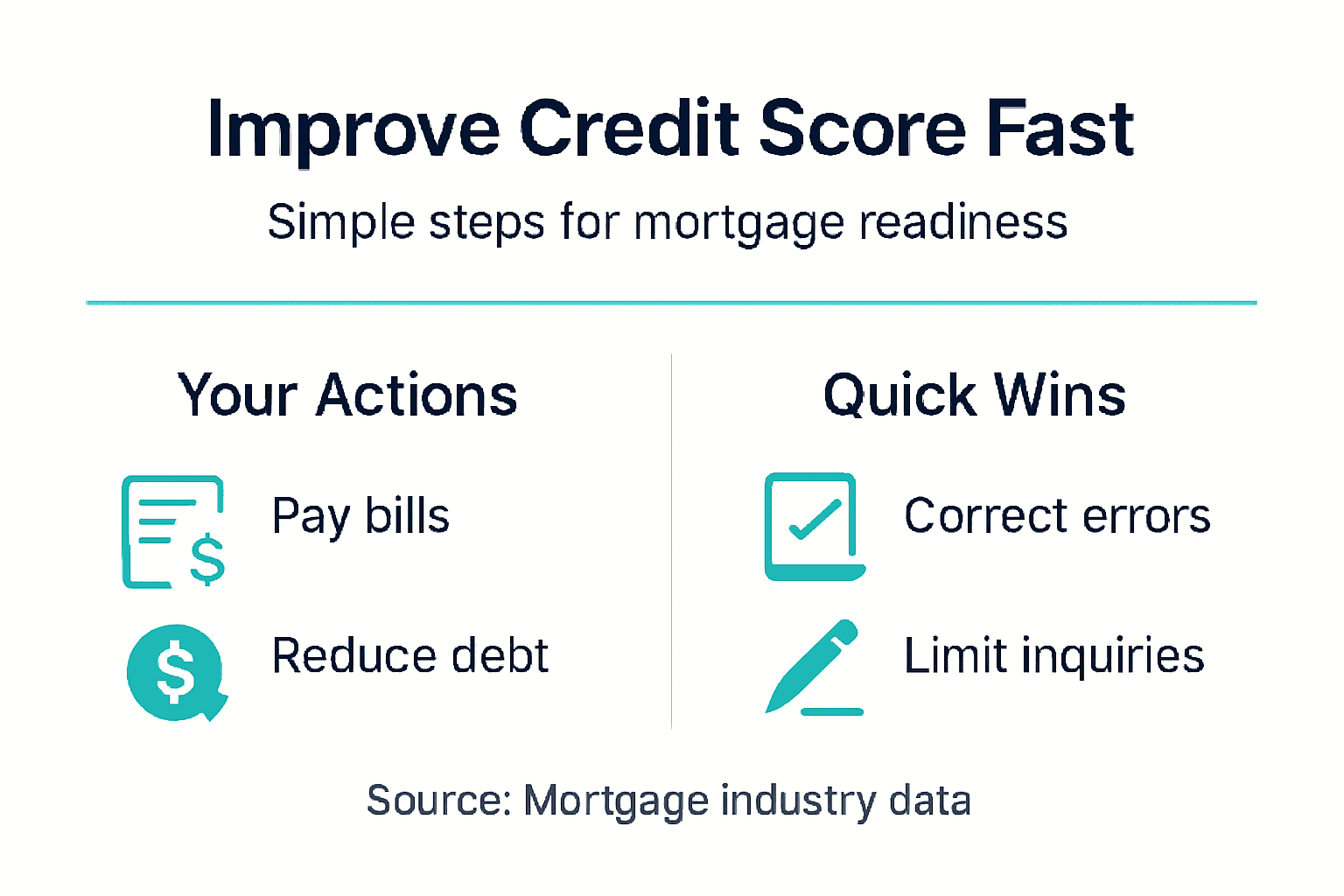
Payment history dominates credit calculations. Maintaining timely payments, reducing credit utilization below 30%, and limiting new credit inquiries can raise your credit score significantly within 3-6 months. Even one late payment reverberates through your score for months, so automate payments where possible to eliminate forgetfulness.
Credit utilization, the percentage of available credit you’re using, ranks second in importance. If you have a $10,000 credit limit and carry a $5,000 balance, you’re at 50% utilization, well above the ideal 30% threshold. Paying down balances or requesting credit limit increases both reduce this ratio, boosting your score without changing spending habits.
Step-by-step credit improvement plan:
- Set up automatic payments for all bills to eliminate late payment risk.
- Pay down credit card balances below 30% of available limits, targeting 10% if possible.
- Request credit limit increases on existing cards to improve utilization ratios without new applications.
- Dispute any errors on both Equifax and TransUnion reports immediately through their online portals.
- Avoid applying for new credit cards or loans during the 6 months before your mortgage application.
- Keep old credit accounts open to maintain length of credit history, even if unused.
- Check both credit reports monthly to track progress and catch new errors quickly.
Pro Tip: If you have collections or charge-offs, prioritize paying them before applying. While payment doesn’t erase the record immediately, it shows lenders you’re addressing past issues, improving approval odds.
External resources provide additional credit rebuilding strategies that complement these core actions. The mortgage preparation period offers a focused window to improve your credit score for mortgage qualification, making every month of improvement count toward better terms.
Special Considerations for Self-Employed Borrowers
Self-employed Ontarians face unique mortgage challenges that compound credit score scrutiny. While your credit score matters as much as any employed borrower’s, lenders add layers of income verification that employed applicants avoid. For self-employed borrowers, credit score is only one factor; additional income documentation is often required to satisfy lenders.
Lenders view self-employment income as less predictable than salaried positions. They demand two years of Notice of Assessments, business financial statements, and bank statements showing consistent deposits. Strong credit scores partially offset their income concerns, while weak scores amplify them, creating approval barriers that employed borrowers with identical scores wouldn’t face.
Alternative lenders and mortgage brokers specialize in self-employed scenarios, understanding the documentation complexity and knowing which lenders accept varied income structures. These professionals match your credit profile with lenders who won’t automatically penalize self-employment, expanding options beyond what you’d find applying directly to banks.
Self-employed mortgage credit strategies:
- Maintain excellent credit to counterbalance income documentation complexity
- Organize financial records meticulously before applying
- Work with brokers experienced in self-employed mortgage qualification tips
- Consider alternative lenders who specialize in self-employed borrowers
- Plan applications around tax filing cycles when income documentation is current
Your credit score serves as a trust signal that you manage finances responsibly despite variable income. Keeping it strong reduces lender skepticism and speeds approval timelines. Self-employment doesn’t disqualify you from mortgages, but it demands extra attention to credit alongside comprehensive documentation.
Discover Expert Mortgage Solutions with Miracle Financial
Navigating credit score requirements across different mortgage products feels overwhelming without expert guidance. Understanding the Ontario mortgage broker guide reveals how professionals simplify this complexity, matching your credit profile with lenders most likely to approve your application at competitive rates.

Miracle Financial specializes in helping Ontario homebuyers and homeowners optimize their mortgage outcomes regardless of credit challenges. Our brokers understand which lenders accept lower scores, how to position refinancing applications for approval, and when alternative lending makes sense. We guide you through mortgage refinance options in Ontario that align with your credit situation, maximizing approval odds while securing favorable terms. Whether you’re buying your first home, refinancing for better rates, or exploring debt consolidation services, our team provides personalized strategies that turn credit obstacles into manageable steps toward homeownership.
Frequently Asked Questions
Can I get a mortgage in Ontario with a credit score below 600?
Yes, insured mortgages through CMHC accept scores as low as 540, though you’ll pay mandatory insurance premiums. Alternative and private lenders provide additional options for scores below 600, typically at higher interest rates. Working with experienced brokers who understand mortgages for low credit scores expands your options beyond conventional bank rejections.
How long does it take to improve my credit score before applying for a mortgage?
Meaningful credit score improvements typically require 3 to 6 months of consistent positive behavior. Payment history updates monthly, so each on-time payment gradually raises your score. Starting early before your planned mortgage application gives you time to address errors and implement strategies that improve credit score for mortgage approval without rushing into unfavorable terms.
Why do my Equifax and TransUnion scores differ, and which one matters for mortgages?
Equifax and TransUnion use different data sources and proprietary algorithms, creating score variations between bureaus. Lenders typically pull from one bureau based on their underwriting preferences, so both scores matter. Checking reports from both bureaus before applying reveals which score lenders will likely see, preventing surprises. Understanding credit bureau differences for mortgages helps you prepare accurate applications.
What special documents do self-employed borrowers need to improve mortgage approval chances?
Self-employed applicants must provide two years of Notice of Assessments, T1 Generals, business financial statements, and recent bank statements showing consistent income deposits. Credit scores remain important but form only part of the approval puzzle. Strong credit combined with organized self-employed mortgage documentation significantly improves approval odds with both conventional and alternative lenders.