
Blog
First-Time Homebuyer Mortgages: Smart Choices in Ontario


Most Canadian first-time homebuyers are surprised to find out that your credit history can play a bigger role in approval than your income or savings. If you are in Vaughan and just starting the journey toward homeownership, understanding mortgage basics can make a major difference. This guide breaks down every key step in the mortgage process, untangles crucial requirements for limited credit profiles, and offers practical tips to help you secure the right mortgage and feel confident from your first offer to closing day.
Table of Contents
- First-time Homebuyer Mortgages Defined Clearly
- Types Of First-time Homebuyer Mortgages Ontario
- Essential Eligibility And Qualification Requirements
- Government Incentives And Local Support Programs
- Costs, Insurance, And Long-term Financial Impacts
- Common Mistakes And How To Avoid Them
Key Takeaways
| Point | Details |
|---|---|
| Understand Mortgage Basics | Familiarize yourself with key mortgage components such as interest rates, amortization periods, and down payment requirements to make informed decisions. |
| Explore Government Incentives | Take advantage of programs like the First-Time Home Buyer Incentive and the Home Buyers’ Plan to ease financial burdens when purchasing a home. |
| Assess Financial Readiness | Prior to applying, review your credit score and gather necessary financial documentation to enhance your chances of mortgage approval. |
| Avoid Common Pitfalls | Conduct thorough research and compare multiple mortgage options to avoid costly mistakes and strengthen your negotiating position in the housing market. |
First-time homebuyer mortgages defined clearly
A mortgage represents a critical financial agreement where you borrow funds to purchase a home while using the property itself as collateral. When entering the housing market as a first-time buyer in Ontario, understanding mortgage fundamentals becomes essential for making informed decisions. Mortgage loans secured by real property require borrowers to make consistent monthly payments that gradually pay down both principal and accumulated interest.
First-time homebuyers should recognize that mortgages involve several key components beyond the basic loan amount. These typically include interest rates (which can be fixed or variable), amortization periods determining repayment length, and down payment requirements that impact your initial financial commitment. The specific terms will vary based on your credit history, income stability, and the property’s appraised value. Some first-time buyers might qualify for special programs designed to reduce initial barriers to homeownership.
In the Ontario housing market, mortgage options range from traditional bank offerings to alternative lending solutions. Potential homeowners can choose between conventional mortgages requiring 20% down payment or high-ratio mortgages allowing smaller initial investments with mandatory mortgage default insurance. Your specific financial profile will determine which mortgage structure best suits your long-term goals and current economic circumstances.
Pro tip: Before applying for a mortgage, review your credit report and take steps to improve your credit score, as this can significantly impact your interest rates and loan approval chances.
Types of first-time homebuyer mortgages Ontario
First-time homebuyers in Ontario have several mortgage options designed to accommodate different financial situations and homeownership goals. Mortgage types range from fixed-rate to variable-rate structures, each offering unique advantages for potential homeowners. Fixed-rate mortgages provide predictability with a constant interest rate throughout the loan term, allowing buyers to plan their budget with confidence and protection against potential interest rate increases.
Variant mortgage options include variable-rate mortgages, which adjust according to market indexes, potentially offering lower initial rates but with some inherent financial uncertainty. New federal mortgage rules in 2024 have introduced a 30-year amortization option specifically for first-time buyers purchasing newly constructed homes, which can help reduce monthly payment amounts and improve overall affordability. This innovative approach makes homeownership more accessible for younger Canadians entering the housing market.
Ontario homebuyers can also explore high-ratio mortgages, which require mortgage default insurance and allow smaller down payments. These mortgages are particularly beneficial for individuals with limited upfront capital but stable income. Alternative lending solutions through banks, credit unions, and mortgage brokers provide flexible terms that can be tailored to individual financial circumstances, ensuring first-time buyers can find a mortgage structure matching their specific needs.
Pro tip: Compare mortgage options from multiple lenders and consider getting pre-approved to understand your exact borrowing capacity and strengthen your position when house hunting.
Here is a summary comparing common types of first-time homebuyer mortgages in Ontario:
| Mortgage Type | Interest Rate Structure | Down Payment Minimum | Key Advantage |
|---|---|---|---|
| Fixed-rate | Constant for full term | 5% (high-ratio) | Stable payments, easy budgeting |
| Variable-rate | Fluctuates with market | 5% (high-ratio) | Lower initial rates possible |
| High-ratio (insured) | Fixed or variable | 5% | Smaller upfront cost, insurance required |
| Conventional | Fixed or variable | 20% | No required mortgage insurance |
Essential eligibility and qualification requirements
Qualifying for a first-time homebuyer mortgage in Ontario involves meeting several critical financial and personal criteria. Credit score stands as the primary gateway to mortgage approval, with most lenders requiring a minimum score of 680 for conventional mortgages. This numerical representation of your financial reliability demonstrates your ability to manage credit responsibly and repay borrowed funds consistently.

Income stability plays a crucial role in mortgage qualification. Lenders typically evaluate your debt-to-income ratio, which compares your monthly debt payments to your gross income. Most financial institutions prefer this ratio to remain below 44%, ensuring you have sufficient income to cover mortgage payments alongside other financial obligations. First-time homebuyer mortgage programs often provide more flexible guidelines for individuals with stable employment but limited credit history.
Additional qualification requirements include demonstrating a consistent employment history, typically requiring two years of steady income from the same employer or within the same industry. Down payment sources are also critically examined, with lenders preferring funds from personal savings, gifts from immediate family, or government first-time homebuyer incentive programs. Potential borrowers must also pass a stress test, which evaluates their ability to make mortgage payments at a higher interest rate to ensure financial resilience during potential economic fluctuations.
Pro tip: Gather comprehensive financial documentation in advance, including tax returns, pay stubs, and bank statements, to streamline your mortgage application process and demonstrate financial preparedness.
Government incentives and local support programs
First-time homebuyers in Ontario can leverage several government programs designed to make homeownership more accessible and affordable. The First-Time Home Buyer Incentive offers a unique shared equity mortgage program that allows buyers to reduce their monthly mortgage payments by sharing the equity with the Canadian government. This innovative program provides up to 10% of a home’s purchase price as a shared investment, effectively lowering the initial financial burden for new homeowners.
Additional support mechanisms include the Home Buyers’ Plan, which permits first-time buyers to withdraw up to $35,000 from their Registered Retirement Savings Plan (RRSP) tax-free to fund their down payment. The First-Time Home Buyers’ Tax Credit provides further financial relief by offering a tax credit that can help offset closing costs and initial home purchasing expenses. These programs collectively aim to reduce the financial barriers that often prevent younger Canadians from entering the housing market.
Ontario-specific incentives complement federal programs, with the province offering a land transfer tax rebate that can significantly reduce closing costs for eligible buyers. Many municipalities also provide additional local support, including grants, reduced development charges, and specialized financing programs targeting first-time homeowners. These layered support mechanisms demonstrate a comprehensive approach to helping new buyers establish their first home while managing financial challenges.
Pro tip: Research and combine multiple government incentives strategically, and consult with a mortgage professional to maximize your potential financial benefits and support.
Costs, insurance, and long-term financial impacts
First-time homebuyers must navigate a complex landscape of financial considerations beyond the initial home purchase. Homebuyer costs encompass multiple layers of financial responsibility, including mortgage loan insurance for down payments less than 20%, which protects lenders but increases overall borrowing expenses. These additional premiums can significantly impact monthly payments, typically ranging from 2.4% to 4% of the total mortgage amount, depending on the down payment percentage.
Closing costs represent another critical financial dimension that first-time buyers must budget carefully. These expenses include legal fees, land transfer taxes, home inspections, and potential property transfer charges. Buyers should anticipate spending between 3% to 5% of the home’s purchase price on these initial expenses, which are often overlooked in preliminary budgeting. Home insurance adds another recurring expense, typically costing between $800 to $1,500 annually, depending on the property’s value and location.
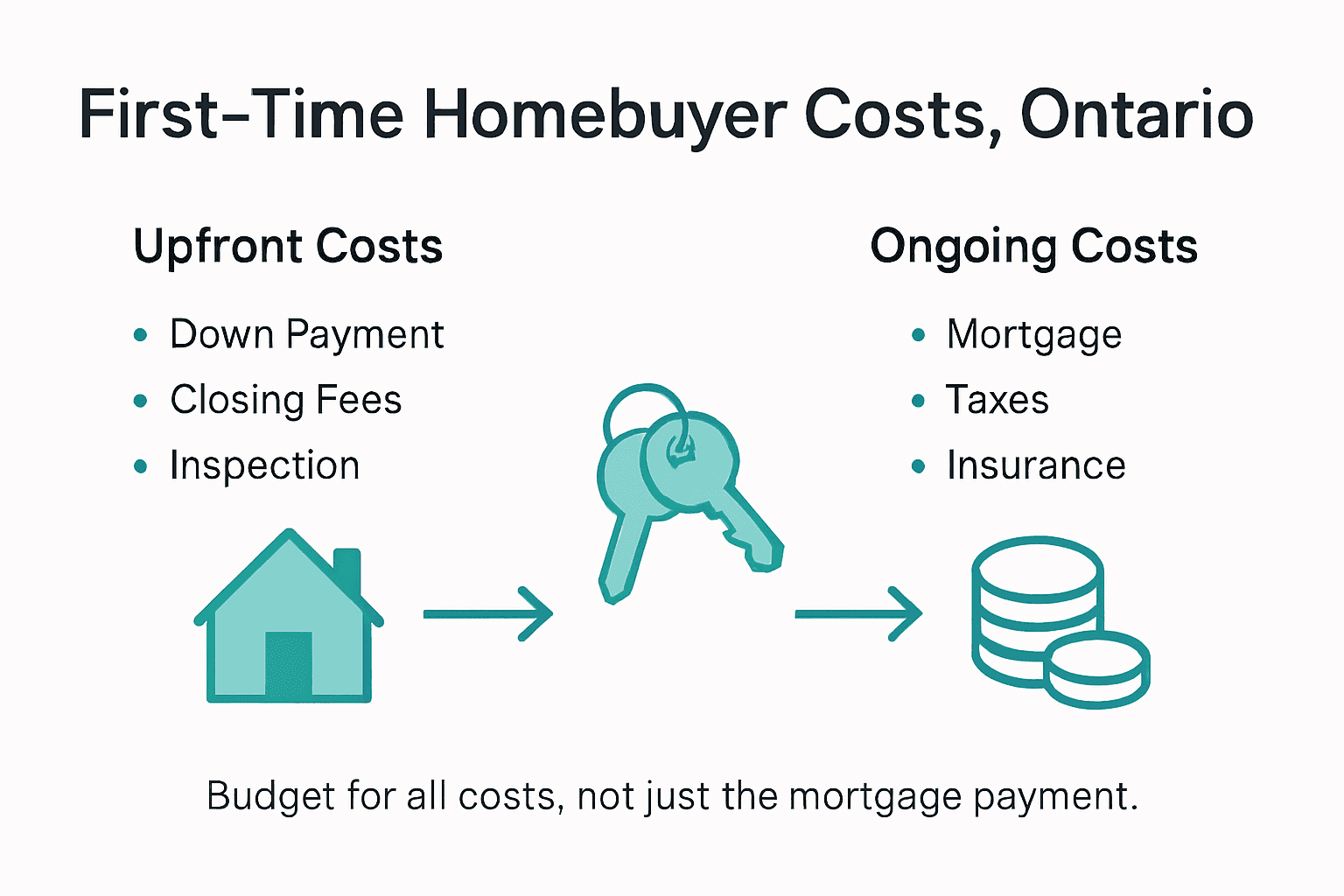
Long-term financial impacts extend far beyond initial costs, involving strategic decisions about mortgage structure, amortization periods, and potential equity growth. Choosing between shorter or longer amortization periods can dramatically affect total interest paid over the mortgage’s lifetime. A 25-year mortgage will result in lower monthly payments but significantly higher total interest compared to a 15-year term. Smart homeowners consider prepayment options, additional principle payments, and potential refinancing strategies to minimize long-term financial burden.
Pro tip: Create a comprehensive budget that includes not just mortgage payments, but also anticipates maintenance costs, potential repairs, and unexpected home-related expenses to ensure long-term financial stability.
The following table outlines typical first-time homebuyer costs and their financial impact:
| Cost Type | Typical Range | Financial Impact | When Paid |
|---|---|---|---|
| Mortgage loan insurance | 2.4% – 4% of mortgage | Increases total costs | Added to mortgage |
| Closing costs | 3% – 5% of home price | Immediate outlay | At purchase |
| Home insurance | $800 – $1,500 per year | Ongoing annual expense | Post-purchase |
| Maintenance | 1% – 3% of home value | Unplanned spending | Throughout ownership |
Common mistakes and how to avoid them
First-time homebuyers often encounter significant financial pitfalls that can derail their homeownership journey. Overlooking credit score preparation represents one of the most critical errors, as many buyers fail to understand how their credit profile directly impacts mortgage approval and interest rates. First-time homebuyer mortgage programs typically require a minimum credit score of 680, making proactive credit management essential months before applying.
Another common mistake involves inadequate financial planning and underestimating the total costs of homeownership. Beyond the mortgage principal, buyers must budget for property taxes, home insurance, maintenance expenses, and potential unexpected repairs. Many first-time homeowners dramatically underestimate annual maintenance costs, which typically range between 1% to 3% of the home’s total value. Failing to create a comprehensive financial buffer can lead to significant financial strain and potential mortgage default risks.
Mortgage-specific errors frequently emerge from poor understanding of loan structures and terms. Buyers often make hasty decisions by accepting the first mortgage offer without comparing multiple lenders, potentially leaving thousands of dollars in savings unexplored. Choosing the wrong mortgage type, such as selecting a variable-rate mortgage without understanding potential interest rate fluctuations, can create long-term financial vulnerability. Additionally, many first-time buyers neglect to get pre-approved, which weakens their negotiating position and can result in missed opportunities in competitive real estate markets.
Pro tip: Conduct thorough research, maintain a robust emergency fund, and consult with a professional mortgage advisor to navigate potential financial pitfalls and make informed homeownership decisions.
Pre-qualification is not pre-approval
Both words get used loosely, including by lenders, and the difference matters when you are competing for a property.
A pre-qualification is an estimate. Someone takes your stated income and debts, runs a quick calculation, and tells you roughly what you might afford. Nothing has been verified and no lender has committed to anything.
A pre-approval means a lender has reviewed actual documents — income confirmation, credit report, down payment source — and has agreed, subject to the property itself, to lend a specific amount at a rate held for a set period, commonly 90 to 120 days.
In a competitive offer, the second one is worth something and the first is not. Ask which you have been given, and ask what was actually verified.
If a bank says no, that is one lender’s answer
First-time buyers are often declined for reasons that have nothing to do with whether they can afford the payment: a short credit history, self-employment income, a bonus or commission structure the lender does not know how to read, or a down payment gifted from family without the right paperwork.
Those same files are frequently approved elsewhere. Credit unions, monoline lenders and alternative lenders each assess income and credit differently, and a broker’s job is to know which one reads your situation the way you need it read. A decline from one institution is not a verdict on the file — it is one institution’s policy.
If you have already been turned down, bring the decline with you. Knowing why the first lender said no is the fastest route to finding the lender who will say yes.
Take Control of Your First-Time Homebuyer Mortgage Journey with Expert Support
Navigating first-time homebuyer mortgages in Ontario can feel overwhelming with so many options, qualification requirements, and hidden costs to consider. If you are worried about meeting credit score thresholds, managing down payments, or understanding mortgage structures like fixed-rate versus variable-rate, you are not alone. Miracle Financial, a trusted Ontario mortgage broker, specializes in guiding first-time buyers through these complex decisions. We focus on your unique financial goals by offering personalized mortgage planning that ensures you avoid common pitfalls highlighted in this article and secure the best possible mortgage tailored to your needs.

Empower yourself with confidence today by partnering with a dedicated Vaughan mortgage broker who understands local market nuances and government incentives like the First-Time Home Buyer Incentive. Visit Miracle Financial now to get started with your mortgage pre-approval and expert advice that can make homeownership affordable and stress-free. Act now to take advantage of our fast approvals and customized solutions designed specifically for first-time homebuyers in Ontario.
Frequently Asked Questions
What is a first-time homebuyer mortgage?
A first-time homebuyer mortgage is a loan specifically designed for individuals purchasing their first home, allowing them to secure financing while using the property as collateral. These mortgages include various terms, interest rates, and down payment requirements.
What types of first-time homebuyer mortgages are available?
First-time homebuyers can choose from fixed-rate and variable-rate mortgages, high-ratio mortgages, and conventional mortgages, each with unique benefits. Fixed-rate mortgages maintain a consistent interest rate, while variable-rate mortgages fluctuate based on market conditions.
What are the eligibility requirements for obtaining a first-time homebuyer mortgage?
To qualify for a first-time homebuyer mortgage, applicants typically need a minimum credit score of 680, a stable income with a favorable debt-to-income ratio, and proof of consistent employment history. Lenders also assess the source of down payment funds and may require a stress test.
What government incentives are available for first-time homebuyers?
Government incentives such as the First-Time Home Buyer Incentive, the Home Buyers’ Plan, and the First-Time Home Buyers’ Tax Credit offer financial assistance to new homeowners. These programs help reduce the financial burden of purchasing a home and make homeownership more accessible.
Recommended
- First-time homebuyer programs in Ontario
- Ontario mortgage application checklist
- Best Mortgage Options Ontario – Strategies for First-Time Buyers
- First Mortgage Ontario – Miracle Financial
- Mortgage Terminology Explained: Complete Ontario Guide – Miracle Financial
- 7 Examples of Mortgage Solutions for Ontario Homeowners
- Let The Buyer Beware | Know The Risks