
Blog
Complete Guide to Mortgage Brokers in Newmarket


Finding the right mortgage can be a daunting challenge for any canadian homebuyer, especially when faced with a bewildering range of options and confusing terms. Newmarket’s fast-paced real estate market only adds to the pressure, making expert advice more valuable than ever. With over 60 percent of homebuyers in Ontario seeking guidance through licensed professionals, understanding how mortgage brokers operate can help you secure better rates, save money, and feel confident at every step.
Table of Contents
- Role of Mortgage Brokers in Newmarket
- Types of Mortgage Services Available
- How Mortgage Brokers Secure Approvals
- Legal and Regulatory Standards in Ontario
- Costs, Fees, and Broker Compensation
- Choosing Between Mortgage Brokers and Banks
Key Takeaways
| Point | Details |
|---|---|
| Role of Mortgage Brokers | Mortgage brokers in Newmarket connect homebuyers with tailored lending solutions, leveraging their access to multiple lenders and financial products. |
| Comprehensive Support | They provide assistance throughout the mortgage process, from application preparation to securing approvals, offering valuable strategic advice. |
| Diverse Services | Brokers cater to various client needs, offering residential, commercial, and private mortgage solutions, ensuring personalised financial guidance. |
| Regulatory Standards | Mortgage brokers in Ontario adhere to strict regulatory standards that mandate professional competence, transparency, and consumer protection. |
Role of Mortgage Brokers in Newmarket
Mortgage brokers in Newmarket serve a crucial role as financial intermediaries, connecting potential homebuyers with appropriate lending solutions tailored to their unique financial circumstances. According to Financial Services Regulatory Authority of Ontario (FSRAO), these professionals are licensed under the Mortgage Brokerages, Lenders and Administrators Act, 2006, which ensures they meet rigorous professional standards and provide reliable mortgage guidance.
In Newmarket’s dynamic real estate market, mortgage brokers act as knowledgeable guides who navigate the complex landscape of mortgage products. Mortgage brokers analyse a client’s financial profile, credit history, income stability, and homeownership goals to recommend the most suitable mortgage options. Unlike traditional bank representatives who offer limited in-house products, these brokers have access to a wide range of lending solutions from multiple financial institutions, enabling them to find competitive rates and terms that precisely match a client’s requirements.
The value of a mortgage broker extends far beyond simple product matching. These professionals provide comprehensive support throughout the entire mortgage process – from initial consultation and application preparation to final approval and closing. They help clients understand complex mortgage terminology, explain the implications of different mortgage structures, and provide strategic advice on topics like down payment strategies, mortgage term selection, and interest rate negotiation. For a deeper understanding of mortgage brokerage in Ontario, explore our comprehensive guide on mortgage broker roles.
Mortgage brokers in Newmarket also play a critical role in helping diverse client groups secure financing. Whether supporting first-time homebuyers, self-employed professionals, or individuals with unique financial backgrounds, these brokers leverage their expertise and extensive lender networks to find creative mortgage solutions. Their personalised approach ensures that each client receives tailored advice, transparent communication, and professional guidance designed to transform homeownership dreams into achievable realities.

Types of Mortgage Services Available
Mortgage brokers in Newmarket offer a diverse array of services designed to meet the unique financial needs of homebuyers and property investors. According to Financial Services Regulatory Authority of Ontario (FSRAO), these professionals assist clients in obtaining mortgages from various sources, including traditional lenders like banks and credit unions, as well as alternative and private lending platforms.
The primary mortgage services typically encompass several key categories. Residential mortgages remain the most common, helping individuals and families secure financing for their primary homes. These include first-time homebuyer mortgages, refinancing options, and renewal services that help homeowners adapt their mortgage terms as their financial situations evolve. For an in-depth exploration of alternative mortgage solutions, check out our guide on alternative mortgages in Ontario.
Beyond residential offerings, mortgage brokers provide specialised services for diverse financial scenarios. Commercial mortgages support business owners and real estate investors seeking financing for income-generating properties, while private mortgages offer flexible solutions for clients who might not qualify through traditional lending channels. These services are particularly valuable for self-employed professionals, individuals with complex income structures, or those with credit challenges who require more nuanced mortgage solutions.
Moreover, mortgage brokers in Newmarket offer comprehensive support services that extend far beyond simple loan matching. They provide detailed financial consultations, help clients understand complex mortgage structures, assist with mortgage pre-approvals, negotiate competitive interest rates, and offer strategic advice on optimising mortgage terms. Their holistic approach ensures that clients receive personalised guidance tailored to their specific financial goals, making the often complex journey of property financing more accessible and understandable.
How Mortgage Brokers Secure Approvals
The process of securing mortgage approvals is a sophisticated and strategic endeavour that requires deep financial expertise and comprehensive client understanding. According to Financial Services Regulatory Authority of Ontario (FSRAO), mortgage brokers systematically assist clients by collecting necessary financial information, meticulously assessing creditworthiness, and strategically submitting applications to most suitable lenders.
Mortgage application preparation represents the critical first phase of securing approvals. Brokers conduct thorough financial assessments, carefully reviewing income documentation, credit histories, debt ratios, and employment stability. They help clients understand and improve their financial profiles, addressing potential weaknesses before formal applications. For insights into navigating complex mortgage approval processes, especially for self-employed professionals, explore our guide on mortgage steps, which provides detailed strategies for optimising approval chances.
Leveraging extensive professional networks becomes another powerful mechanism for securing mortgage approvals. Broker relationships with diverse lending institutions enable them to match clients with lenders most likely to approve their specific financial scenarios. This targeted approach means brokers can often secure approvals for clients who might struggle through traditional banking channels, particularly those with non-traditional income streams, complex financial backgrounds, or previous credit challenges.
Ultimately, mortgage brokers transform the approval process from a potentially intimidating experience into a strategic, personalised journey. They provide continuous support, negotiating terms, explaining complex financial requirements, and guiding clients through each stage of the mortgage application. Their expertise extends beyond mere document submission – they serve as strategic financial advisors who understand how to present client profiles in the most favourable light, significantly increasing the probability of successful mortgage approvals.
Legal and Regulatory Standards in Ontario
Mortgage brokerage in Ontario operates under a stringent regulatory framework designed to protect consumers and maintain professional standards. According to Financial Services Regulatory Authority of Ontario (FSRAO), mortgage brokers must comply with the Mortgage Brokerages, Lenders and Administrators Act, 2006, which establishes comprehensive guidelines for licensing, professional conduct, and consumer protection.
The regulatory landscape imposes specific requirements on mortgage professionals. Licensing standards mandate that all mortgage brokers complete rigorous educational programs, demonstrate professional competence, and maintain ongoing professional development. This ensures that practitioners possess the necessary knowledge to provide sound financial advice and navigate complex mortgage landscapes. To understand the intricacies of private lending within these regulatory frameworks, explore our guide on private mortgage lending in Ontario.
Key regulatory provisions focus on transparency, ethical conduct, and consumer safeguards. Mortgage brokers must provide clear, comprehensive disclosures about mortgage terms, potential fees, and lending conditions. They are legally obligated to act in their clients’ best interests, maintain confidentiality, and avoid conflicts of interest. The regulatory framework also establishes mechanisms for addressing consumer complaints, with the FSRAO empowered to investigate potential misconduct and impose sanctions when professional standards are not met.
Beyond initial licensing, ongoing compliance remains critical. Mortgage brokers must regularly renew their credentials, submit to periodic audits, and demonstrate continued adherence to evolving regulatory standards. These mechanisms ensure that the mortgage brokerage profession in Ontario remains accountable, professional, and committed to protecting the financial interests of consumers across the province.
Costs, Fees, and Broker Compensation
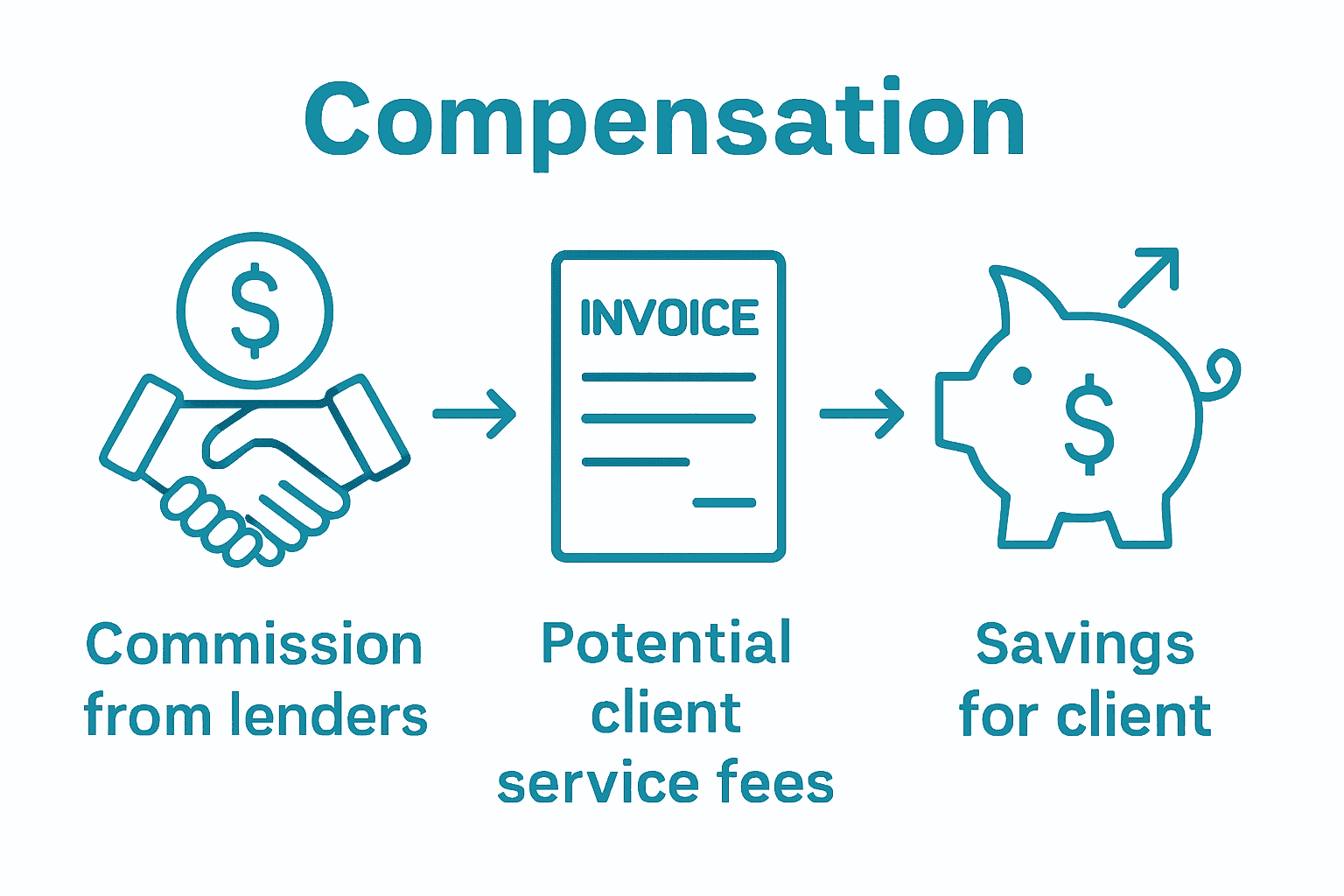
Understanding the financial mechanics of mortgage broker compensation provides critical transparency for potential clients. According to Financial Services Regulatory Authority of Ontario (FSRAO), mortgage brokers in Ontario are typically compensated through multiple channels, with most of their income derived from commissions paid by lenders rather than direct client fees.
The compensation structure for mortgage brokers is primarily commission-based, with rates that can vary depending on the complexity of the mortgage and the specific lender. Bank of Canada publications indicate that brokers typically receive commissions ranging from 50 to 120 basis points of the total loan amount. This means for a $300,000 mortgage, a broker might earn between $1,500 and $3,600 as a one-time commission, strategically aligned to incentivize securing optimal mortgage solutions for clients.
While lender commissions represent the primary income source, some mortgage brokers may charge additional client service fees for specialized or complex mortgage applications. These fees, when applicable, must be transparently disclosed upfront and can vary based on the scope of services provided. Potential clients should always discuss fee structures during initial consultations, ensuring they understand the full financial arrangement before proceeding. Factors that might influence additional fees include credit complexity, self-employment status, investment property financing, or requirements for extensive financial documentation and advisory services.
The compensation model creates an interesting dynamic where broker interests are fundamentally aligned with client outcomes. Since brokers are motivated to secure approved mortgages with competitive terms, they are incentivized to find the most suitable financial products. This approach benefits clients by providing access to a broader range of mortgage options than traditional single-lender approaches, potentially saving significant money through more favourable interest rates and terms.
Choosing Between Mortgage Brokers and Banks
The decision between mortgage brokers and traditional banks represents a critical choice for potential homebuyers seeking optimal financing solutions. According to Financial Services Regulatory Authority of Ontario (FSRAO), consumers should carefully evaluate the distinct advantages each option provides, recognising that brokers offer access to multiple lenders and a variety of mortgage products, potentially securing more competitive rates and terms compared to single-source bank offerings.
Product diversity emerges as a significant differentiator between mortgage brokers and banks. While bank representatives are limited to their institution’s specific mortgage products, brokers can access an extensive network of lenders, including major banks, credit unions, and alternative lending sources. For those navigating complex mortgage scenarios, such as self-employed professionals, our guide offers comprehensive insights into specialised mortgage strategies. This flexibility allows brokers to craft more personalised solutions that align precisely with a client’s unique financial profile and homeownership objectives.
The compensation and cost structures also distinguish these two mortgage acquisition channels. Bank mortgage specialists are typically salaried employees incentivised to sell their institution’s products, whereas mortgage brokers operate on a commission model that fundamentally aligns their interests with finding the most suitable client solution. This means brokers are motivated to secure the most competitive rates and terms across multiple lenders, potentially saving clients significant money over the mortgage’s lifetime.
Ultimately, the choice between a mortgage broker and a bank depends on individual financial circumstances, complexity of mortgage requirements, and personal preference. Clients with straightforward financial profiles and existing strong bank relationships might find direct bank applications convenient. However, those with complex income structures, challenging credit histories, or seeking the most competitive rates will likely benefit substantially from a mortgage broker’s comprehensive, multi-lender approach to finding the ideal financing solution.
Unlock the Full Potential of Mortgage Brokerage in Newmarket
Navigating the complex mortgage landscape in Newmarket can be overwhelming, especially when facing challenges like low credit scores, self-employment income verification, or seeking refinancing options. The article highlights how mortgage brokers offer personalised, multi-lender solutions and expert guidance to turn your homeownership goals into reality. If you need strategic advice on concepts like mortgage renewal Ontario or debt consolidation mortgage, it is critical to work with a trusted professional who understands Ontario’s legal and financial standards.
At Miracle Financial, our Vaughan mortgage broker team specialises in delivering tailored mortgage solutions that address your unique financial circumstances. From obtaining approval as a self-employed mortgage broker to securing private mortgage lenders Ontario offers, we combine industry knowledge with technology to ensure you experience fast approvals and clear communication every step of the way.

Take control of your mortgage journey today with the best mortgage broker GTA clients trust. Explore strategies for refinance mortgage Ontario or investment property financing with experts dedicated to transparent service and your financial success. Visit Miracle Financial now and start your path toward smarter mortgage planning.
Learn more about how we support complex cases by reading our guide on self-employed mortgage steps or discover flexible options through private mortgage lending Ontario.
Frequently Asked Questions
What is the role of a mortgage broker?
Mortgage brokers act as intermediaries between potential homebuyers and lenders, helping clients find suitable mortgage options tailored to their financial needs.
How do mortgage brokers help secure mortgage approvals?
Mortgage brokers gather financial information, assess creditworthiness, and strategically submit applications to lenders most likely to approve the client’s mortgage request, significantly improving the chances of approval.
What types of mortgage services do brokers provide?
Mortgage brokers offer various services, including residential mortgages, refinancing options, commercial mortgages, and specialized solutions for clients with unique financial situations.
How are mortgage brokers compensated?
Mortgage brokers are typically compensated through commissions paid by lenders based on the total loan amount, with additional client service fees possibly applied for complex applications.