
Blog
Mortgage Insurance in Ontario – What First-Time Buyers Need


Most Canadian lenders require mortgage insurance when your down payment is less than 20 percent on a new home in Vaughan. For first-time homebuyers, this protection opens doors to homeownership that might otherwise feel out of reach. By learning how mortgage insurance works and what costs to expect, you can make smarter financial decisions and avoid surprises while taking the next step toward owning your home.
Table of Contents
- Mortgage Insurance Defined For Ontario Homebuyers
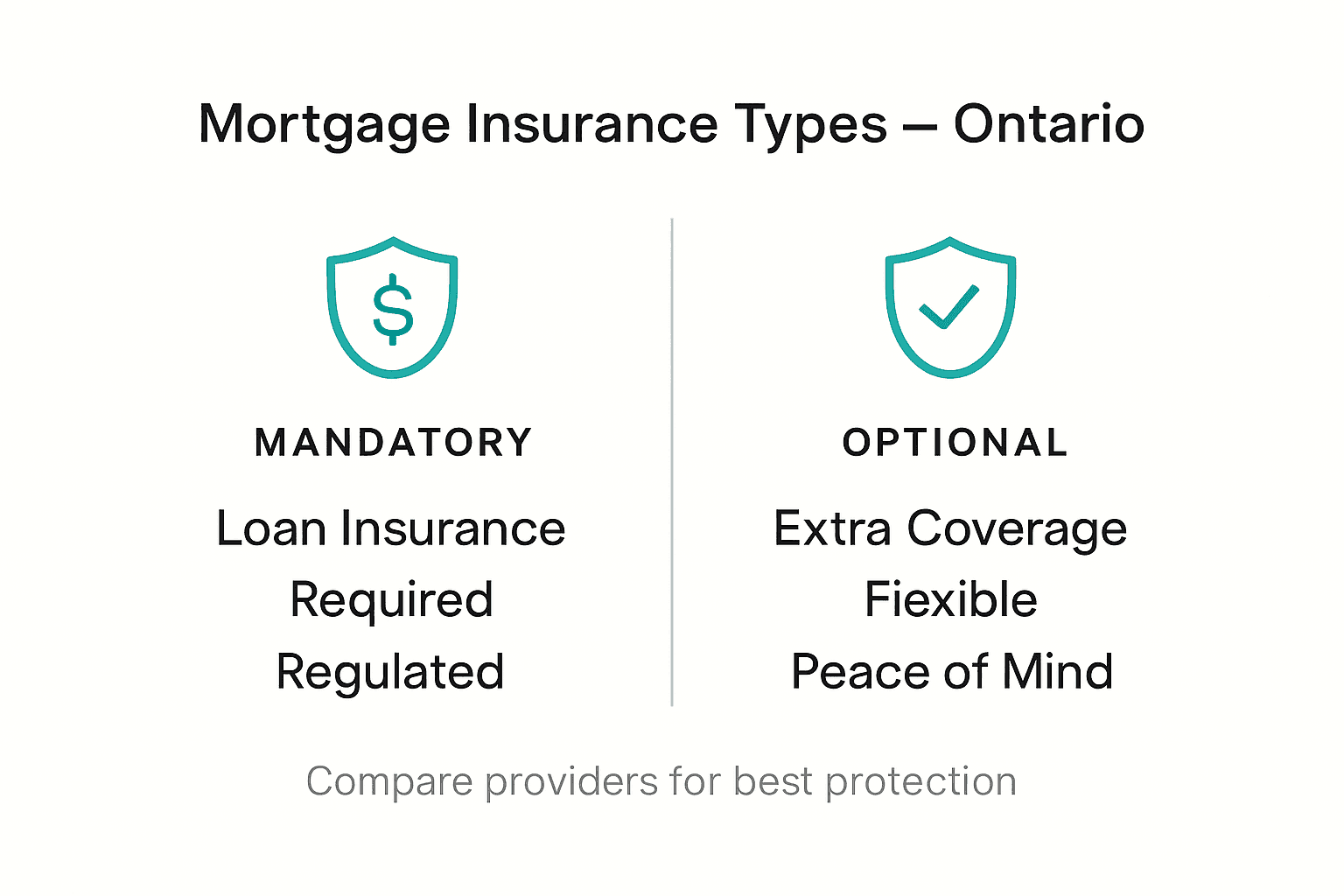
- Mandatory Versus Optional Mortgage Insurance Types
- How Mortgage Insurance Works In Practice
- Eligibility Rules And Legal Requirements In Ontario
- Premium Costs, Payment Methods, And Financial Impacts
- Alternatives, Common Pitfalls, And Expert Tips
Key Takeaways
| Point | Details |
|---|---|
| Understanding Mortgage Insurance | Mortgage insurance in Ontario helps first-time homebuyers with down payments under 20% secure financing by mitigating lender risk. |
| Mandatory vs. Optional Insurance | Mandatory mortgage loan insurance is required for high-ratio mortgages, while optional insurance provides benefits directly to homeowners. |
| Premium Costs and Payment Methods | Premiums are based on down payment size, with larger down payments resulting in lower costs, and can be rolled into monthly payments or paid upfront. |
| Alternative Financing Strategies | Consider saving for a larger down payment or exploring government programs to avoid mortgage insurance costs and improve eligibility. |
Mortgage Insurance Defined for Ontario Homebuyers
Mortgage insurance in Ontario represents a critical financial protection mechanism designed to help first-time homebuyers secure financing when traditional lending requirements seem challenging. At its core, mortgage loan insurance provides a safety net that enables buyers with smaller down payments to enter the housing market by reducing lender risk. The Canada Mortgage and Housing Corporation (CMHC) explains that this insurance helps first-time homebuyers obtain high-ratio loans when their down payment is less than 20% of the home’s purchase price.
Typically, mortgage insurance in Ontario comes in two primary forms: mandatory mortgage loan insurance and optional mortgage protection insurance. Mandatory mortgage loan insurance is required by Canadian lenders when homebuyers provide a down payment below 20% of the property’s value. This insurance protects the lender in case the borrower defaults on their mortgage payments. Optional mortgage insurance, conversely, includes products like mortgage life insurance, which can provide financial protection for your family by paying off the mortgage balance in the event of death or critical illness.
Understanding the nuances of mortgage insurance is crucial for Ontario homebuyers. Mortgage loan insurance facilitates homeownership by allowing buyers to qualify for loans they might not otherwise obtain, particularly those with smaller down payments. The insurance premium is typically added to your mortgage amount and can be paid monthly along with your regular mortgage payments. For first-time homebuyers in Ontario, this insurance represents an important pathway to homeownership, enabling more Canadians to enter the real estate market with reduced financial risk.
Pro tip: Before selecting mortgage insurance, compare multiple providers and carefully review the specific terms, coverage limits, and exclusions to ensure you choose a policy that best matches your individual financial circumstances and protection needs.
Mandatory Versus Optional Mortgage Insurance Types
In the complex landscape of Canadian mortgage financing, understanding the distinction between mandatory and optional mortgage insurance is crucial for Ontario homebuyers. The Canadian government clearly distinguishes between these two critical insurance categories, each serving different financial protection purposes for homeowners and lenders.
Mandatory mortgage loan insurance is a non-negotiable requirement for homebuyers who provide a down payment less than 20% of the property’s value. This insurance protects the lender by mitigating their financial risk in case of borrower default. Typically, the premium for this insurance is added to the mortgage amount and can be paid through monthly mortgage payments. Key characteristics of mandatory mortgage loan insurance include:
- Automatically required for high-ratio mortgages
- Protects the lender, not the homeowner
- Premium varies based on down payment percentage
- Enables borrowers with smaller down payments to secure financing
Optional mortgage insurance, in contrast, is a voluntary financial protection product that homeowners can choose to purchase. These insurance types provide direct benefits to the borrower or their family. Common optional mortgage insurance products include:
- Mortgage life insurance
- Disability insurance
- Critical illness insurance
- Job loss protection
These optional policies offer financial security by potentially covering mortgage payments or paying off the entire mortgage balance in specific circumstances like death, serious illness, or unexpected job loss.
Pro tip: Always compare multiple insurance providers and carefully review policy details, coverage limits, and exclusions to ensure you select the most appropriate mortgage insurance strategy for your individual financial situation.
Here is a summary comparing key aspects of mandatory versus optional mortgage insurance for Ontario homebuyers:
| Feature | Mandatory Mortgage Loan Insurance | Optional Mortgage Insurance |
|---|---|---|
| Requirement | Required if down payment is under 20% | Voluntary, chosen by homeowner |
| Beneficiary | Protects the mortgage lender | Supports homeowner or family |
| Product Types | Only one, usually CMHC-backed | Life, disability, critical illness |
| Impact on Approval | Enables homeownership with small down payment | Provides extra financial security |
| Premium Payment | Added to mortgage or paid upfront | Separate premium payments |
How Mortgage Insurance Works in Practice
Mortgage insurance represents a complex financial mechanism that bridges the gap between lenders’ risk management and homebuyers’ financing opportunities. Mortgage insurance companies calculate premiums based on specific risk factors that directly impact the borrower’s financing strategy, creating a nuanced protection framework for both financial institutions and homeowners.
The practical implementation of mortgage insurance involves a multi-step process that begins with assessing the borrower’s down payment and overall financial profile. When a homebuyer provides a down payment less than 20% of the property’s value, mortgage insurers evaluate multiple risk parameters to determine the insurance premium. These parameters typically include:
- Total mortgage amount
- Down payment percentage
- Borrower’s credit history
- Employment stability
- Debt-to-income ratio
- Property type and location
The insurance premium is then calculated as a percentage of the total mortgage amount and can be paid in two primary methods: either rolled into the monthly mortgage payment or paid upfront as a lump sum. This premium protects the lender by guaranteeing compensation if the borrower defaults, which enables financial institutions to offer mortgages to buyers who might otherwise be considered higher-risk.
For Ontario homebuyers, understanding this process means recognizing that mortgage insurance is not just a bureaucratic requirement, but a strategic financial tool. The insurance allows individuals with smaller down payments to enter the housing market, providing opportunities that would be unavailable without this risk mitigation mechanism. The premiums, while an additional cost, ultimately enable more Canadians to achieve homeownership by reducing lender risk and expanding access to mortgage financing.

Pro tip: Calculate your potential mortgage insurance premium before finalizing your home purchase, and consider strategies to increase your down payment to potentially reduce or eliminate insurance costs.
Eligibility Rules and Legal Requirements in Ontario
Mortgage insurance eligibility in Ontario involves a complex set of legal and regulatory requirements designed to protect both lenders and homebuyers. The Canada Mortgage and Housing Corporation (CMHC) establishes specific criteria for mortgage loan insurance that first-time homebuyers must carefully navigate, ensuring responsible lending practices and sustainable homeownership.
Key eligibility requirements for mortgage insurance in Ontario typically encompass several critical dimensions:
- Canadian citizenship or permanent resident status
- Minimum credit score requirements
- Proof of stable employment and income
- Maximum mortgage amount limits
- Property intended as primary residence
- Down payment between 5% and 20% of property value
- Maximum amortization period of 25 years
- Property must be located in Canada
- No outstanding consumer proposals or bankruptcies
The legal framework surrounding mortgage insurance is dynamic, with recent Ontario government initiatives aimed at supporting housing accessibility and protecting homebuyers’ interests. These regulations ensure that mortgage insurance remains a balanced mechanism for risk management, balancing the needs of financial institutions with the aspirations of first-time homebuyers.
Beyond standard eligibility, insurers conduct thorough assessments of an applicant’s financial health. This involves evaluating debt service ratios, credit history, and overall financial stability. Lenders use these comprehensive evaluations to determine not just insurance eligibility, but also the specific terms and potential premium rates that will apply to the mortgage.
Pro tip: Obtain a copy of your credit report and address any potential issues before applying for mortgage insurance to improve your chances of approval and secure more favourable terms.
Premium Costs, Payment Methods, and Financial Impacts
Mortgage insurance premiums represent a significant financial consideration for Ontario homebuyers, with costs calculated as a percentage of the total mortgage amount based on specific risk parameters. The premium structure directly correlates with the size of the down payment, creating a nuanced pricing model that rewards larger initial investments.
Premium costs typically range across different down payment scenarios:
- 5% down payment: Highest premium rate (approximately 4% of mortgage amount)
- 10% down payment: Moderate premium rate (approximately 3.1% of mortgage amount)
- 15% down payment: Reduced premium rate (approximately 2.8% of mortgage amount)
- 20% down payment: Lowest premium rate or potential elimination of insurance requirement
Homebuyers have two primary payment methods for mortgage insurance premiums. They can choose to:
- Roll the premium into monthly mortgage payments
- Pay the entire premium upfront at mortgage origination
The financial impacts extend beyond the immediate premium cost. Adding the insurance premium to the mortgage increases the total borrowed amount, which means higher monthly payments and more interest paid over the mortgage’s lifetime. For instance, a $300,000 mortgage with a 5% down payment might incur an additional $12,000 in insurance premiums, effectively increasing the total borrowed amount.
Understanding these financial dynamics helps Ontario homebuyers make informed decisions about their mortgage strategy. While mortgage insurance enables access to homeownership with smaller down payments, it comes with incremental costs that should be carefully evaluated against long-term financial goals.
Pro tip: Calculate the total long-term cost of mortgage insurance by comparing different down payment scenarios and considering how premium amounts affect your overall mortgage affordability.
The following table outlines how down payment size affects typical mortgage insurance premiums and long-term costs in Ontario:
| Down Payment Percentage | Estimated Premium Rate | Impact on Monthly Payments |
|---|---|---|
| 5% | Around 4.0% | Highest cost and interest |
| 10% | Around 3.1% | Moderate added expense |
| 15% | Around 2.8% | Reduced premium and impact |
| 20% or more | 0% (none required) | No insurance cost |
Alternatives, Common Pitfalls, and Expert Tips
Mortgage insurance alternatives require careful strategic consideration for Ontario homebuyers. The Canada Mortgage and Housing Corporation offers comprehensive guidance for first-time buyers exploring different financing pathways, emphasizing the importance of understanding multiple financial options beyond traditional mortgage insurance.
Alternative strategies for managing mortgage financing risks include:
- Saving for a larger down payment (20% or more)
- Exploring government first-time homebuyer programs
- Considering shared equity mortgage options
- Investigating private mortgage insurance providers
- Partnering with a co-signor to improve loan eligibility
Common pitfalls that first-time homebuyers must carefully navigate include:
- Underestimating total mortgage-related costs
- Failing to budget for insurance premiums
- Overlooking credit score impacts
- Neglecting to compare multiple insurance providers
- Making assumptions about automatic insurance approval
Expert strategies for mitigating mortgage insurance challenges involve proactive financial planning. Potential homebuyers should focus on improving credit scores, building robust savings, and maintaining stable employment. Understanding the nuanced relationship between down payment size, insurance premiums, and long-term financial implications can significantly enhance mortgage approval chances and reduce overall borrowing costs.
Pro tip: Develop a comprehensive financial profile at least six months before applying for mortgage insurance, focusing on improving credit history, reducing existing debt, and demonstrating consistent income stability.
Secure Your Path to Homeownership with Expert Mortgage Insurance Guidance
Navigating mortgage insurance in Ontario can feel overwhelming for first-time homebuyers facing challenges like managing down payment requirements and understanding mandatory versus optional coverage options. At Miracle Financial, our team of seasoned professionals based in Vaughan understands these pain points and is dedicated to helping you overcome barriers such as credit history concerns or complex premium calculations. We tailor solutions that align with your unique financial circumstances, including access to private mortgage lenders Ontario and strategies for debt consolidation mortgage to improve affordability.

Take the stress out of mortgage financing by partnering with a trusted Ontario mortgage broker who puts your homeownership goals first. Explore how our expertise in first-time homebuyer mortgage options can reduce the costs and confusion associated with mortgage insurance. Act now to secure personalized advice that maximizes your financing opportunities and positions you for long-term success. Visit Miracle Financial today to start your journey towards a confident and informed home purchase.
Frequently Asked Questions
What is mortgage insurance and why do first-time buyers need it?
Mortgage insurance is a financial protection mechanism that allows first-time buyers with smaller down payments to secure a mortgage. It reduces lender risk, particularly for mortgages where the down payment is less than 20% of the property’s value.
What are the types of mortgage insurance available for home buyers?
There are two main types of mortgage insurance: mandatory mortgage loan insurance, which is required for down payments below 20%, and optional mortgage protection insurance, which includes products like mortgage life, disability, and critical illness insurance that protect homeowners and their families.
How is the premium for mortgage insurance calculated?
The premium for mortgage insurance is calculated as a percentage of the total mortgage amount and varies based on the down payment percentage. Typically, a down payment of 5% incurs the highest premium, while a 20% down payment may eliminate the insurance requirement altogether.
What eligibility requirements must first-time buyers meet for mortgage insurance?
First-time buyers typically need to meet several eligibility criteria, including being a Canadian citizen or permanent resident, maintaining a minimum credit score, providing proof of stable income, and ensuring the property will be their primary residence with a down payment between 5% and 20% of the property value.