
Blog
Mortgage Process Steps Ontario – From Pre-Approval to Funding


Securing a mortgage as a Canadian homebuyer can feel overwhelming, especially when more than 60 percent of first-time buyers report confusion about the process in Ontario. Each step, from gathering critical documents to choosing between fixed or variable rates, can influence your financial future for years to come. This guide unpacks the essentials of the mortgage process in Ontario so you can approach your next move with confidence and clarity.
Table of Contents
- Mortgage Process In Ontario Explained
- Mortgage Types And Financing Options In Ontario
- Key Steps From Pre-Approval To Completion
- Legal Requirements And Documentation Needed
- Costs, Fees, And Common Pitfalls
Key Takeaways
| Point | Details |
|---|---|
| Mortgage Pre-Approval is Essential | Securing mortgage pre-approval provides a clear understanding of borrowing capacity and signals to sellers you are a serious buyer. |
| Comprehensive Documentation is Crucial | Collecting complete financial records, including pay stubs and tax returns, is vital to demonstrate creditworthiness to lenders. |
| Understand Your Mortgage Options | Evaluate different mortgage types, such as fixed-rate and variable-rate options, to choose the best fit for your financial situation. |
| Anticipate All Costs | Be aware of upfront and ongoing expenses beyond the mortgage principal to ensure you are financially prepared for homeownership. |
Mortgage Process in Ontario Explained
Navigating the mortgage process in Ontario requires understanding a comprehensive series of strategic steps designed to help homebuyers secure financing effectively. The Financial Services Regulatory Authority of Ontario outlines a detailed nine-step mortgage application process that provides crucial guidance for prospective homeowners across the province.
The mortgage journey begins with selecting a qualified mortgage professional who can help you navigate the complex landscape of financing options. During this initial stage, you’ll want to review your financial criteria, assess your borrowing capacity, and explore various lending solutions tailored to your specific needs. Mortgage pre-approval represents a critical milestone, enabling you to understand exactly how much you can borrow and demonstrating to sellers that you are a serious, qualified buyer.
Documentation plays a pivotal role in the mortgage application process. Lenders will require comprehensive financial records to assess your creditworthiness, including:
- Recent pay stubs
- Tax returns from the past two years
- Bank statements
- Proof of employment
- Credit history reports
- Information about existing debts and financial obligations
Once you’ve assembled these documents, mortgage professionals will conduct thorough qualification calculations, analyzing your income, debt ratios, and credit profile to determine your lending eligibility. The Financial Consumer Agency of Canada emphasizes the importance of understanding all terms and conditions before signing any mortgage agreement, ensuring transparency and protecting your financial interests throughout the process.
The final stages involve property assessment, application completion, and ultimately, securing your mortgage commitment. This intricate process requires patience, meticulous documentation, and strategic financial planning to successfully transition from initial application to mortgage funding.
Mortgage Types and Financing Options in Ontario
Ontario offers a diverse landscape of mortgage options designed to accommodate various financial situations and homebuyer needs. Different mortgage types provide unique advantages and considerations for borrowers seeking to finance their home purchases or refinance existing properties.
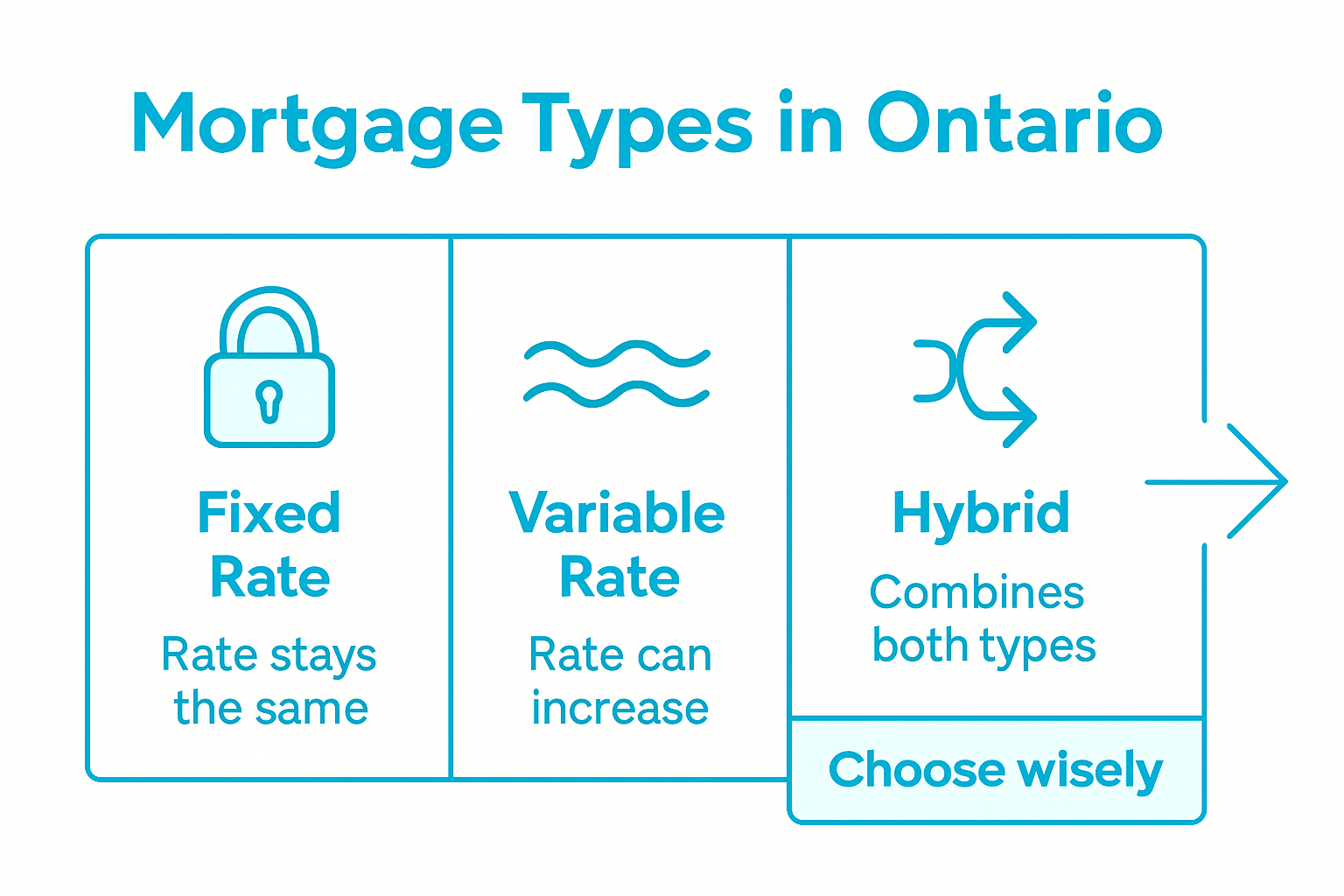
The primary mortgage categories in Ontario include fixed-rate mortgages, variable-rate mortgages, and hybrid mortgage solutions. Fixed-rate mortgages provide stability with consistent interest rates throughout the loan term, allowing borrowers to plan their financial commitments with predictable monthly payments. Variable-rate mortgages, conversely, offer potential cost savings when market interest rates decline but introduce an element of financial uncertainty as rates can fluctuate.
For Ontario residents exploring alternative financing strategies, several specialized mortgage options exist:
- Conventional mortgages requiring 20% or more down payment
- High-ratio mortgages for buyers with smaller down payments
- Adjustable-rate mortgages with interest rates that periodically adjust
- Alternative mortgage solutions for self-employed or non-traditional income earners
Borrowers should carefully evaluate their financial circumstances, long-term goals, and risk tolerance when selecting a mortgage product. Private mortgage lenders can provide additional flexibility for individuals who might not qualify through traditional banking channels, offering customized financing solutions that address unique financial situations in the Ontario housing market.
Key Steps from Pre-Approval to Completion
The mortgage journey from pre-approval to final funding involves a carefully orchestrated series of strategic steps that require meticulous attention and comprehensive financial documentation. The mortgage application process demands precise execution to ensure successful home financing in Ontario.

Initially, borrowers must obtain mortgage pre-approval, which involves a preliminary assessment of their financial capacity. During this stage, lenders thoroughly examine credit history, income verification, debt-to-income ratios, and overall financial stability. This critical evaluation provides potential homebuyers with a clear understanding of their borrowing potential and signals to sellers that they are serious, qualified purchasers.
The key steps in completing a mortgage application include:
-
Financial Document Preparation
- Gather recent pay stubs
- Compile tax returns
- Collect bank statements
- Prepare employment verification
- Organize credit reports
-
Lender Assessment
- Credit score evaluation
- Income verification
- Debt service ratio calculations
- Property appraisal
Improving mortgage approval chances requires strategic financial planning and a comprehensive understanding of lender requirements. Borrowers should maintain stable employment, minimize outstanding debts, and ensure accurate documentation throughout the application process.
The final stages involve property assessment, mortgage commitment, and ultimately, funding. Successful navigation of these steps demands patience, financial discipline, and proactive communication with mortgage professionals who can guide you through the intricate process of securing home financing in Ontario.
Legal Requirements and Documentation Needed
Navigating the legal landscape of mortgage financing in Ontario requires a comprehensive understanding of documentation requirements and contractual obligations. Mortgage contract signing involves complex legal considerations that demand careful attention and thorough comprehension from potential borrowers.
The essential documentation for a mortgage application typically encompasses a wide range of personal and financial records. Borrowers must be prepared to provide comprehensive evidence of their financial stability, including:
-
Identification Documents
- Government-issued photo identification
- Social insurance number
- Proof of Canadian citizenship or permanent residency
-
Financial Documentation
- Two years of tax returns
- Recent pay stubs
- Notice of assessment from Canada Revenue Agency
- Bank statements
- Investment account statements
- Detailed income verification
-
Property-Related Documents
- Purchase agreement
- Property appraisal
- Home inspection report
- Property tax assessments
Consumer rights during mortgage applications are critically important, ensuring transparency and protection for borrowers throughout the financing process. Lenders are legally obligated to provide clear, simple disclosure of all mortgage terms, enabling borrowers to make informed financial decisions.
Understanding the legal nuances of mortgage contracts requires careful review and potentially seeking professional legal advice. Borrowers should pay particular attention to interest rates, payment schedules, prepayment conditions, and potential penalties to ensure they fully comprehend their financial commitments and long-term obligations.
Costs, Fees, and Common Pitfalls
Mortgage financing in Canada involves a complex array of expenses that can significantly impact your overall home purchasing strategy. Prospective homebuyers must carefully anticipate and budget for various costs beyond the basic mortgage principal to ensure financial preparedness.
The primary mortgage-related expenses typically include:
-
Upfront Costs
- Down payment (minimum 5-20% of home value)
- Legal fees ($1,000-$2,500)
- Home inspection ($300-$500)
- Land transfer tax
- Property appraisal fees ($300-$600)
-
Ongoing Expenses
- Mortgage insurance (if down payment is less than 20%)
- Property taxes
- Home insurance
- Potential mortgage default insurance
-
Hidden Potential Costs
- Mortgage penalties for early termination
- Interest rate fluctuation expenses
- Potential refinancing charges
- Administrative processing fees
Many borrowers overlook critical financial considerations that can derail their mortgage journey. The mortgage application process demands meticulous financial planning to avoid common pitfalls such as overextending personal finances, failing to account for additional housing expenses, or neglecting credit score maintenance.
Navigating mortgage costs requires strategic financial management. Borrowers should maintain a comprehensive emergency fund, carefully review all potential fees, and consider consulting financial professionals who can provide nuanced guidance tailored to their specific financial circumstances and long-term homeownership goals.
Take Control of Your Ontario Mortgage Journey with Expert Guidance
Understanding the detailed mortgage process steps in Ontario can feel overwhelming. From pre-approval to funding, managing documentation, legal requirements, and choosing the right mortgage type requires expert knowledge and personalised support. If you are navigating challenges like assembling financial documents, securing approval with a low credit score, or exploring alternative mortgage options as a self-employed homebuyer, you are not alone. These key steps demand careful planning and trusted advice to make informed decisions and avoid costly pitfalls.
Miracle Financial, a leading Ontario mortgage broker, specialises in turning these complexities into clear, manageable solutions. Our Vaughan-based team offers tailored mortgage strategies including refinancing options, debt consolidation mortgages, private mortgage lending, and assistance for investment property financing. We combine modern technology with years of experience to deliver fast approvals and transparent communication every step of the way.

Ready to take the next step towards mortgage success? Visit Miracle Financial to connect with experts who understand your unique situation. Discover how our self-employed mortgage broker and private mortgage lenders Ontario services can provide the personalized assistance you need today. Don’t wait to secure your financial future—get started now.
Frequently Asked Questions
What is the mortgage pre-approval process in Ontario?
The mortgage pre-approval process involves submitting your financial information to a lender for an initial assessment. This helps you understand your borrowing capacity and shows sellers that you are a serious buyer.
What documents are required for a mortgage application?
Key documents for a mortgage application typically include identification, recent pay stubs, tax returns from the past two years, bank statements, proof of employment, and a credit history report.
How does the mortgage application process work after pre-approval?
After pre-approval, you’ll need to prepare detailed financial documentation, undergo lender assessment, and complete property appraisals before securing a mortgage commitment and funding.
What types of mortgages are available in Ontario?
Available mortgage types in Ontario include fixed-rate mortgages, variable-rate mortgages, hybrid mortgages, conventional mortgages, and high-ratio mortgages, each offering different terms and conditions to suit various financial situations.
Recommended
- Mortgage approval workflow in Markham
- Technology in the Ontario mortgage process
- Mortgage frequently asked questions
- Mortgage calculator
- What Is Mortgage Pre-Approval? Complete Canadian Guide – Miracle Financial
- 7 Ways to Improve Mortgage Approval in Ontario
- Mortgage Terminology Explained: Complete Ontario Guide – Miracle Financial
- First Mortgage Ontario – Miracle Financial