
Blog
Ontario Mortgage Broker Role: Complete Guide for 2025


Over 60 percent of Ontario homebuyers now rely on mortgage brokers when securing a loan. This growing trend reflects how vital these professionals have become for those tackling the complicated housing market. The right mortgage broker does much more than just compare rates. They open access to a wide range of options and guide clients through strict regulations and hidden pitfalls. Understanding their role can make all the difference in finding the best mortgage for your needs.
Table of Contents
- Role of Mortgage Brokers in Ontario
- Types of Mortgages Brokers Help Secure
- Ontario’s Mortgage Broker Legal Regulations
- Key Steps in the Mortgage Broker Process
- Costs, Fees, and Common Pitfalls
Key Takeaways
| Point | Details |
|---|---|
| Role of Mortgage Brokers | Mortgage brokers in Ontario connect homebuyers to suitable mortgage solutions, leveraging their expertise to navigate the complex market more effectively than traditional bank representatives. |
| Diverse Mortgage Options | Brokers assist in securing various mortgage types, including residential, commercial, and specialized financing, tailored to individual financial needs. |
| Regulatory Framework | Licensed mortgage brokers must adhere to strict regulations set by the FSRA to ensure consumer protection and maintain high professional standards. |
| Understanding Costs | Clients should be aware of potential fees incurred from broker services, including lender commissions and administrative costs, to avoid unexpected financial burdens. |
Role of Mortgage Brokers in Ontario
Mortgage brokers are licensed financial professionals who play a critical role in connecting Ontario homebuyers with suitable mortgage solutions. According to Financial Services Regulatory Authority, these professionals are regulated to ensure compliance with the Mortgage Brokerages, Lenders and Administrators Act, providing consumers with expert guidance through the complex mortgage landscape.
The primary function of mortgage brokers in Ontario is to act as intermediaries between potential borrowers and multiple lending institutions. They bring specialized expertise in navigating the mortgage market, offering clients access to a wider range of mortgage products than traditional bank representatives. By analyzing a client’s financial profile, credit history, and specific needs, brokers can recommend personalized mortgage options that might otherwise remain undiscovered.
A significant advantage of working with mortgage brokers is their ability to secure more competitive financing. Bank of Canada research indicates that these professionals help clients obtain larger loans and achieve higher leverage in the mortgage market. Their comprehensive understanding of lending criteria across various financial institutions enables them to:
- Negotiate more favorable interest rates
- Identify suitable mortgage products for unique financial situations
- Provide strategic advice on mortgage structures
- Simplify the complex application process
- Offer solutions for clients with non-traditional income or credit challenges
For Ontario residents seeking a comprehensive guide to mortgage brokers, understanding the nuanced role of these professionals can significantly impact your home financing journey. Whether you’re a first-time homebuyer or looking to refinance, a mortgage broker can provide invaluable support in achieving your real estate financial goals.
Types of Mortgages Brokers Help Secure
Mortgage brokers in Ontario provide expertise in securing diverse mortgage solutions tailored to individual financial needs. According to Canada.ca, these professionals assist clients in navigating various mortgage types, including open and closed mortgages, fixed and variable rate mortgages, and hybrid mortgages.
The primary mortgage categories brokers help clients secure include residential, commercial, and specialized financing options. Residential mortgages represent the most common type, ranging from first-time homebuyer programs to refinancing solutions for existing homeowners. Get Smarter About Money highlights that brokers play a crucial role in helping clients understand complex mortgage structures, including:
- Fixed-Rate Mortgages: Consistent interest rates providing predictable payments
- Variable-Rate Mortgages: Interest rates that fluctuate with market conditions
- Open Mortgages: Flexible options allowing additional payments without penalties
- Closed Mortgages: Structured with specific payment terms and potential prepayment restrictions
- Hybrid Mortgages: Combining elements of fixed and variable rate structures
For those exploring specialized financing, brokers can also assist with private mortgage options that might not be available through traditional lending channels. These include solutions for self-employed individuals, investors, and clients with unique financial circumstances who require more flexible lending criteria. The broker’s expertise becomes particularly valuable in matching borrowers with mortgage products that align precisely with their financial goals and risk tolerance.
Ontario’s Mortgage Broker Legal Regulations
Mortgage brokers in Ontario operate within a stringent regulatory framework designed to protect consumers and maintain high professional standards. The Financial Services Regulatory Authority of Ontario (FSRA) serves as the primary regulatory body overseeing mortgage brokerage activities, ensuring that professionals adhere to strict licensing, ethical, and operational requirements.
To practice legally in Ontario, mortgage brokers must complete comprehensive requirements that demonstrate their professional competence and reliability. These regulatory obligations include:
- Mandatory licensing through FSRA
- Completing approved educational programs
- Passing professional qualifying examinations
- Maintaining ongoing professional development
- Carrying professional liability insurance
- Submitting to regular compliance and background checks
The legal framework governing mortgage brokers encompasses multiple critical aspects of consumer protection. Brokers are legally required to provide transparent disclosure of all mortgage terms, potential fees, and potential conflicts of interest. This includes detailed documentation explaining mortgage products, interest rates, and potential financial implications. How to Choose a Private Mortgage Lender becomes especially important when understanding these complex regulatory requirements.
Moreover, the regulatory environment mandates strict ethical standards that prevent predatory lending practices. Mortgage brokers must conduct thorough assessments of a client’s financial capacity, recommend products that genuinely suit the client’s needs, and maintain confidentiality of personal financial information. Failure to comply with these regulations can result in significant penalties, including license suspension, financial penalties, and potential legal action, underscoring the critical importance of maintaining professional integrity in Ontario’s mortgage brokerage landscape.
Key Steps in the Mortgage Broker Process
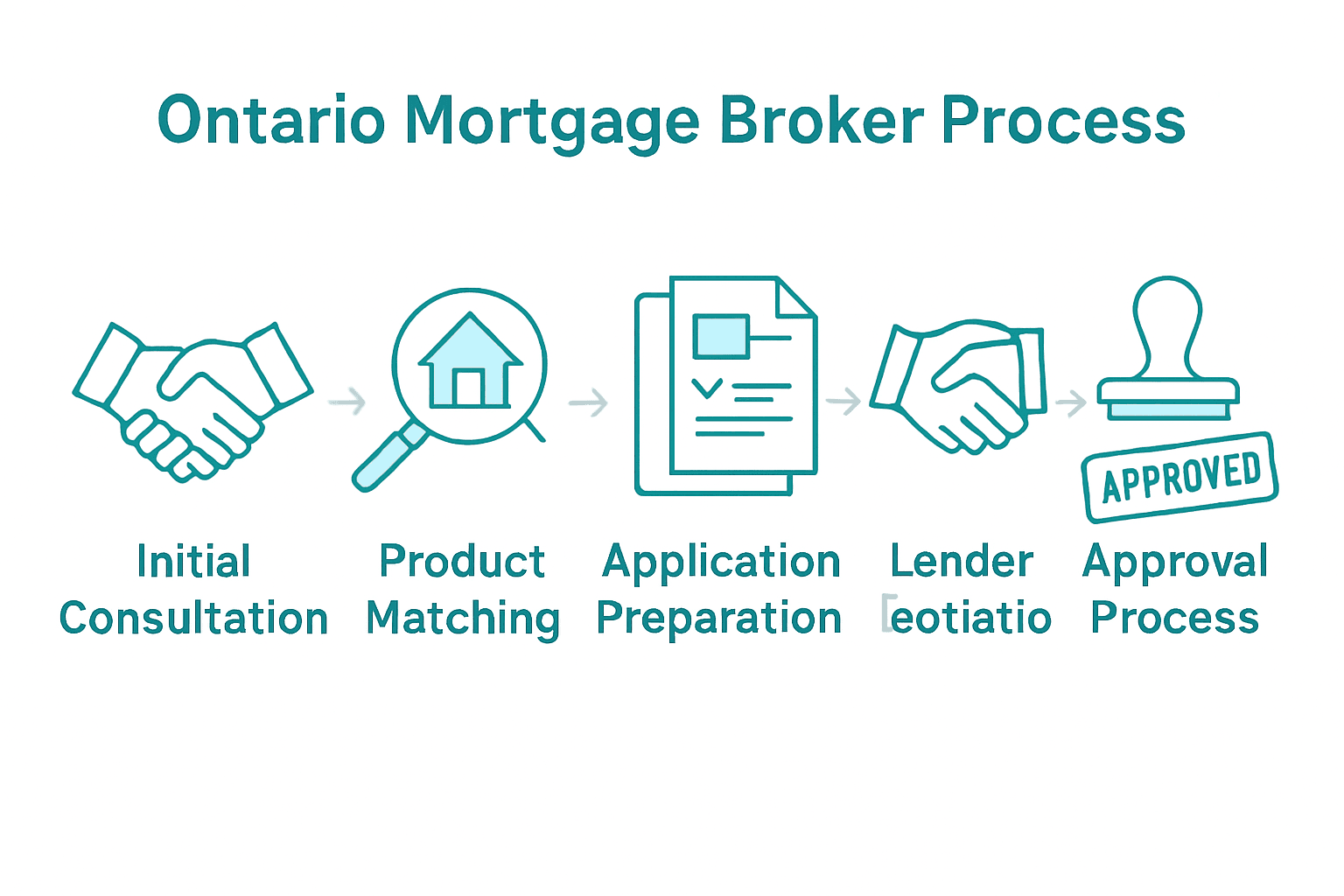
The mortgage broker process is a structured journey designed to match borrowers with optimal financing solutions. According to Financial Services Regulatory Authority, this comprehensive process involves several critical stages that ensure clients receive personalized and appropriate mortgage recommendations.
Bank of Canada research highlights the intricate nature of mortgage selection, which typically involves the following key steps:
- Initial Consultation: Comprehensive financial assessment
- Product Matching: Identifying suitable mortgage options
- Application Preparation: Gathering required documentation
- Lender Negotiation: Securing competitive terms
- Approval Process: Facilitating final mortgage authorization
The detailed process begins with an in-depth financial evaluation where brokers conduct a thorough analysis of the client’s financial health. This includes reviewing credit scores, income stability, existing debt, and long-term financial objectives. Brokers leverage their extensive network of lenders to identify mortgage products that precisely match the client’s unique circumstances.
Documentation and application preparation represent another crucial stage in the mortgage broker process. Clients work closely with their broker to compile necessary paperwork, including income verification, tax returns, employment records, and other financial statements. First Mortgage in Ontario becomes particularly important for first-time homebuyers navigating this complex documentation process. The broker’s expertise ensures that all required documents are accurately prepared, minimizing potential delays or complications in mortgage approval.

Costs, Fees, and Common Pitfalls
Navigating the financial landscape of mortgage brokerage requires a comprehensive understanding of potential costs and hidden challenges. According to Financial Services Regulatory Authority, consumers must be vigilant about understanding the complete financial picture associated with mortgage services and protecting themselves against potential risks.
Mortgage brokers typically charge fees that can vary based on several factors. These compensation structures might include:
- Lender-paid commissions: No direct cost to the borrower
- Borrower-paid fees: Typically ranging from 0.5% to 1.5% of the mortgage amount
- Administrative fees: Covering document processing and application management
- Consultation fees: For comprehensive financial planning services
Canada.ca emphasizes the importance of understanding potential financial pitfalls, which often include unexpected costs like:
- Prepayment penalties
- Administrative processing charges
- Default insurance fees
- Mortgage registration expenses
- Legal documentation costs
To mitigate financial risks, borrowers should conduct thorough due diligence and ask detailed questions about all potential expenses. 7 Key Benefits of Refinancing for Ontario Homeowners can provide additional insights into managing mortgage-related financial strategies. Understanding the complete fee structure upfront helps prevent unexpected financial surprises and ensures a transparent, smooth mortgage acquisition process.
Find the Right Ontario Mortgage Broker to Guide Your Home Financing
Navigating the complexities of mortgage options in Ontario can feel overwhelming. Whether you are a first-time homebuyer or looking to refinance, understanding the different mortgage types, fees, and legal requirements is crucial. You need a partner who listens to your unique financial situation and can recommend tailored solutions that simplify the process and maximize your benefits.
At Miracle Financial, our Vaughan mortgage broker experts are dedicated to helping you overcome obstacles like low credit scores, non-traditional incomes, or debt consolidation needs. We specialize in comprehensive mortgage strategies including refinance mortgage Ontario, private lending, and investment property financing so you have more confidence in your financial decisions.

Take control of your mortgage journey now with a trusted Ontario mortgage broker who cares about your goals. Visit Miracle Financial and discover how our personalized service and expert guidance can unlock your best mortgage options today. Start your path to better financial outcomes by contacting a Vaughan mortgage broker who understands the local market and legal landscape. Don’t wait – explore smart mortgage planning tailored just for you.
Frequently Asked Questions
What is the role of a mortgage broker in Ontario?
Mortgage brokers in Ontario act as intermediaries between homebuyers and lenders, helping clients navigate the mortgage market to find suitable financing solutions tailored to their financial needs.
How do mortgage brokers help secure better mortgage terms?
Mortgage brokers have extensive knowledge of various lenders’ criteria, which allows them to negotiate competitive interest rates and identify mortgage products that best fit individual financial situations.
What types of mortgages can brokers help me secure?
Brokers assist clients in securing different types of mortgages, including fixed-rate, variable-rate, open, closed, and hybrid mortgages, tailored to residential, commercial, and specialized financing needs.
What are the costs associated with hiring a mortgage broker?
Costs can vary; brokers may charge lender-paid commissions with no direct cost to borrowers, borrower-paid fees typically ranging from 0.5% to 1.5% of the mortgage amount, and additional administrative or consultation fees depending on the services provided.