
Blog
Ontario Mortgage Regulations: Protecting Your Home Equity


Facing tight budgets or juggling multiple debts can make mortgage decisions in Vaughan feel overwhelming, especially when credit scores are less than perfect or income comes from alternative sources. Ontario’s mortgage regulations exist to protect you, defining clear homeowner rights and lender obligations through the Mortgages Act. Understanding these key concepts empowers you to choose refinancing or debt consolidation options confidently, knowing the rules that shape your financial outcomes.
Table of Contents
- Ontario Mortgage Regulations And Key Concepts
- Types Of Mortgages And Lending Sources
- Legal Requirements For Mortgage Brokers In Ontario
- Homeowner Rights, Lender Obligations, And Disclosure Standards
- Risks, Penalties, And Mistakes To Avoid
Key Takeaways
| Point | Details |
|---|---|
| Understand Mortgage Regulations | Familiarize yourself with Ontario’s mortgage rules, as they define borrowers’ rights, obligations, and protections during the mortgage process. |
| Choose the Right Mortgage Type | Select between fixed-rate, variable-rate, open, and closed mortgages based on your financial stability and plans for homeownership. |
| Utilize Equity Position | Be aware of your home equity, which can be leveraged for debt consolidation or refinancing options. |
| Recognize Your Rights | Exercise your redemption rights to pay off the mortgage early without penalties, and ensure clear disclosures from lenders and brokers. |
Ontario mortgage regulations and key concepts
Ontario’s mortgage rules exist to protect you as a homeowner and create fairness in lending. Whether you’re refinancing to consolidate debt or buying your first home in Vaughan, understanding these regulations matters.
The Mortgages Act forms the legal backbone of all mortgage transactions in Ontario. This foundational legislation defines the relationship between borrowers and lenders, outlining your rights and obligations throughout the mortgage lifecycle.
Key regulatory concepts you’ll encounter:
- Mortgagor: You, the homeowner who borrows money and puts up your property as security
- Mortgagee: The lender who holds the legal claim to your home until the debt is repaid
- Redemption rights: Your right to pay off the mortgage at any time, even before maturity
- Assignment: The lender’s ability to sell your mortgage to another financial institution
Recent changes have made homeownership more accessible. New mortgage rules effective December 2024 expanded eligibility for mortgage insurance on homes valued up to $1.5 million and allow longer amortizations for certain buyers. These changes specifically benefit Vaughan homeowners in higher-cost markets.
Understanding mortgage amortization is crucial for your financial planning. This is the time frame you have to repay the entire loan amount, typically ranging from 15 to 30 years. Longer amortizations mean lower monthly payments but more interest paid overall.
The mortgage term differs from amortization. Your term is how long your current interest rate and conditions are locked in—usually between six months and five years. When your term ends, you either renew with the same lender or refinance with a different one.
Homeowners with non-traditional income (self-employed, freelancers, contract workers) have additional options under Ontario regulations. Alternative lenders and private mortgage services recognize income through tax returns, business financials, and bank statements.
Ontario regulations require lenders to act in good faith and provide clear disclosure of all terms before you sign. Never agree to conditions you don’t fully understand.
Your equity position is a central concept in Ontario mortgage law. Home equity is the difference between your home’s current market value and what you still owe on your mortgage. Many Vaughan homeowners use home equity for debt consolidation or refinancing.

Regulations also protect you during mortgage enforcement. Lenders cannot seize your home without following specific legal procedures, including notices and opportunities to remedy default. This process takes time and you have rights.
Pro tip: Document all mortgage-related communications and statements for at least seven years after paying off your mortgage—this protects you if questions arise about your payment history or terms.
Types of mortgages and lending sources
Your mortgage choice shapes your financial future for years. The type you select affects your monthly payments, total interest costs, and flexibility when life changes.
Fixed-rate mortgages
A fixed-rate mortgage locks your interest rate for the entire mortgage term. Your monthly payment stays the same whether rates climb or fall.
Fixed-rate mortgages work best when:
- Interest rates are historically low
- You want predictable monthly budgeting
- You plan to stay in your home long-term
- You prefer stability over savings opportunities
The trade-off: fixed rates are typically higher than variable rates at the time of signing.
Variable-rate mortgages
With a variable-rate mortgage, your interest rate fluctuates based on the prime lending rate. Your payment may increase or decrease throughout your term.
Variable rates appeal to borrowers who can handle payment changes and believe rates will stay low. Self-employed Vaughan homeowners sometimes prefer variable rates because of lower initial costs.
Open versus closed mortgages
An open mortgage allows you to pay off the entire balance anytime without penalty. You sacrifice lower interest rates for this flexibility.
A closed mortgage restricts prepayments—you can typically pay only up to 20% annually without penalty. Breaking a closed mortgage early triggers substantial prepayment penalties.
Here’s a concise comparison of the main mortgage types available in Ontario:
| Mortgage Type | Interest Rate Security | Prepayment Flexibility | Typical Suitability |
|---|---|---|---|
| Fixed-rate | Locked for term | Limited by contract | Long-term planning |
| Variable-rate | Changes with prime | Varies, often less flexible | Cost-focused, rate-savvy |
| Open | Fixed or variable | Can repay anytime | Short-term ownership |
| Closed | Fixed or variable | Restricted prepayments | Seeking low rates |
Lending sources in Ontario
Where you borrow matters as much as what you borrow. Understanding different lending sources helps you find the right fit for your situation.
Traditional lenders include:
- Banks: Strict qualification requirements, competitive rates for prime borrowers
- Credit unions: Member-focused, sometimes more flexible than banks
- Mortgage brokers: Access multiple lenders, streamlined approval process
- Private lenders: Higher rates but faster approval, ideal for alternative income or credit challenges
Private lenders are game-changers for Vaughan homeowners with non-traditional income or credit issues. They evaluate your situation holistically instead of relying solely on credit scores.
Below is a summary of Ontario’s main mortgage lending sources and their unique advantages:
| Lending Source | Approval Process Speed | Qualification Flexibility | Typical Rate Range |
|---|---|---|---|
| Banks | Slow to moderate | Strict, credit-based | Competitive, low |
| Credit Unions | Moderate | More flexible, member-first | Moderate to low |
| Mortgage Brokers | Fast, varies | Varies by lender | Varies, can be low |
| Private Lenders | Fast | Flexible, holistic review | High, risk-based |
Your mortgage type and lender choice work together. A private lender with a variable-rate mortgage might cost less than a bank offering a fixed rate.
Alternative lenders recognize self-employed income, contract work, and rental property income differently than traditional banks. They use tax returns, financial statements, and bank deposits to verify earnings.
Mortgage brokers act as intermediaries, shopping multiple lenders on your behalf. This saves time and often reveals options you wouldn’t find alone.
Pro tip: Compare not just the interest rate but also prepayment options, term length, and lender flexibility—the lowest rate isn’t always the best mortgage for your situation.
Legal requirements for mortgage brokers in Ontario
Mortgage brokers in Ontario operate under strict regulations designed to protect you. Before working with any broker, understand what legal standards they must follow.
Licensing and regulation
Every mortgage broker in Ontario must be licensed by the Financial Services Regulatory Authority of Ontario (FSRA). FSRA licensing requirements ensure brokers meet education, competency, and ethical standards before handling your mortgage.
Licensing covers:
- Individual mortgage agents
- Mortgage brokers and brokerages
- Mortgage administrators who handle funds
- All staff involved in mortgage transactions
Without proper licensing, a broker cannot legally operate in Ontario. Verify any broker’s credentials through FSRA’s registry before signing agreements.
Statutory framework
The Mortgage Brokerages, Lenders and Administrators Act, 2006 provides the legal foundation for all mortgage brokerage activities. This legislation defines prohibited conduct, disclosure obligations, and consumer protection measures.
Key legal requirements include:
- Full transparency about fees, rates, and terms before commitment
- Accurate record-keeping for every transaction
- Prohibition of deceptive advertising or misleading statements
- Proper handling of client funds and trust accounts
- Conflicts of interest disclosure
Continuing education mandates
Licensed brokers must complete mandatory continuing education to renew their licenses. This ensures they stay current with regulation changes, market conditions, and best practices.
Education requirements protect you by keeping brokers informed about:
- New lending products and programs
- Regulatory updates and compliance changes
- Consumer protection standards
- Risk management and ethical conduct
Disclosure obligations
Brokers must disclose all material information before you commit. This includes interest rates, fees, prepayment penalties, and any incentives the broker receives from lenders.
They cannot hide information or present misleading comparisons between mortgage products.
A compliant mortgage broker discloses everything upfront—no surprises after you’ve signed. If a broker seems evasive about fees or terms, that’s a red flag.
Record-keeping and documentation
Brokers maintain detailed records of every transaction, including applications, communications, and agreements. These records protect both you and the broker if disputes arise.
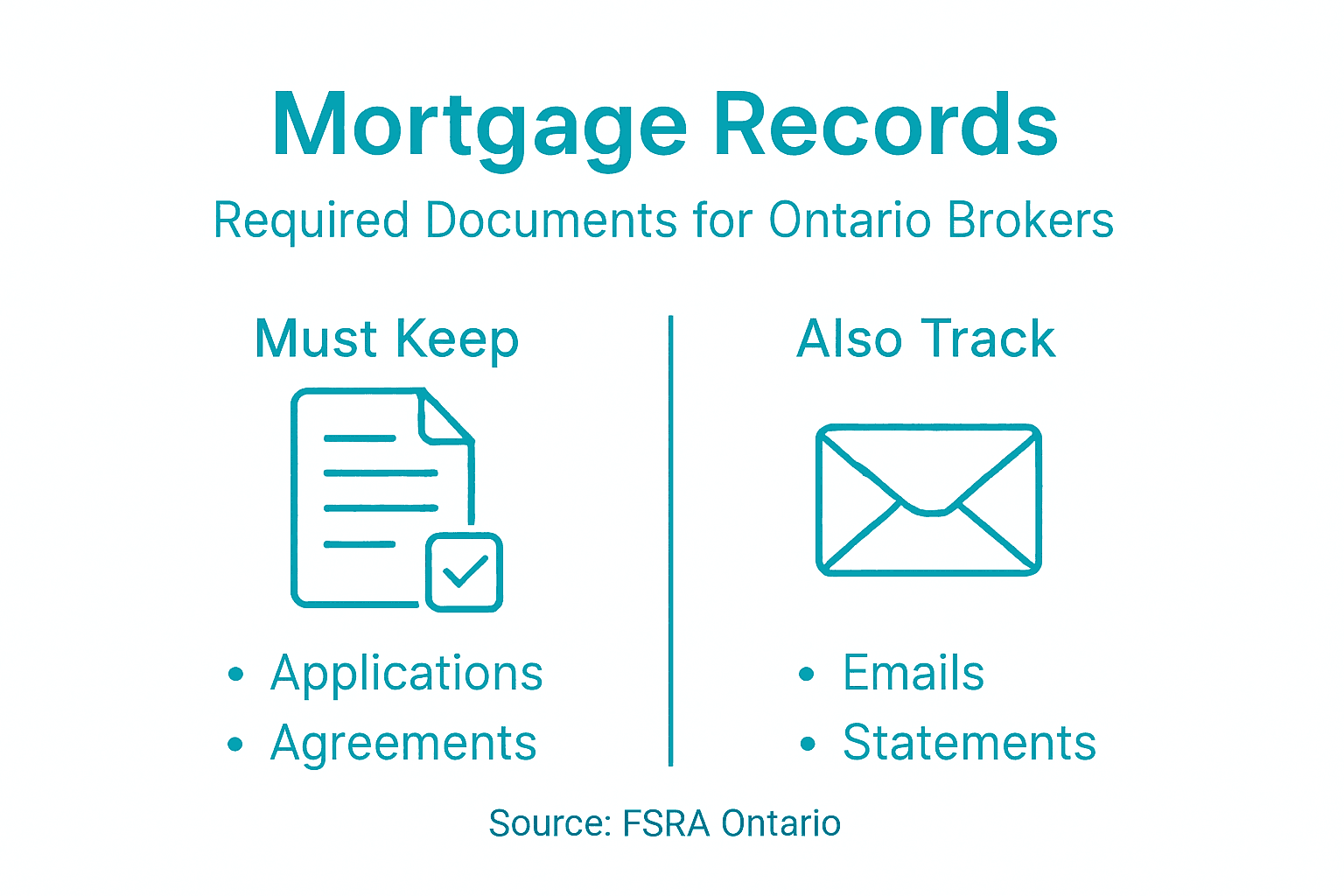
Proper documentation proves the broker acted in your best interest and explained all terms clearly.
Your protection as a consumer
These regulations exist because you’re vulnerable during mortgage negotiations. Brokers have information asymmetry—they understand products and rates better than most borrowers.
Regulation levels the playing field by requiring transparency and prohibiting predatory practices.
Pro tip: Ask your broker for their FSRA license number and verify it directly on FSRA’s website—this takes 60 seconds and confirms they’re legitimate before you share personal financial information.
Homeowner rights, lender obligations, and disclosure standards
You have legal rights protecting your interests throughout your mortgage relationship. Ontario law creates obligations for lenders to treat you fairly and disclose information clearly.
Your redemption rights
Redemption rights allow you to pay off your entire mortgage at any time without permission from the lender. This gives you control over your financial future and flexibility to refinance or sell.
You can exercise redemption rights:
- Before the mortgage matures
- Without penalties on open mortgages
- On closed mortgages (though prepayment fees may apply)
- When life circumstances change
Redemption protects you from being locked into unfavourable terms indefinitely.
Lender disclosure obligations
Lenders must provide full transparency before you sign anything. This means clear information about interest rates, fees, prepayment penalties, and all conditions affecting your mortgage.
Disclosure requirements cover:
- Exact interest rate and how it’s calculated
- Total cost of borrowing over the mortgage term
- Payment amounts and schedules
- Prepayment options and any associated costs
- What happens if you default
- Insurance requirements or recommendations
Mandatory disclosure protects you from surprise costs after you’ve committed.
Broker and lender responsibilities
FSRA regulations require brokers and lenders to act in your best interest, not theirs. They must disclose conflicts of interest when they receive incentives from lenders.
They cannot:
- Recommend unsuitable mortgages for commission
- Hide fees or costs
- Pressure you into decisions
- Misrepresent terms or conditions
- Collect fees without clear written consent
Foreclosure protections
The Mortgages Act provides protection against unlawful foreclosure. Lenders cannot seize your home without following strict legal procedures and providing notice.
You have time to remedy a default before foreclosure proceedings begin. This gives you opportunity to catch up on payments or refinance before losing your home.
Documentation and records
Lenders must maintain clear records of all transactions and communications with you. These records prove what was disclosed and when you received information.
You can request copies of all mortgage documents, payment history, and statements at any time.
Clear disclosure means no hidden fees, no surprises at closing, and no undisclosed conflicts. If a lender or broker cannot explain every cost and condition in plain language, walk away.
Your right to legal review
You have the right to review mortgage documents with a lawyer before signing. This protects you from committing to terms you don’t understand.
Many Vaughan homeowners refinancing or consolidating debt benefit from legal review, especially with complex scenarios.
Complaints and recourse
If a lender or broker violates regulations, you can file a complaint with FSRA. They investigate violations and take enforcement action against non-compliant providers.
Pro tip: Keep all mortgage documents, emails, and communications in one secure folder—if disputes arise later, having complete records proves what was disclosed and when, strengthening your position.
Risks, penalties, and mistakes to avoid
Mortgage mistakes can cost you thousands of dollars and years of financial stress. Understanding common pitfalls protects your home equity and your financial future.
Predatory lending practices
Predatory lenders exploit borrowers through deceptive terms, hidden fees, and unsuitable products. They target people with credit challenges or non-traditional income—exactly the Vaughan homeowners who need protection most.
Watch for red flags:
- Pressure to sign documents quickly without time to review
- Fees that aren’t clearly disclosed upfront
- Interest rates significantly higher than market rates
- Promises that sound too good to be true
- Requests for large upfront fees before approval
- Reluctance to explain terms in writing
Legitimate lenders encourage you to review everything carefully and ask questions.
Non-compliance and regulatory violations
Mortgage brokers and lenders who ignore regulations face serious penalties. Non-compliant providers create liability for you through improper disclosure or unsuitable recommendations.
Common violations include:
- Operating without proper licensing
- Failing to disclose fees or conflicts of interest
- Providing unsuitable mortgage recommendations
- Misrepresenting terms or conditions
- Unauthorized collection of fees
Working with unregistered brokers leaves you unprotected if problems arise.
Prepayment penalties and early exit costs
Many borrowers unknowingly lock into closed mortgages with severe prepayment penalties. Breaking a closed mortgage early can cost thousands in penalties, sometimes exceeding your available equity.
Mistakes include:
- Not understanding the difference between open and closed mortgages
- Refinancing without calculating the penalty cost
- Assuming you can pay off your mortgage early without consequences
- Not negotiating prepayment terms before signing
Always know your exit costs before committing.
Deceptive practices to avoid
Prohibited deceptive practices include misrepresenting loan terms, hiding costs, and pressuring borrowers. These aren’t just unethical—they’re illegal and can trigger license revocation.
Protect yourself by:
- Getting all terms in writing before signing
- Requesting full disclosure of all fees
- Asking lenders to explain anything unclear
- Walking away from brokers who seem evasive
- Verifying lender credentials with FSRA
Default and foreclosure consequences
Falling behind on mortgage payments triggers a cascade of problems. Late payments damage your credit, trigger acceleration clauses, and eventually lead to foreclosure.
Once foreclosure begins, legal costs mount and your home equity vanishes quickly.
Missing even one mortgage payment sets events in motion that are hard to reverse. If you anticipate payment difficulty, contact your lender immediately to discuss options like forbearance or refinancing.
Signing without understanding terms
Many homeowners sign mortgage documents without fully understanding what they’re committing to. This is perhaps the costliest mistake.
Your mortgage is a legal contract binding you for 15-30 years. Understanding every clause protects your interests.
Choosing the wrong mortgage type
Selecting a variable-rate mortgage when you need payment stability, or a closed mortgage when you anticipate early payoff, creates unnecessary risk and cost.
Your circumstances should drive your mortgage choice, not just the lowest initial rate.
Pro tip: Before signing any mortgage, use a calculator to estimate prepayment penalties and total interest costs under different scenarios—this single step prevents most expensive mortgage mistakes.
Secure Your Home Equity with Expert Guidance from Miracle Financial
Navigating Ontario mortgage regulations can feel overwhelming, especially when protecting your home equity and understanding key terms like redemption rights or mortgage amortization. If you are a Vaughan homeowner looking to refinance, consolidate debt, or explore private lending options, these challenges are real. The pressure of selecting the right mortgage type and lender, while avoiding costly mistakes or hidden fees, underscores the need for trusted advice.
At Miracle Financial, our experienced team acts as your dedicated Ontario mortgage broker and Vaughan mortgage broker, simplifying complex rules and delivering solutions tailored to your unique financial goals. We specialize in refinance mortgage Ontario options, debt consolidation mortgage strategies, and private mortgage lenders Ontario programs designed to protect your equity and improve cash flow.

Take control of your mortgage journey today to avoid pitfalls like prepayment penalties and predatory lending. Book a consultation with Miracle Financial now to get personalized guidance on choosing the best mortgage type, understanding your rights, and maximizing your home equity. Visit Miracle Financial to secure your financial future with confidence.
Frequently Asked Questions
What are my redemption rights as a homeowner in Ontario?
Your redemption rights allow you to pay off your entire mortgage at any time without needing permission from the lender. This means you have flexibility in managing your financial future.
What legal requirements must mortgage brokers adhere to in Ontario?
Mortgage brokers in Ontario must be licensed by the Financial Services Regulatory Authority (FSRA). They are required to provide full transparency about fees, rates, and terms, and adhere to strict ethical standards.
How do fixed-rate and variable-rate mortgages differ?
Fixed-rate mortgages lock your interest rate for the entire term, providing predictable payments, while variable-rate mortgages have interest rates that fluctuate based on the prime lending rate, which can lead to lower initial payments but increased payment variability.
What should I be aware of regarding prepayment penalties?
Prepayment penalties can apply if you pay off a closed mortgage early. It’s essential to understand the terms regarding prepayments before signing, as penalties can be significant and vary widely depending on the mortgage agreement.