
Blog
Self-Employed Mortgage Approval Process in Ontario


Most Canadian self-employed professionals discover that securing a mortgage can be far more challenging than expected. Strict income verification and detailed documentation requirements often make the process feel daunting. With over three and a half million Canadians choosing self-employment, having the right strategy and documentation is key. This resource breaks down each step, giving you clear guidance to help streamline your mortgage journey and improve your chance of approval as a Canadian entrepreneur.
Table of Contents
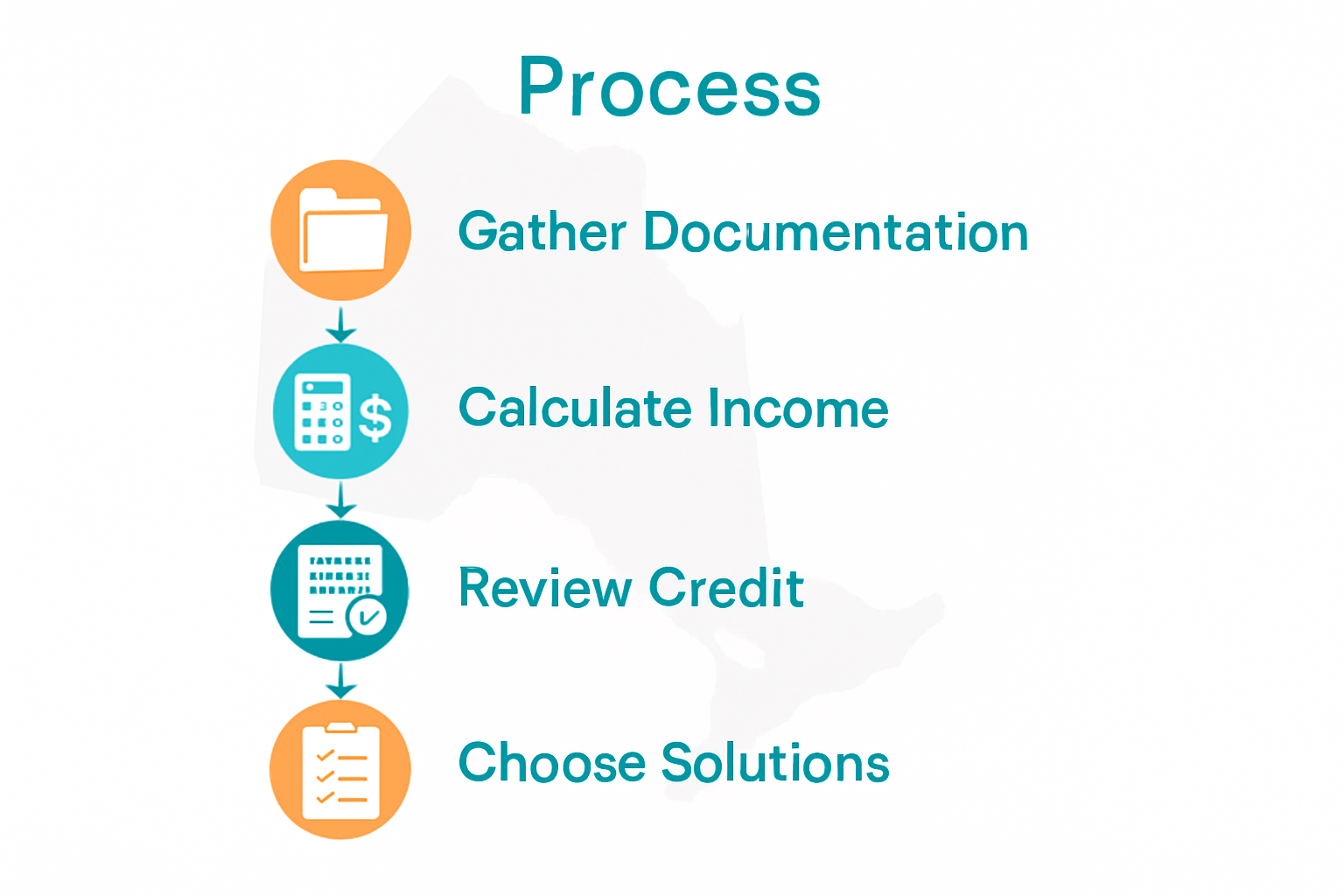
- Step 1: Gather Essential Income Documentation
- Step 2: Calculate and Verify Your Qualifying Income
- Step 3: Review Your Credit Profile and Address Issues
- Step 4: Select Suitable Mortgage Solutions for Self-Employed
- Step 5: Submit Your Application and Confirm Approval
Quick Summary
| Key Insight | Explanation |
|---|---|
| 1. Gather Detailed Income Docs | Compile income tax returns, profit and loss statements, and business financials to verify your income for lenders. |
| 2. Calculate Your Qualifying Income | Use Form T2125 to assess net profit by deducting business expenses, giving a clearer picture of earnings. |
| 3. Review and Clean Up Credit Profile | Obtain credit reports, correct any errors, and maintain a score above 680 to improve mortgage approval chances. |
| 4. Explore Self-Employment Mortgage Options | Investigate tailored mortgage programs that cater to the unique needs of self-employed borrowers, including larger down payment requirements. |
| 5. Submit Application with Care | Ensure all documentation is accurate and avoid significant financial changes during this period to enhance the likelihood of approval. |
Step 1: Gather Essential Income Documentation
As a self-employed professional in Ontario, documenting your income accurately is the most critical step in securing a mortgage. Preparing comprehensive income documentation will streamline your mortgage approval process and demonstrate your financial stability to potential lenders.
You will need to compile several key financial documents that provide a complete picture of your earnings. According to the Canada Revenue Agency, this includes notices of assessment from the past two years, which detail your gross and net income from self-employment. Lenders will scrutinize these documents to verify your consistent income and assess your mortgage eligibility.
Start by gathering your income tax returns (T1 General), business financial statements, and profit and loss statements from the previous two to three years. Include additional supporting documentation like business bank statements, client contracts, and proof of consistent work. Pro tip: Organize these documents chronologically and keep digital and physical copies to demonstrate your financial reliability and income consistency.

The next step involves presenting these documents to your mortgage broker, who will help interpret and package your income documentation for potential lenders.
Step 2: Calculate and Verify Your Qualifying Income
Calculating your qualifying income is a crucial step for self-employed professionals seeking mortgage approval in Ontario. Determining your true earning potential requires more than just a simple review of your bank statements.
Financial experts recommend carefully assessing your complete financial situation, including income, debts, and other financial obligations. For self-employed individuals, this means diving deep into your business financials. You will need to use Form T2125 to calculate your net profit by subtracting business expenses from your total business income. Lenders typically average your income over the past two to three years to establish a consistent earning profile.
Specifically, focus on documenting your net income rather than gross revenue. Mortgage lenders will scrutinize your tax returns, looking for stable and recurring income streams. Keep detailed records of all business expenses, including receipts, invoices, and financial statements. Pro tip: Work with an accountant who understands mortgage qualification requirements to ensure your financial documentation presents the most favourable picture of your income.
Once you have compiled and verified your income documentation, you will be ready to move forward with the next stage of your mortgage application process.
Step 3: Review Your Credit Profile and Address Issues
As a self-employed professional, reviewing your credit profile is a critical step in securing a mortgage. Proactively managing your credit repair strategy can significantly improve your mortgage approval chances.
Lenders will thoroughly examine your credit report during the preapproval process, assessing your financial reliability and determining your maximum loan amount. For self-employed applicants, this scrutiny is even more intense. Order a copy of your credit report from both major Canadian credit bureaus and carefully review every detail. Look for potential errors, outdated information, or unresolved credit issues that might negatively impact your mortgage application.
If you discover any discrepancies or have outstanding debts, take immediate action to resolve them. This might involve paying down credit card balances, addressing collections, or correcting reporting errors. Pro tip: Aim to maintain a credit score above 680, as this threshold typically signals low risk to potential mortgage lenders. Avoid opening new credit accounts or making large purchases during this preparation period, as these actions can temporarily lower your credit score.
Once you have addressed any credit profile issues, you will be well positioned to move forward with confidence in your mortgage application.
Step 4: Select Suitable Mortgage Solutions for Self-Employed
Navigating mortgage options as a self-employed professional requires strategic planning and understanding of specialized lending programs. Exploring tailored self-employment mortgage solutions can help you find the most appropriate financing for your unique financial situation.
The Canada Mortgage and Housing Corporation has recognized the distinctive needs of self-employed borrowers, introducing specialized programs that consider the nuanced income verification challenges faced by entrepreneurs. Most lenders will require additional documentation to validate your income, including tax returns, financial statements, and proof of consistent business revenue. Be prepared that self-employed applicants might need to provide a larger down payment compared to traditional salaried employees.
Carefully compare different mortgage products that cater to self-employed professionals. Look for flexible options that consider your unique income structure, such as stated income mortgages, alternative lending programs, or products that use a more comprehensive approach to income verification. Pro tip: Work with a mortgage broker who specializes in self-employed financing to access a wider range of tailored solutions that traditional banks might not offer.
With the right mortgage strategy in place, you will be well prepared to move forward in your home financing journey.
Step 5: Submit Your Application and Confirm Approval
Submitting your mortgage application is the critical final step in securing financing for your home purchase. Complete your mortgage application online with precision and attention to detail.
After carefully compiling all your documentation, submit your mortgage application to your chosen lender or mortgage broker. They will meticulously review your financial information, verify your income, credit history, and overall financial health. Be prepared for a comprehensive evaluation that goes beyond simple document checking. They will assess your ability to manage mortgage payments, considering factors like your income stability, debt service ratios, and credit score.
During the approval process, maintain financial stability and avoid making any significant financial changes. Pro tip: Do not open new credit accounts, make large purchases, or change employment during this critical period, as these actions could potentially jeopardize your mortgage approval. Once your application is approved, you will receive a mortgage commitment letter detailing the specific terms, interest rate, and conditions of your loan.
With your mortgage approval secured, you are now ready to move forward with your home purchase.
Simplify Your Self-Employed Mortgage Journey with Miracle Financial
Navigating the self-employed mortgage approval process in Ontario can feel overwhelming with all the income documentation, credit verification, and income calculations required. At Miracle Financial, we understand the unique challenges self-employed borrowers face when securing a mortgage. Our expert Self-Employed Mortgage Broker team in Vaughan is dedicated to helping you organize your financial documents, review your credit profile, and identify tailored mortgage solutions that fit your specific situation.

Don’t let complex paperwork or strict lender requirements hold you back from your dream home. Partner with the best Ontario Mortgage Broker who combines in-depth industry knowledge with personalized service to fast-track your approval. Take the first step today by visiting Miracle Financial and discover how our strategic self-employed mortgage plans can secure your financial future.
Frequently Asked Questions
What documents do I need to provide for self-employed mortgage approval in Ontario?
To secure mortgage approval, you need to provide essential income documentation such as your income tax returns for the past two years, business financial statements, and profit and loss statements. Gather these documents and keep them organised to streamline the mortgage application process.
How can I calculate my qualifying income as a self-employed professional?
Calculate your qualifying income by using Form T2125 to assess your net profit, which is your total business income minus allowable business expenses. Review your income from the past two to three years to present a consistent earning profile for your mortgage application.
How can I improve my credit profile before applying for a mortgage?
Improve your credit profile by reviewing your credit report for errors and resolving any outstanding debts. Aim to maintain a credit score above 680, and avoid making large purchases or opening new credit accounts during this process to protect your score.
What mortgage options are available specifically for self-employed individuals?
Explore tailored mortgage solutions that cater to self-employed professionals, such as stated income mortgages or alternative lending programs that consider your unique financial situation. Work with a mortgage broker who understands these options to find the best fit for your needs.
What steps should I take after submitting my mortgage application?
After submitting your mortgage application, maintain your financial stability by avoiding significant changes, such as new credit accounts or job changes. Wait for your lender to review your application and receive your mortgage commitment letter, which outlines the details of your approval.