
Blog
Self-Employed Mortgage Approval Workflow in Ontario


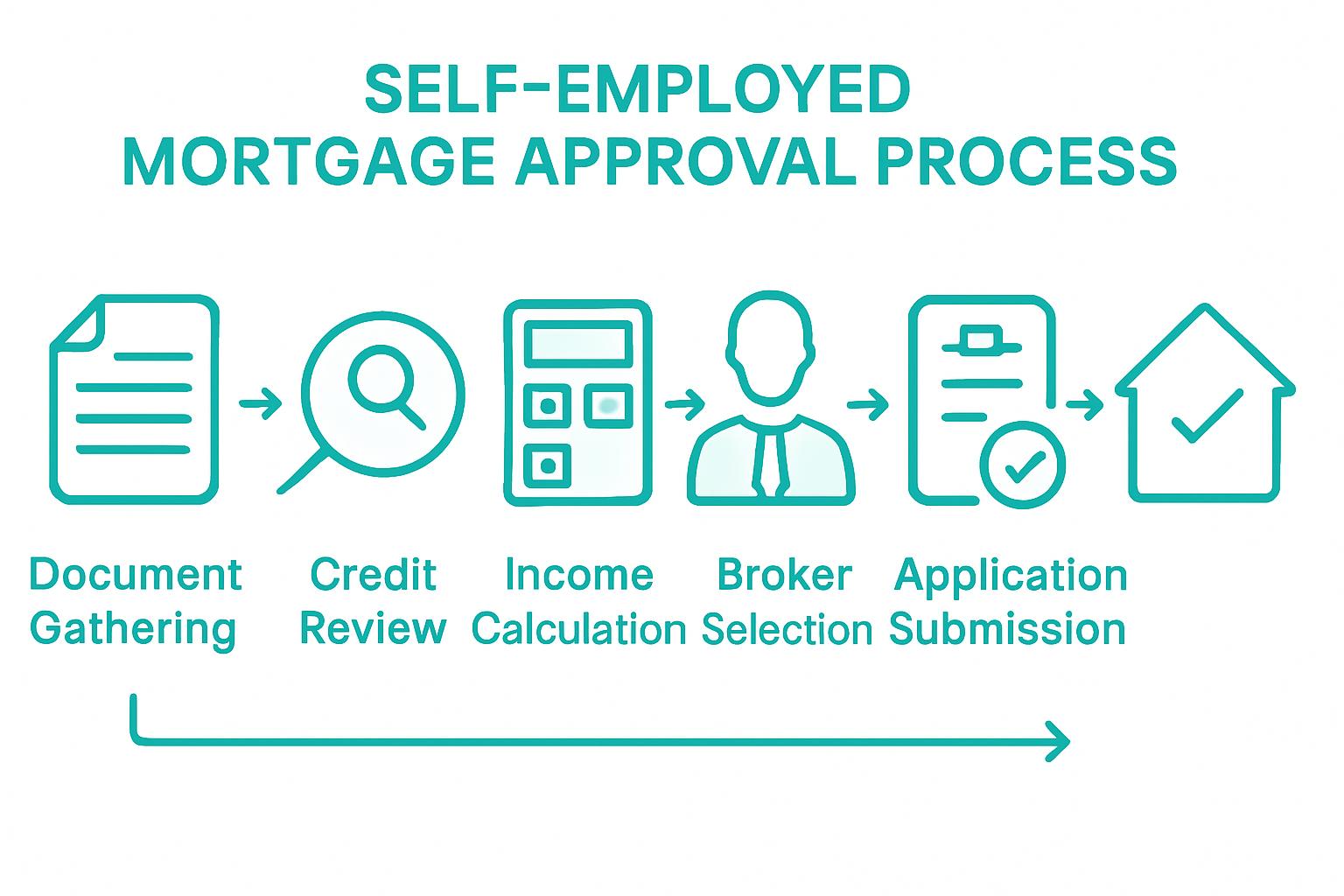
Over 15 percent of Canadians are self-employed, yet many struggle to navigate the complex steps of securing a mortgage. For every Canadian entrepreneur or freelancer, understanding the financial requirements can feel daunting. This guide simplifies each crucial stage, from organizing business records to choosing the right Ontario broker, empowering self-employed Canadians to approach mortgage approval with clarity and confidence.
Table of Contents
- Stage 1: Organize Business And Personal Financial Documents
- Stage 2: Assess And Optimize Your Credit Profile
- Stage 3: Calculate Your Qualifying Income Accurately
- Stage 4: Select The Right Ontario Mortgage Broker
- Stage 5: Submit Your Mortgage Application And Supporting Files
- Stage 6: Verify Approval Terms And Finalize Your Mortgage
Quick Summary
| Key Insight | Explanation |
|---|---|
| 1. Separate Financial Records | Maintain distinct storage for personal and business documents to streamline tax preparation and audits. |
| 2. Optimize Your Credit Score | Consistently pay bills on time and reduce debts to enhance your credit profile for better mortgage terms. |
| 3. Accurate Income Calculation | Gather comprehensive financial records and calculate average annual income from net profits for mortgage qualification. |
| 4. Choose an Experienced Broker | Select a mortgage broker with expertise in self-employed income structures to navigate unique challenges effectively. |
| 5. Review Mortgage Terms Carefully | Verify all terms and conditions before signing to ensure the agreement aligns with your financial goals. |
Stage 1: Organize business and personal financial documents
Managing financial documents as a self-employed professional requires strategic planning and meticulous record-keeping. The goal is to create a streamlined system that simplifies tax preparation, supports potential audits, and provides clarity about your financial health.
Start by establishing separate storage for personal and business financial records. The Canada Revenue Agency recommends maintaining comprehensive records of all business transactions for at least six years. I suggest investing in a robust filing system with physical and digital components. Use an accordion folder or dedicated filing cabinet with clearly labelled sections for income records, expense receipts, tax documents, and banking statements.
Creating distinct bank accounts for business transactions helps segregate personal and professional finances. Digitize receipts using scanning apps to create backup copies and reduce physical paper clutter. Pro tip: develop a monthly routine of categorizing and filing documents to prevent overwhelming accumulation. This consistent approach transforms document management from a dreaded task into a smooth, predictable process that supports your financial success.
Stage 2: Assess and optimize your credit profile
Building a strong credit profile is crucial for self-employed professionals seeking mortgage approval. Your credit score acts as a financial passport, signalling your reliability to potential lenders and directly impacting your ability to secure competitive mortgage terms.
Improving your credit score involves strategic financial management. Begin by obtaining your credit report from major Canadian credit bureaus and thoroughly reviewing it for accuracy. Pay all bills consistently and on time, as payment history significantly influences your credit score. Aim to reduce outstanding debts, particularly credit card balances, keeping your credit utilization below 30% of available limits.
Additionally, limit the number of new credit applications, as multiple hard inquiries can temporarily lower your score. Credit repair strategies can help you systematically address any negative marks. Maintain a mix of credit types credit cards, lines of credit, and installment loans demonstrate financial diversity. Remember that rebuilding credit is a marathon, not a sprint patience and consistent financial discipline will gradually improve your creditworthiness and mortgage approval prospects.
Stage 3: Calculate your qualifying income accurately
As a self-employed professional, accurately determining your qualifying income is the most critical step in securing a mortgage. Lenders scrutinize your financial documents to assess your true earning potential, which requires a nuanced approach beyond simple tax returns.

Determining net business income involves meticulously tracking and documenting your eligible business expenses. Start by gathering comprehensive financial records including profit and loss statements, business bank statements, and two years of tax returns. Calculate your average annual income by adding your net profits from the past two years and dividing by 24 months. Be prepared to provide detailed documentation of business expenses such as office supplies, travel costs, utilities, and equipment purchases that can be legitimately deducted.
Self-employed mortgage approval processes often require additional verification compared to traditional employment. Consider working with a mortgage broker who understands the unique challenges of self-employed income reporting. Maintain clean, organized financial records and be ready to explain income fluctuations. Lenders typically look for stability, consistent income trends, and thorough documentation to feel confident in your ability to manage mortgage payments.
Stage 4: Select the right Ontario mortgage broker
Choosing the right mortgage broker can make the difference between a smooth financing journey and a frustrating experience. For self-employed professionals, this decision becomes even more critical as your unique income structure requires specialized expertise.
The Financial Services Commission of Ontario regulates mortgage brokers and provides resources to help you verify professional credentials. Start by checking a broker’s licensing status and seeking recommendations from other self-employed professionals in your network. Look for brokers with demonstrable experience working with entrepreneurs, freelancers, and independent contractors who understand the nuanced income documentation requirements specific to self-employed applicants.
Ontario mortgage broker roles involve more than just finding a loan they should act as strategic financial partners. Prioritize brokers who offer comprehensive consultations, can explain complex mortgage products, and demonstrate patience in working through your unique financial scenario. Ask potential brokers about their success rates with self-employed clients, their approach to income verification, and their relationships with lenders who specialize in alternative income documentation. Your ideal mortgage broker will be a knowledgeable advocate who can navigate the complexities of your financial profile and secure the most favourable mortgage terms possible.
Stage 5: Submit your mortgage application and supporting files
Submitting your mortgage application represents the culmination of your careful financial preparation. This critical stage requires precision, thoroughness, and strategic document organization to demonstrate your financial reliability to potential lenders.
Self-employed mortgage steps demand meticulous attention to detail. Compile a comprehensive package that includes two years of tax returns, notices of assessment, business financial statements, and proof of consistent income. Organize your documents chronologically and create digital and physical copies. Ensure all financial records are clear, legible, and highlight your stable income stream. Include additional documentation such as client contracts, bank statements showing business revenue, and any supplementary income sources.
Be prepared for potential requests for extra information. Lenders often require detailed explanations of income fluctuations, proof of ongoing business stability, and comprehensive documentation of your self employment journey. Keep communication channels open with your mortgage broker, respond promptly to any queries, and maintain a professional demeanour throughout the application process. Your goal is to present a compelling financial narrative that demonstrates your reliability and capacity to manage mortgage payments.
Stage 6: Verify approval terms and finalize your mortgage
Reaching the final stage of your mortgage approval process requires careful review and strategic decision making. Your goal is to thoroughly understand every aspect of the mortgage terms before committing to this significant financial agreement.
Mortgage pre-approval guidelines recommend meticulously examining all contract details. Review the interest rate, payment schedule, amortization period, and any potential prepayment penalties. Pay special attention to fixed versus variable rate options and understand how each might impact your long term financial planning. Confirm that the terms align with your initial discussions with your mortgage broker and that there are no unexpected clauses or conditions.
Be prepared to negotiate and ask questions about any terms that seem unclear. Request a comprehensive breakdown of all associated fees, including legal costs, insurance requirements, and potential administrative charges. Your final mortgage document should reflect a transparent agreement that provides clarity and protects your financial interests. Once you feel completely comfortable with the terms, proceed with signing the mortgage contract confident that you have made an informed and strategic decision for your financial future.
Simplify Your Self-Employed Mortgage Approval with Expert Guidance
Being self-employed in Ontario comes with its unique challenges when applying for a mortgage. From organising financial documents to accurately calculating qualifying income and navigating lender requirements the process can quickly feel overwhelming. You need a knowledgeable partner who understands the complexities of self-employed income verification and can help you present your financial story clearly and confidently.
At Miracle Financial we specialise in working with self-employed individuals just like you. Our experienced Ontario mortgage broker team offers tailored solutions including alternative income strategies and private mortgage lending options to improve your approval chances. We combine deep expertise with modern technology to deliver fast approvals and clear communication every step of the way.

Take control of your mortgage journey now by partnering with a trusted Vaughan mortgage broker who knows how to get results for self-employed Canadians. Visit Miracle Financial to schedule your personalised consultation and move confidently towards your homeownership goals.
Frequently Asked Questions
How can I organize my financial documents for self-employed mortgage approval?
To organize your financial documents effectively, establish separate storage for personal and business records. Create a systematic filing system with clearly labelled sections for income records, expense receipts, and tax documents. Set a monthly routine to categorize and file your documents to keep everything manageable.
What should I include when calculating my qualifying income as a self-employed individual?
Accurately calculate your qualifying income by gathering two years of tax returns and business financial statements. Include eligible business expenses to determine your net business income, and provide documentation such as profit and loss statements to support your calculations.
Why is choosing the right mortgage broker important for self-employed professionals?
Selecting the right mortgage broker is crucial because they can help navigate the unique income documentation requirements faced by self-employed individuals. Look for brokers who have experience with self-employed clients and can offer tailored advice throughout the mortgage process.
What documents do I need to submit with my mortgage application as a self-employed professional?
When submitting your mortgage application, include two years of tax returns, notices of assessment, and business financial statements. Additionally, provide proof of consistent income, client contracts, and any supplementary income sources to support your application.
How do I verify the terms of my mortgage approval before finalizing it?
To verify the mortgage terms, carefully review the interest rate, payment schedule, and any potential prepayment penalties. Ensure all details align with your initial discussions with your mortgage broker, and don’t hesitate to ask questions if anything is unclear to avoid any surprises.