
Blog
Self-Employed Mortgage Guide Ontario: Secure Approval Fast


Most Canadian self-employed professionals find gathering mortgage documents far more complex than expected. With over 15 percent of Canadian workers now running their own business, lenders require extra proof of steady income and business stability. Knowing exactly which records and steps you need can make the difference between approval and endless delays. This guide highlights each critical stage to help Canadian entrepreneurs smooth the process and improve their chances of securing a mortgage.
Table of Contents
- Step 1: Gather Required Income and Business Documents
- Step 2: Assess Your Financial Health and Credit Profile
- Step 3: Research Lender Options and Mortgage Products
- Step 4: Consult an Ontario Mortgage Broker for Best Rates
- Step 5: Submit Application and Verify Mortgage Approval
Quick Summary
| Key Insight | Explanation |
|---|---|
| 1. Collect Comprehensive Financial Documents | Gather two years of tax returns, business statements, and CRA notices to prove income consistency for mortgage lenders. |
| 2. Assess Financial Health Before Applying | Regularly check your credit score and manage debts to ensure a strong financial profile for mortgage applications. |
| 3. Research Flexible Lender Options | Compare private lenders and credit unions that offer tailored income verification processes for self-employed individuals. |
| 4. Leverage Expertise of a Mortgage Broker | Consult a broker for tailored mortgage solutions and to navigate the complex lending landscape effectively. |
| 5. Maintain Organized Application Files | Keep a digital and physical record of all application documents and communications to streamline the approval process. |
Step 1: Gather Required Income and Business Documents
As a self-employed professional seeking a mortgage in Ontario, your income documentation becomes the critical foundation of your mortgage application. Lenders need comprehensive proof of your financial stability and earning potential.
Your document collection must include detailed financial records that demonstrate consistent and reliable income. Key documents include two years of personal income tax returns showing your net income, business financial statements, notices of assessment from the Canada Revenue Agency, and corporate tax returns if you operate a corporation. For incorporated businesses, include T1 general forms and year end financial statements prepared by an accountant.
Banking records play an equally crucial role. Lenders will want to see business bank statements covering the past 12 months, highlighting steady cash flow and revenue streams. Self-employed applicants should prepare comprehensive documentation including profit and loss statements, business registration documents, and records showing your business has been operational for at least two years. Ensure all documents are current, legible, and organized chronologically to streamline the mortgage approval process.
Pro tip: Create a dedicated digital and physical folder for all financial documents, keeping them updated quarterly to simplify future mortgage or lending applications.
Here is a quick summary of key income documents for self-employed mortgage applicants:
| Document Type | Why It Matters | Preparation Tip |
|---|---|---|
| Personal Tax Returns | Demonstrates net income over two years | Ensure all returns are signed and filed |
| Business Statements | Shows business profit, loss, and stability | Have accountant-prepared, organized by year |
| CRA Notices of Assessment | Proves taxes paid and declared income | Request recent copies directly from CRA |
| Bank Statements | Verifies business revenue and cash flow | Provide consecutive 12-month records |
| Business Registration | Confirms business legitimacy and duration | Include registration proof, at least two years |
| Corporate Tax Returns (if applicable) | Documents income for incorporated entities | Ensure forms are complete and accountant-reviewed |
Step 2: Assess Your Financial Health and Credit Profile
Assessing your financial health is a critical step for self-employed professionals seeking mortgage approval in Ontario. Your objective is to understand and strengthen your financial standing before approaching lenders.

Self-employed individuals face unique challenges when demonstrating income stability. Mortgage lenders often evaluate net income reported on tax returns from the past two to three years, which can be complicated by business expense deductions that reduce taxable income. Carefully review your credit repair strategies to ensure your credit profile presents a strong financial picture. This means maintaining a credit score above 680, minimizing outstanding debts, and ensuring all credit accounts are current and in good standing.
To build a compelling financial profile, compile comprehensive documentation that showcases your income consistency and financial responsibility. This includes bank statements, tax returns, profit and loss statements, and a detailed record of your business revenue. Consider working with a professional accountant who can help you present your financial information in the most favourable light for mortgage applications.
Pro tip: Request a free credit report annually and review it meticulously for any errors or discrepancies that could negatively impact your mortgage application.
Step 3: Research Lender Options and Mortgage Products
Researching mortgage lender options is a crucial step for self-employed professionals in Ontario seeking financing. Your goal is to find lenders who understand the unique financial circumstances of entrepreneurs and independent contractors.
Private mortgage lenders offer flexible solutions specifically designed for self-employed borrowers, with varying approval criteria that accommodate non traditional income documentation. Some lenders may approve applicants with just three months of self employment income if they maintain a credit score of 650 or higher. Exploring alternative mortgage options in Ontario can help you identify lenders who specialize in working with self employed professionals.
When evaluating mortgage products, consider factors beyond interest rates. Look for lenders who offer flexible income verification processes, understand the nuanced financial reporting of self employed individuals, and provide terms that align with your specific business income patterns. Compare products from traditional banks, credit unions, and specialized private lenders to find the most suitable mortgage solution for your unique financial situation.
Pro tip: Create a comprehensive spreadsheet comparing mortgage products, tracking interest rates, terms, income verification requirements, and additional fees to simplify your decision making process.
Compare the main types of mortgage lenders for self-employed individuals:
| Lender Type | Income Verification Approach | Typical Flexibility |
|---|---|---|
| Traditional Bank | Requires full tax documents and detailed proof | Conservative; difficult for fluctuating incomes |
| Credit Union | May accept alternative income documentation | Moderate; values long-term relationships |
| Private Lender | Accepts recent cash flow or business invoices | High; tailored for non-traditional earners |
| Mortgage Broker | Matches applicants with flexible lenders | Maximizes options, negotiates custom solutions |
Step 4: Consult an Ontario Mortgage Broker for Best Rates
Consulting a mortgage broker is a strategic move for self-employed professionals navigating the complex mortgage landscape in Ontario. Your primary objective is to leverage professional expertise that can unlock tailored financing solutions specific to your unique income situation.
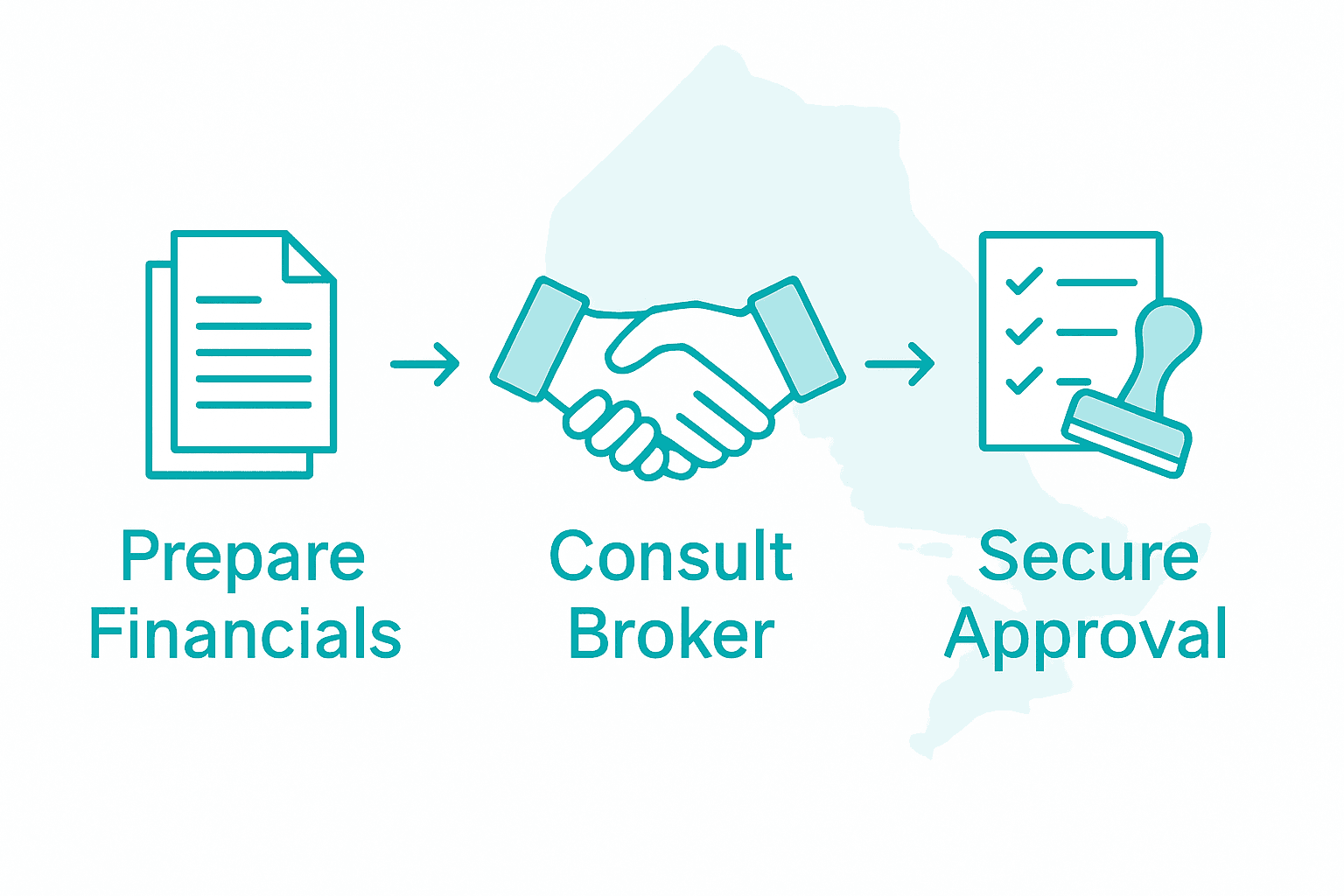
Understanding the comprehensive role of Ontario mortgage brokers can significantly improve your mortgage approval chances. These professionals serve as intermediaries who understand the nuanced requirements for self employed individuals, connecting you with lenders who specialize in alternative income verification. They possess in depth knowledge of mortgage broker benefits across the Greater Toronto Area, allowing them to negotiate rates and terms that traditional banks might not offer.
When meeting with a mortgage broker, come prepared with comprehensive financial documentation. Be ready to discuss your business structure, income consistency, credit history, and long term financial goals. A skilled broker will help you understand which mortgage products align best with your specific circumstances, potentially identifying opportunities you might have overlooked independently.
Pro tip: Request a detailed written comparison of mortgage options from your broker, ensuring you understand all terms, potential penalties, and flexibility of each proposed product.
Step 5: Submit Application and Verify Mortgage Approval
Submitting your mortgage application represents the culmination of your careful preparation as a self-employed professional. Your goal is to present a comprehensive financial profile that demonstrates your creditworthiness and income stability.
Follow the precise mortgage application workflow designed for Ontario self employed individuals to increase your chances of successful approval. This involves compiling all necessary documentation including tax returns, business financial statements, bank records, and proof of consistent income. Thoroughly review your application for accuracy and completeness before submission, ensuring every detail reflects your financial circumstances transparently.
Once submitted, expect a thorough review process where lenders will scrutinize your financial documentation. Be prepared to provide additional information or clarification promptly. Some lenders might request supplementary evidence of your business sustainability such as client contracts, business registration documents, or professional credentials. Maintain open communication with your mortgage broker during this verification stage, as they can help navigate any potential challenges and advocate on your behalf.
Pro tip: Create a digital and physical file with all submitted documents and correspondence, tracking each communication and submission date to ensure a smooth and accountable mortgage approval process.
Get the Right Mortgage Solution as a Self-Employed Professional in Ontario
Navigating the mortgage process with fluctuating income and complex documentation can feel overwhelming. This guide highlights common challenges like verifying income stability, managing credit profiles, and finding lenders who truly understand self-employed financial realities. At Miracle Financial, our experienced Ontario mortgage broker team specialises in tailored mortgage strategies for entrepreneurs and independent contractors. We know how to present your financial documentation, explore financing options including private mortgage lenders Ontario, and negotiate terms that fit your unique income pattern.

Take control of your mortgage journey with a trusted self-employed mortgage broker who prioritizes fast approval and personalised service. Visit Miracle Financial to connect with experts who can simplify the process, help you improve cash flow, and secure the best mortgage solution now. Don’t wait for opportunity to pass. Explore how our Vaughan mortgage broker team can make your homeownership goals a reality today.
Frequently Asked Questions
What documents do I need to provide as a self-employed applicant for a mortgage?
To secure a mortgage as a self-employed individual, you must provide personal tax returns, business financial statements, notices of assessment from the Canada Revenue Agency, and bank statements from the past 12 months. Gather these documents and keep them organized to streamline your application process.
How can I assess my financial health before applying for a mortgage?
Begin by reviewing your credit score and ensuring it’s above 680, while also minimizing outstanding debts. Compile bank statements, tax returns, and profit and loss statements for the previous two years to effectively showcase your financial stability.
What are the different types of lenders I can approach for a self-employed mortgage?
You can approach traditional banks, credit unions, and private lenders for mortgage options. Each type has different criteria; private lenders often have the most flexible options, making them suitable for self-employed individuals.
Why should I consult a mortgage broker when applying for a mortgage?
Consulting a mortgage broker can help you navigate the complexities of securing a mortgage as a self-employed individual. They will connect you with lenders who understand your unique financial situation and may negotiate better rates and terms on your behalf.
What steps should I follow after submitting my mortgage application?
After submission, keep track of all communications and documents sent to the lender. Be prepared to provide additional information if requested, and maintain open communication with your mortgage broker to address any potential issues quickly.
How long does the mortgage approval process typically take for self-employed individuals?
The mortgage approval process can take anywhere from a few weeks to several months, depending on the complexity of your financial situation and the responsiveness of the lender. Stay organized with your documentation to expedite the process as much as possible.
Recommended
- Self-Employed Mortgage Workflow for Fast Approval
- Self-Employed Mortgage Approval Process in Ontario
- Self-Employed Mortgage Steps Ottawa: Secure Approval Fast – Miracle Financial
- Self-Employed Mortgages: Complete Guide for Ontario – Miracle Financial
- Non-Traditional Income Mortgages Explained: Complete Guide – Craigburn Capital