
Blog
Self-Employed Mortgage Steps Ottawa: Secure Approval Fast


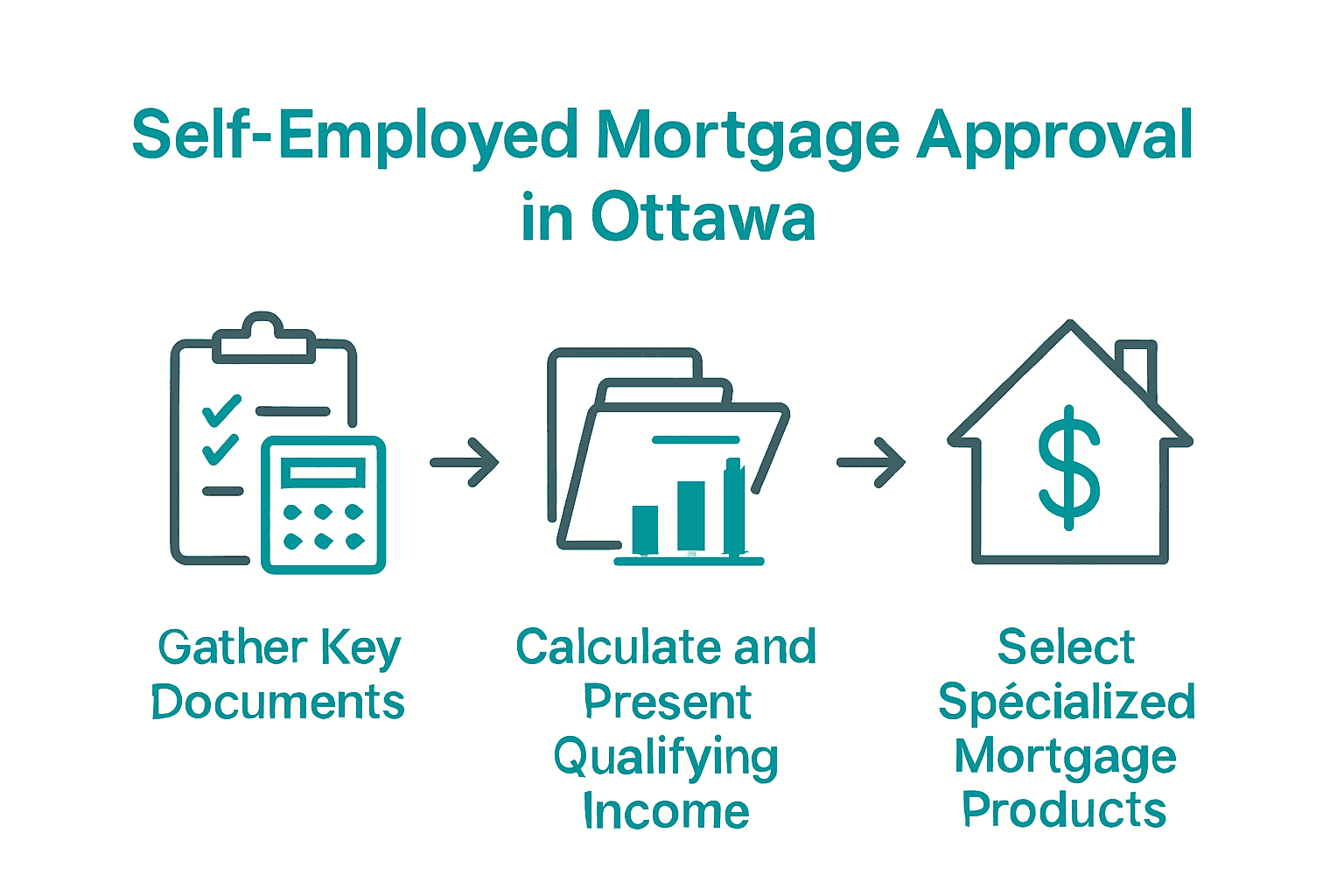
Most canadian self employed professionals learn quickly that proving stable income can be a bigger hurdle than finding the perfect home. Mortgage lenders pay close attention to your finances, so organizing your paperwork and financial portfolio is crucial. With almost one in ten workers in Canada being self employed, knowing exactly which steps to follow makes the difference between fast approval and unnecessary delays. This guide breaks down the process, helping you move forward with confidence and clarity.
Table of Contents
- Step 1: Gather Required Financial Documents
- Step 2: Calculate Qualifying Income and Budget
- Step 3: Select the Right Mortgage Products
- Step 4: Apply with a Self-Employed Mortgage Broker
- Step 5: Verify Approval and Review Mortgage Terms
Quick Summary
| Important Insight | Explanation |
|---|---|
| 1. Gather Financial Documents | Compile your Notice of Assessment, tax returns, and business financial statements to demonstrate income stability to lenders. |
| 2. Calculate Your Qualifying Income | Assess your net income from tax returns and consider additional income sources to improve your mortgage eligibility. |
| 3. Choose Suitable Mortgage Products | Evaluate mortgage options that align with your unique income structure and offer flexible payment terms beneficial for self-employed individuals. |
| 4. Work with a Specialized Mortgage Broker | Partnering with a broker experienced with self-employed professionals can ease the application process and improve approval odds. |
| 5. Review Mortgage Approval Terms Carefully | Thoroughly verify your mortgage terms, focusing on interest rates and flexibility to ensure they suit your financial situation. |
Step 1: Gather Required Financial Documents
Securing a mortgage as a self-employed professional starts with compiling a comprehensive financial portfolio that demonstrates your income stability and creditworthiness. According to RBC Royal Bank, you will need to collect several key documents that lenders use to verify your financial standing.
Your documentation package should include your most recent Notice of Assessment from the Canada Revenue Agency which provides a detailed breakdown of your reported income. You will also want to gather at least two years of complete tax returns showing consistent earnings. Additional supporting documents might include business financial statements, contracts demonstrating ongoing work, and bank statements that reflect your business revenue streams. Pro tip: Organize these documents chronologically and make clean digital copies to streamline the application process.
Be prepared to provide extra verification of your self employed status. This could mean collecting business registration documents, client contracts, or professional memberships that validate your ongoing work. The more comprehensive your financial documentation, the smoother your mortgage approval journey will be. Having these materials ready signals to lenders that you are a responsible and organized borrower who understands the importance of thorough financial record keeping.
Step 2: Calculate Qualifying Income and Budget
Navigating the complexities of mortgage qualification as a self employed professional requires a strategic approach to calculating your actual income. According to WOWA, traditional lenders typically assess your mortgage eligibility using the net income reported on line 150 of your T1 tax returns over the past two to three years.
To accurately calculate your qualifying income, you will need to compile a comprehensive financial snapshot that reflects your true earning potential. This means gathering your complete tax returns and carefully analyzing your average annual income. Some lenders may look beyond just your net income and consider additional factors such as consistent business revenue, potential contract work, and overall financial stability. FCIQ recommends managing your business and personal debt effectively to improve your debt to income ratio a critical factor in mortgage approval.
Pro tip: Create a detailed budget that clearly demonstrates your income stability and financial discipline. This should include tracking your business expenses, showing consistent revenue streams, and maintaining a healthy balance between your income and existing financial obligations. By presenting a clear and organized financial picture, you significantly increase your chances of mortgage approval and show lenders that you are a reliable and responsible borrower.

Step 3: Select the Right Mortgage Products
Choosing the ideal mortgage product as a self employed professional requires careful consideration of your unique financial landscape. Your goal is to find a mortgage solution that aligns perfectly with your income structure and long term financial objectives. Self-Employed Mortgages: Complete Guide for Ontario can help you understand the nuanced options available for entrepreneurs and freelancers.
When exploring mortgage products, youll want to evaluate several key factors including fixed versus variable rates, term lengths, and specific features designed for self employed individuals. Some lenders offer specialized products that accommodate the less predictable income streams common among self employed professionals. Consider mortgage options that provide flexibility in payment schedules and potentially allow for more generous income verification methods.
Pro tip: Look beyond the interest rate and examine the overall terms and conditions. Some mortgage products might offer prepayment privileges, portability, or the ability to make additional payments without penalties these features can be incredibly valuable for self employed professionals with fluctuating income. By carefully matching your financial profile with the right mortgage product, youll set yourself up for long term financial success and stability.
Step 4: Apply with a Self-Employed Mortgage Broker
Working with a specialized mortgage broker can be your most strategic move when navigating the complex mortgage landscape as a self employed professional. Self-Employment Mortgage Solutions provides targeted expertise that can significantly streamline your application process and improve your approval odds.
When applying with a mortgage broker, prepare to provide a comprehensive financial portfolio that tells your complete professional story. This means organizing all documentation including tax returns, business financial statements, bank records, and proof of consistent income. Your broker will help you present your financial information in the most favorable light possible carefully highlighting your income stability and business performance to potential lenders.
Pro tip: Choose a mortgage broker who has specific experience working with self employed professionals. They understand the unique challenges you face and can guide you toward lenders who are most likely to appreciate the nuanced nature of your income. By partnering with the right broker, youll transform what could be a challenging application process into a smooth strategic financial journey.
Step 5: Verify Approval and Review Mortgage Terms
The final stage of your self employed mortgage journey involves carefully verifying your mortgage approval and meticulously reviewing all associated terms. Pre-Approved Mortgage Solutions Toronto can provide additional context for understanding this critical process. According to CIBC, this verification stage requires confirming employment income, validating down payment sources, and thoroughly examining all property related details.
Carefully review each section of your mortgage agreement paying special attention to interest rates, payment schedules, prepayment options, and any potential penalties. As a self employed professional, you will want to ensure the terms accommodate the potentially variable nature of your income. Look for flexibility in payment structures and confirm that the mortgage aligns with your long term financial strategies.
Pro tip: Do not rush through the final review. Consider having a financial advisor or lawyer examine the complete mortgage documentation to ensure you fully understand every clause and potential implication. By taking a methodical approach to verifying your mortgage approval, youll protect your financial interests and set the foundation for a successful homeownership journey.
Navigate Your Self-Employed Mortgage Journey With Confidence
Securing a mortgage as a self-employed professional in Ottawa can feel overwhelming when faced with complex income verification and fluctuating earnings. This article highlighted the importance of organizing financial documents, accurately calculating qualifying income, and selecting the right mortgage products tailored to your unique situation. If you are struggling with compiling your tax returns or finding lenders who understand your self-employed status, you are not alone.
At Miracle Financial, our specialized self-employed mortgage broker team transforms these challenges into opportunities. We offer personalized strategies that address:
- Flexible income verification options to reflect your true earning power
- Mortgage products designed for self-employed Canadians
- Debt consolidation and refinance solutions to improve your financial profile
By combining expert knowledge with innovative technology, we help you secure fast mortgage approval with clear communication every step of the way.

Ready to take control of your home buying journey as a self-employed professional? Visit Miracle Financial and connect with a trusted self-employed mortgage broker who understands your financial goals. Don’t wait until the paperwork piles up or time runs short—start your application today and experience a smoother path to homeownership in Ontario.
Frequently Asked Questions
What financial documents do I need to gather for a self-employed mortgage application?
To apply for a self-employed mortgage, you’ll need recent tax returns, a Notice of Assessment, business financial statements, client contracts, and bank statements that show your income. Organize these documents chronologically to simplify the application process.
How do I calculate my qualifying income as a self-employed individual?
Calculate your qualifying income by examining your net income from tax returns over the past two to three years and considering additional factors like consistent business revenue. Create a detailed budget that showcases your income stability and clear financial management to enhance your mortgage application.
What should I consider when choosing a mortgage product for self-employed income?
When selecting a mortgage product, evaluate fixed versus variable rates, term lengths, and features that suit self-employed individuals, such as flexible payment schedules. Prioritize mortgage terms that accommodate fluctuating income and offer beneficial prepayment options to support your financial strategy.
How can a mortgage broker help me as a self-employed professional?
Collaborating with a specialized mortgage broker can simplify your application process by guiding you on presenting your financial information effectively. They can connect you with lenders who understand the unique challenges of self-employment, increasing your chances of approval.
What should I do when reviewing my mortgage approval and terms?
Carefully review your mortgage agreement, focusing on interest rates, payment schedules, and prepayment options. Take your time to understand every clause and ask a financial advisor to help ensure your mortgage aligns with your long-term financial goals.
How long does the entire mortgage application process typically take for a self-employed individual?
The entire process, from gathering documents to securing approval, can take anywhere from 30 to 60 days. Start early by preparing your financial documents and consulting with a mortgage broker to expedite the process.
Recommended
- Self-Employed Mortgages: Complete Guide for Ontario – Miracle Financial
- Self-Employment Mortgage Solutions – Miracle Financial
- Alternative Mortgages in Ontario: Complete Expert Guide – Miracle Financial
- How to Choose Private Mortgage Lender in Ontario: Step-by-Step – Miracle Financial
- Mortgage Approval Process Guide NZ Home Loans – Mortgage Managers
- Checklist demande de prêt hypothécaire : les 7 étapes clés