
Blog
Self-Employed Mortgage Workflow for Fast Approval


Over one in six Canadian workers are self-employed, yet many find mortgage approval to be especially demanding. Traditional methods often fail to reflect the income reality of Canadian entrepreneurs, making detailed financial preparation a necessity. This guide breaks down every step of the self-employed mortgage process, highlighting practical documentation tips, credit strategies, and ways to secure the best mortgage product to turn your homeownership goals into reality.
Table of Contents
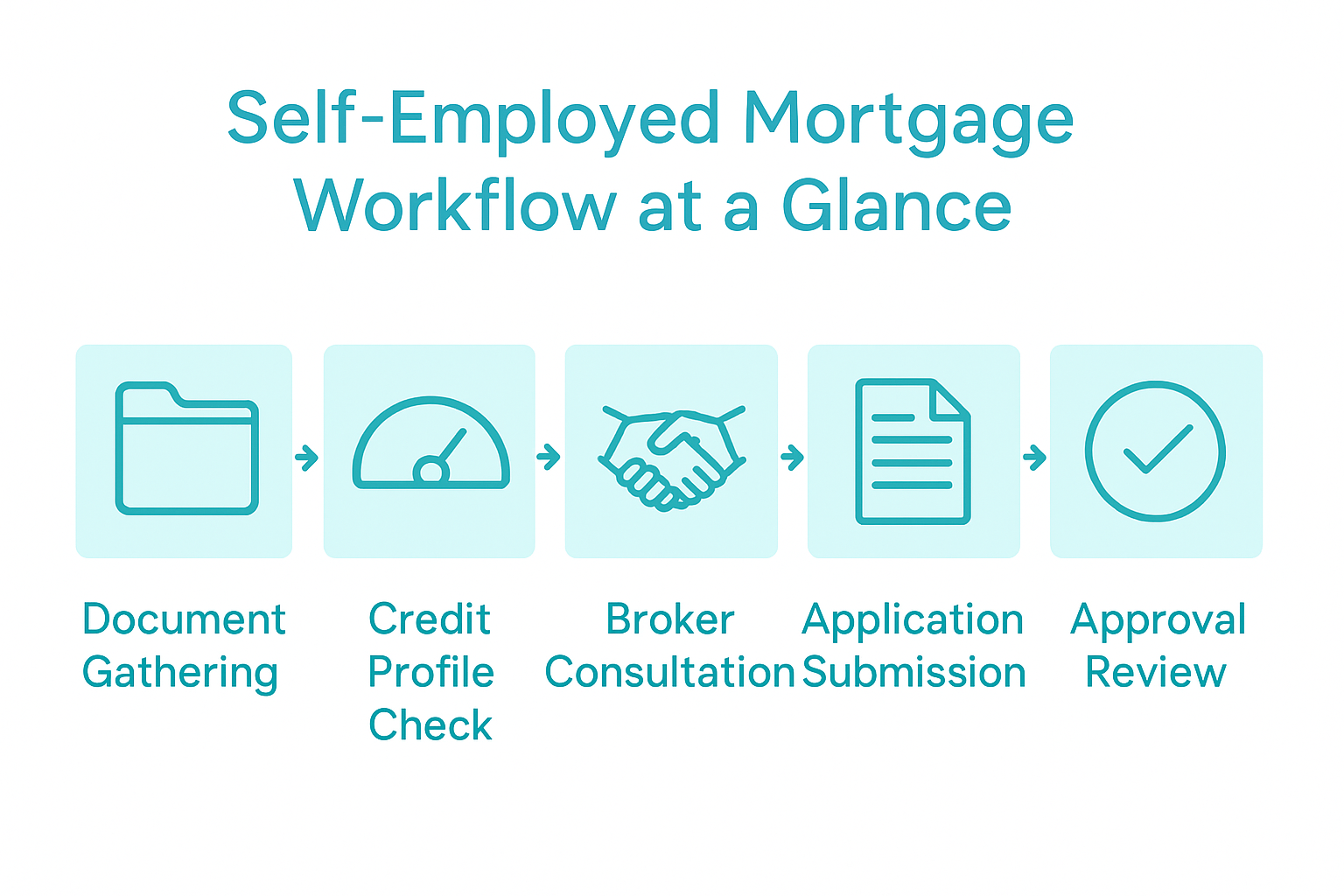
- Step 1: Gather Required Self-Employment Income Documentation
- Step 2: Assess and Improve Your Credit Profile
- Step 3: Evaluate Suitable Mortgage Products with a Broker
- Step 4: Submit a Strong Self-Employed Mortgage Application
- Step 5: Verify Approval Details and Finalize the Mortgage
Quick Summary
| Key Insight | Explanation |
|---|---|
| 1. Gather Comprehensive Documentation | Collect tax returns, business statements, and supporting documents to prove income stability to lenders. |
| 2. Maintain a Strong Credit Profile | Aim for a credit score of 680 or higher; address any negative items before applying to improve approval chances. |
| 3. Work with a Mortgage Broker | Collaborate to explore various mortgage options tailored for self-employed individuals, ensuring the best fit for your financial situation. |
| 4. Prepare an Organized Application | Submit a thorough application with complete and accurate documentation that showcases financial health and income consistency. |
| 5. Review Approval Details Carefully | Confirm all terms of the mortgage approval align with your expectations and understanding before signing the final agreement. |
Step 1: Gather Required Self-Employment Income Documentation
Self-employed individuals require a comprehensive set of financial documents to demonstrate income stability and secure mortgage approval. Mortgage documentation for self-employed professionals involves more nuanced evidence compared to traditional employment records.
Start by collecting your most recent tax returns and Notice of Assessment from the Canada Revenue Agency for the past two to three years. These documents provide mortgage lenders with a clear picture of your consistent income. Supplement these with your business financial statements including profit and loss statements, balance sheets, and business bank statements. For incorporated businesses, include corporate tax returns and financial records that showcase revenue trends and income consistency.
Mortgage brokers typically want comprehensive proof of income sustainability. Prepare additional supporting documents like client contracts, invoices, business registration documents, and letters from key clients confirming ongoing work relationships. Include comprehensive records showing your income has been stable or growing over the past few years. Pro tip: Maintain organized digital and physical copies of all documentation to streamline the mortgage application process and demonstrate financial professionalism.
By meticulously preparing these documents, you signal to lenders that you are a reliable borrower despite having a non traditional employment structure.
Step 2: Assess and Improve Your Credit Profile
Self-employed mortgage applicants must pay special attention to their credit profile, as lenders scrutinize financial stability more closely. Understanding credit requirements for self-employed borrowers is crucial in navigating the mortgage approval process.
Start by obtaining a comprehensive credit report from both major Canadian credit bureaus Equifax and TransUnion. Review these reports meticulously for any errors, outstanding debts, or late payments that could negatively impact your credit score. Aim to maintain a credit score of 680 or higher, which signals financial reliability to mortgage lenders. If your score falls below this threshold, develop a strategic plan to improve it by paying down existing debts, ensuring timely bill payments, and reducing credit utilization across all accounts.
Consider working with a credit repair specialist to address any complex credit issues that might hinder your mortgage application. Avoid opening new credit accounts or making significant financial changes during the mortgage application process, as these actions can temporarily lower your credit score. Demonstrating consistent financial management and a stable credit history will significantly enhance your chances of securing a favourable mortgage as a self-employed professional.
Step 3: Evaluate Suitable Mortgage Products with a Broker
Navigating the complex landscape of mortgage products requires expert guidance, especially for self-employed professionals seeking tailored financing solutions. Understanding mortgage options for self-employed borrowers involves exploring multiple lending pathways that accommodate unique income structures.

Work closely with a mortgage broker to assess different lending options including traditional bank mortgages, alternative lender programs, and private mortgage solutions. The role of mortgage brokers in Ontario becomes crucial in matching your specific financial profile with appropriate mortgage products. Discuss your income documentation, credit history, and long-term financial goals to identify mortgage terms that align with your self-employment status. Consider factors like interest rates, amortization periods, payment flexibility, and potential refinancing options that cater specifically to entrepreneurial income streams.
Prioritize finding a mortgage product that offers flexibility for fluctuating self-employed incomes while maintaining competitive rates. Request detailed comparisons of at least three different mortgage options, understanding the unique advantages and potential limitations of each. Your mortgage broker can help translate complex financial terms and guide you towards a mortgage solution that provides stability and supports your long-term financial objectives as a self-employed professional.
Step 4: Submit a Strong Self-Employed Mortgage Application
Successfully submitting a mortgage application as a self-employed professional requires meticulous preparation and strategic documentation. Comprehensive mortgage documentation for self-employed applicants demands a thorough and professional approach to demonstrate financial stability and income reliability.
Prepare a comprehensive application package that goes beyond standard employment documentation. Include your most recent Notice of Assessment, detailed business financial statements, corporate tax returns, and proof of consistent income from the Canada Revenue Agency. Self-employed mortgage approval steps in Ontario emphasize the importance of presenting a clear financial narrative that showcases your business’s financial health and your personal income consistency.
Double-check every document for accuracy and completeness before submission. Ensure all financial records are current, organized, and clearly demonstrate your income stability. Anticipate potential questions by preparing additional supporting documents such as client contracts, business registration certificates, and bank statements that validate your income streams. A well-prepared application demonstrates professionalism and increases your chances of mortgage approval, showing lenders that your self-employed status is a strength rather than a potential risk.
Step 5: Verify Approval Details and Finalize the Mortgage
The final stage of your self-employed mortgage journey requires careful review and strategic understanding of your approval conditions. Mortgage documentation verification for self-employed applicants demands meticulous attention to ensure all details align with your financial expectations and goals.
Carefully examine every condition outlined in your mortgage approval document, paying special attention to interest rates, payment terms, and any specific requirements related to self-employed income verification. Mortgage pre-approval nuances in Ontario suggest confirming that the approved terms match the initial discussions with your mortgage broker. Verify the exact documentation needed for final approval, including updated financial statements, current income proof, and any additional supporting materials that validate your self-employed income streams.
Before signing the final mortgage agreement, request a comprehensive breakdown of all closing costs, potential penalties, and specific conditions unique to self-employed borrowers. Consider scheduling a final consultation with your mortgage broker to walk through each detail, ensuring you fully understand the long-term implications of the mortgage terms. This thorough approach guarantees that you are making an informed financial decision that supports your professional and personal financial objectives.
Simplify Your Self-Employed Mortgage Journey with Expert Support
Navigating the complex self-employed mortgage workflow can be overwhelming with all the documentation and credit profile challenges involved. Key pain points such as gathering precise income evidence, managing fluctuating revenue, and securing fast approval require professional guidance tailored to your unique situation. At Miracle Financial, our Vaughan mortgage broker team specialises in helping self-employed Canadians overcome these hurdles with confidence and clarity.

Take advantage of personalised strategies including debt consolidation mortgage options, flexible mortgage products, and expert advice on improving your credit profile. Don’t let paperwork delays or confusing lender requirements hold you back. Start your journey today with Miracle Financial. Visit Miracle Financial to connect with a trusted self-employed mortgage broker who will champion your financial goals and secure fast approval. Take the next step and transform your home financing experience now.
Frequently Asked Questions
What financial documents do I need to prepare for a self-employed mortgage application?
To apply for a self-employed mortgage, gather your tax returns and Notice of Assessment from the Canada Revenue Agency for the past two to three years, along with business financial statements, corporate tax returns, and bank statements. Organize these documents to clearly demonstrate your income stability.
How can I improve my credit profile before applying for a mortgage?
Start by obtaining your credit report from major Canadian credit bureaus to check for errors and outstanding debts. Aim for a credit score of 680 or higher by paying off debts and ensuring timely bill payments, which can enhance your mortgage eligibility.
What types of mortgage products should I consider as a self-employed individual?
Explore a range of mortgage products through a mortgage broker, including traditional bank offerings and alternative lender solutions. Identify options that provide flexibility to accommodate your income fluctuations while maintaining competitive rates.
How can I create a strong mortgage application as a self-employed professional?
Prepare a comprehensive application that includes not just standard documentation, but also detailed financial records that highlight your income consistency. Ensure all submissions are accurate and organized to present a professional image to lenders.
What should I verify after receiving my mortgage approval?
Carefully review all conditions in your mortgage approval document, focusing on interest rates and payment terms. Confirm that everything matches your initial discussions and prepare any additional documentation required for final approval to ensure your understanding of the loan terms.