
Blog
What affects mortgage rates in Ontario: a 2026 guide


Many Ontario homeowners wonder why their mortgage rates shift unexpectedly, assuming lenders control pricing arbitrarily. In reality, mortgage rates reflect a complex interplay of national economic signals, personal financial health, provincial regulations, and lender competition. Understanding these factors empowers you to anticipate rate changes, improve your borrowing position, and secure better terms. This guide breaks down the key drivers behind Ontario mortgage rates in 2026, giving you the clarity to make informed decisions about refinancing, purchasing, or restructuring your mortgage.
Table of Contents
- Understanding The Economic Factors Behind Ontario Mortgage Rates
- How Personal Financial Factors Influence Your Mortgage Rate In Ontario
- Provincial Regulations And Lender-Specific Policies Shaping Mortgage Rates In Ontario
- Choosing And Timing Your Mortgage To Get The Best Ontario Rates In 2026
- Explore Expert Mortgage Advice And Refinancing Solutions With Miracle Financial
- Frequently Asked Questions
Key takeaways
| Point | Details |
|---|---|
| Economic indicators drive rates | Bank of Canada policy and inflation forecasts shape baseline lending costs across Ontario. |
| Personal credit matters | Your credit score, debt levels, and mortgage type directly influence the rate lenders offer you. |
| Provincial rules add constraints | Ontario follows federal stress tests and provincial regulations that affect rate availability and eligibility. |
| Fixed versus variable tradeoffs | Fixed rates offer stability while variable rates fluctuate with market conditions, each carrying distinct risks. |
| Timing and preparation pay off | Strategic mortgage applications aligned with economic cycles and improved credit profiles unlock better rates. |
Understanding the economic factors behind Ontario mortgage rates
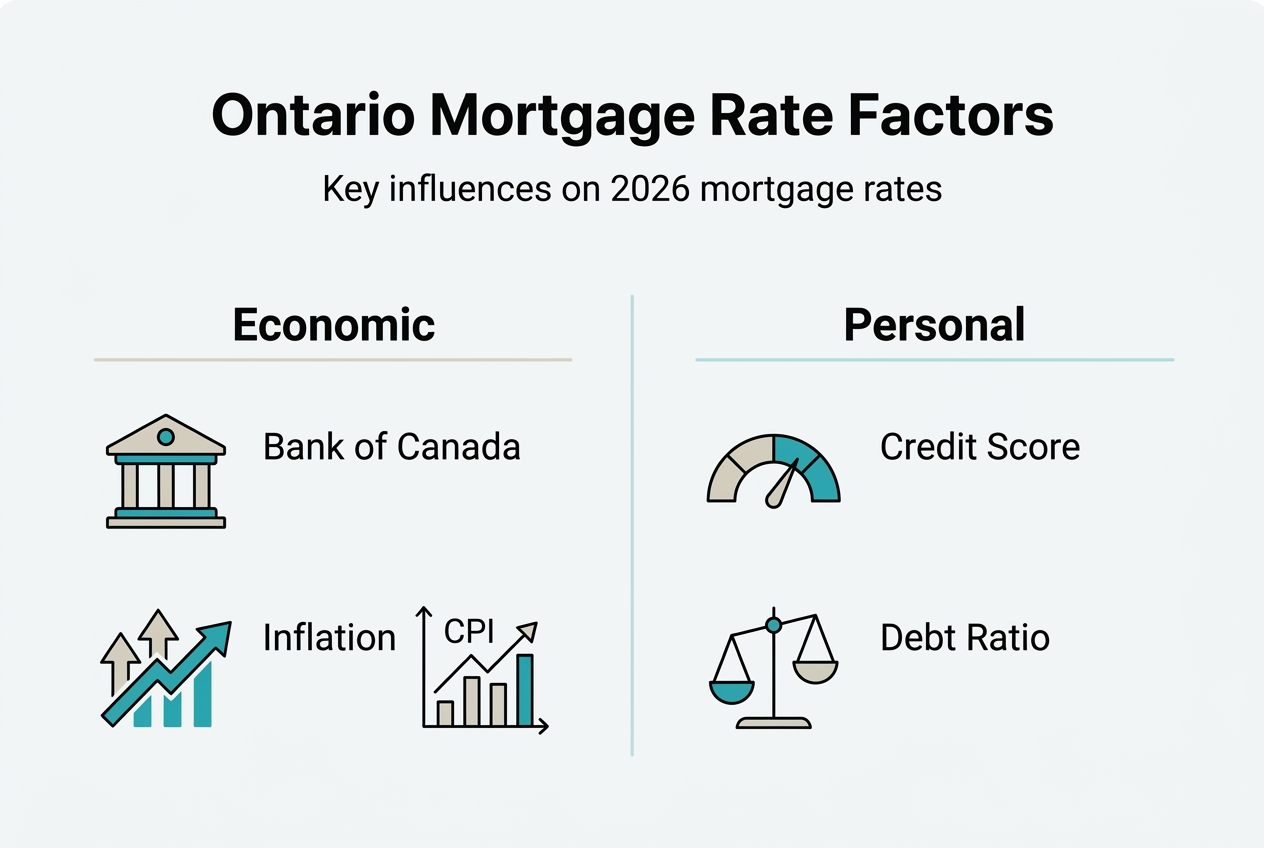
Mortgage rates in Ontario don’t exist in isolation. They respond to broader economic forces that ripple through the financial system. The Bank of Canada’s overnight rate serves as the foundation for prime lending rates, which in turn anchor variable mortgage pricing. When the central bank raises rates to combat inflation, lenders pass those costs to borrowers. Conversely, rate cuts during economic slowdowns lower borrowing expenses.
Inflation expectations also shape mortgage pricing. Lenders price fixed-rate mortgages based on anticipated inflation over the term. If economists forecast rising prices, fixed rates climb to protect lender margins. Variable rates adjust more dynamically, tracking the prime rate as it moves with central bank policy. This creates different risk profiles for borrowers depending on their rate choice.
Bond yields add another layer of complexity. Canadian government bond prices influence fixed mortgage rates because lenders use bonds as benchmarks for long-term lending costs. When bond yields rise, fixed mortgage rates typically follow. Market demand for mortgages also affects pricing. During housing booms, lenders may tighten rates to manage risk exposure. In slower markets, competitive pressure drives rates down as lenders vie for borrowers.
Key economic drivers include:
- Central bank policy rate adjustments that directly impact prime lending rates
- Inflation forecasts that shape fixed-rate pricing over multi-year terms
- Government bond yields that serve as benchmarks for long-term mortgage costs
- Housing market demand that influences lender competition and risk appetite
Understanding these economic forces helps you anticipate rate movements and time your mortgage decisions strategically. Rates don’t change randomly; they reflect measurable economic conditions you can monitor.
How personal financial factors influence your mortgage rate in Ontario
Once economic conditions set the baseline, lenders assess your personal financial profile to determine your specific rate. Your credit score carries enormous weight in this evaluation. Credit profiles significantly impact mortgage eligibility and rates because they signal repayment reliability. Scores above 740 typically unlock the most favourable rates, while scores below 680 trigger higher premiums or alternative lending options.

Debt-to-income ratio matters just as much. Lenders calculate how much of your gross monthly income goes toward debt payments. Lower ratios demonstrate financial breathing room, reducing lender risk and improving your rate offer. High ratios suggest tight cash flow, which lenders offset with higher interest charges or stricter terms.
Your mortgage type choice also shapes your rate. Fixed versus variable mortgages carry different pricing structures because they distribute risk differently. Fixed rates cost more upfront but shield you from rate increases. Variable rates start lower but expose you to market fluctuations. Lenders price these options based on their own risk management strategies and funding costs.
Employment stability and income verification influence rates too. Salaried employees with steady pay stubs often access better rates than self-employed borrowers whose income fluctuates. Down payment size affects pricing as well. Larger down payments reduce lender risk, sometimes unlocking rate discounts or waiving mortgage insurance premiums.
Personal factors lenders evaluate:
- Credit score and payment history over the past several years
- Debt-to-income ratio showing how much income covers existing obligations
- Employment type and income stability affecting repayment confidence
- Down payment size determining loan-to-value ratio and default risk
Pro Tip: Boosting your credit score by even 20 points before applying can save thousands in interest over your mortgage term. Pay down revolving debt, correct credit report errors, and avoid new credit applications for several months before seeking mortgage approval.
Provincial regulations and lender-specific policies shaping mortgage rates in Ontario
Ontario mortgage rates operate within a regulatory framework that constrains how lenders price risk and qualify borrowers. Federal stress testing requires borrowers to qualify at rates higher than their contract rate, ensuring they can handle payment increases. This policy affects which rates lenders can offer while maintaining regulatory compliance. Borrowers who barely pass stress tests may face higher rates or shorter terms.
Ontario mortgage regulations also influence lending standards through provincial oversight of mortgage brokers and lenders. These rules ensure fair practices but also create compliance costs that lenders factor into pricing. Some lenders specialise in niche markets like self-employed borrowers or investment properties, offering tailored rates that reflect different risk assessments.
Lender underwriting guidelines vary significantly across institutions. Major banks follow conservative policies with standardised rate sheets. Credit unions may offer more flexibility for local borrowers with strong community ties. Private lenders fill gaps for borrowers who don’t meet traditional criteria, charging premium rates that reflect higher perceived risk.
Competitive positioning also drives rate variation. Some lenders advertise aggressively low rates to attract volume, then recover margins through fees or stricter terms. Others maintain higher published rates but negotiate more readily. Understanding these dynamics helps you compare offers effectively rather than chasing headline rates that may not materialise.
| Regulatory Factor | Impact on Rates | Borrower Consideration |
|---|---|---|
| Federal stress test | Requires qualification at higher rate, limiting access to lowest rates | Strengthen finances to pass at buffer rate |
| Provincial oversight | Adds compliance costs lenders pass to borrowers | Work with licensed brokers who navigate rules |
| Lender underwriting | Creates rate variation based on risk appetite | Compare multiple lenders for best fit |
| Competitive strategy | Influences advertised versus negotiated rates | Look beyond posted rates to actual offers |
Pro Tip: Consulting with a mortgage broker familiar with Ontario regulations can uncover lenders whose underwriting guidelines match your financial profile, often securing better rates than direct bank applications.
Choosing and timing your mortgage to get the best Ontario rates in 2026
Applying your understanding of rate factors requires strategic decision-making about mortgage type and application timing. The 2026 economic outlook suggests moderate inflation with potential rate adjustments as the Bank of Canada balances growth and price stability. This environment favours careful analysis of fixed versus variable options based on your risk tolerance and financial goals.
| Mortgage Type | Rate Behaviour | Best For | Risk Profile |
|---|---|---|---|
| Fixed Rate | Locked for entire term | Budget certainty, rate rise protection | Low risk, predictable payments |
| Variable Rate | Fluctuates with prime rate | Potential savings, flexibility | Higher risk, tolerance for payment changes |
| Hybrid | Portion fixed, portion variable | Balanced approach, partial protection | Moderate risk, diversified exposure |
Preparing for mortgage refinancing or new applications involves specific steps that improve your rate outcome. Start by reviewing your credit report months before applying, disputing errors and paying down high-utilisation accounts. Calculate your debt-to-income ratio honestly, reducing obligations if needed to improve your profile.
Timing matters significantly in 2026. Monitor Bank of Canada announcements and economic indicators that signal rate direction. If cuts appear likely, variable rates become more attractive. If increases loom, locking fixed rates protects against rising costs. Seasonal patterns also influence rates. Spring housing markets often see tighter pricing due to high demand, while winter months may offer better negotiating leverage.
Practical steps to secure better Ontario rates in 2026:
- Review and improve your credit score at least three months before applying for mortgages.
- Reduce debt-to-income ratio by paying down revolving credit and avoiding new obligations.
- Compare multiple lenders including banks, credit unions, and broker networks for rate variation.
- Time applications around economic cycles, avoiding peak demand periods when rates tighten.
- Prepare documentation thoroughly to streamline approval and demonstrate financial stability.
- Consider mortgage term length strategically, balancing rate savings against renewal frequency.
- Evaluate total borrowing costs including fees, penalties, and flexibility rather than rate alone.
Your personal circumstances should guide these decisions. If job stability concerns you, fixed rates provide peace of mind despite higher costs. If you anticipate income growth or plan to sell within a few years, variable rates or shorter terms may optimise savings. The key is aligning mortgage structure with your financial reality rather than chasing theoretical savings that don’t fit your situation.
Explore expert mortgage advice and refinancing solutions with Miracle Financial
Navigating Ontario mortgage rates requires expertise that accounts for economic conditions, personal finances, and regulatory requirements simultaneously. Understanding what affects rates is the first step. Applying that knowledge to secure optimal terms demands professional guidance tailored to your unique situation.

Miracle Financial’s Ontario mortgage brokers specialise in matching borrowers with lenders whose underwriting aligns with your financial profile. Whether you’re purchasing, refinancing, or consolidating debt, our team accesses multiple lender networks to find competitive rates you might not discover independently. We handle the complexity of comparing offers, negotiating terms, and managing applications so you can focus on your financial goals. Explore mortgage refinancing options that reduce payments or unlock equity, or discover debt consolidation strategies that improve cash flow using your mortgage. Our Vaughan-based experts combine local market knowledge with national lending relationships to deliver results that matter.
Frequently asked questions
What factors most affect mortgage rates in Ontario?
Mortgage rates in Ontario result from the interaction of three primary forces: economic indicators like Bank of Canada policy and inflation, personal financial factors including credit score and debt levels, and regulatory requirements such as stress testing. Economic conditions set baseline rates across the market, while your personal profile determines the specific rate lenders offer you. Provincial regulations and lender policies add another layer of variation. Understanding all three helps you anticipate rate changes and position yourself for better terms.
Can I negotiate my mortgage rate with lenders in Ontario?
Yes, mortgage rates are negotiable within limits set by lender policies and market conditions. Posted rates serve as starting points, but lenders often have flexibility to adjust based on your financial strength, relationship history, or competitive pressure. Working with an experienced mortgage broker significantly improves negotiation outcomes because brokers access multiple lenders and understand which institutions offer the best terms for your profile. They leverage competition between lenders to secure rate concessions you might not achieve independently.
How do credit scores impact mortgage rates in Ontario?
Higher credit scores directly translate to lower mortgage rates because they demonstrate repayment reliability to lenders. Scores above 740 typically qualify for the most favourable rates, while scores between 680 and 740 face modest premiums. Credit profiles below 680 often require alternative lending options with higher rates or additional security. Even small score improvements can generate substantial interest savings over a mortgage term, making credit optimisation one of the most effective strategies for reducing borrowing costs.
What is the difference between fixed and variable mortgage rates?
Fixed rates remain constant throughout your mortgage term, providing payment predictability and protection against rate increases. You pay a premium for this stability, but budget certainty often justifies the cost. Variable rates fluctuate with the prime lending rate, which tracks Bank of Canada policy. They typically start lower than fixed rates but expose you to payment increases if rates rise. Variable mortgages suit borrowers with financial flexibility who can absorb payment changes, while fixed rates benefit those prioritising budget stability over potential savings.
When is the best time to lock in a mortgage rate in Ontario?
Optimal timing depends on economic conditions and your personal circumstances. Monitor Bank of Canada rate announcements and inflation trends for clues about rate direction. If cuts appear likely, variable rates or rate holds become attractive. If increases loom, locking fixed rates protects against rising costs. Seasonal factors also matter. Spring markets often see higher rates due to demand, while winter may offer better terms. Prepare your finances well before applying so you can act quickly when conditions favour borrowers rather than rushing applications during unfavourable periods.